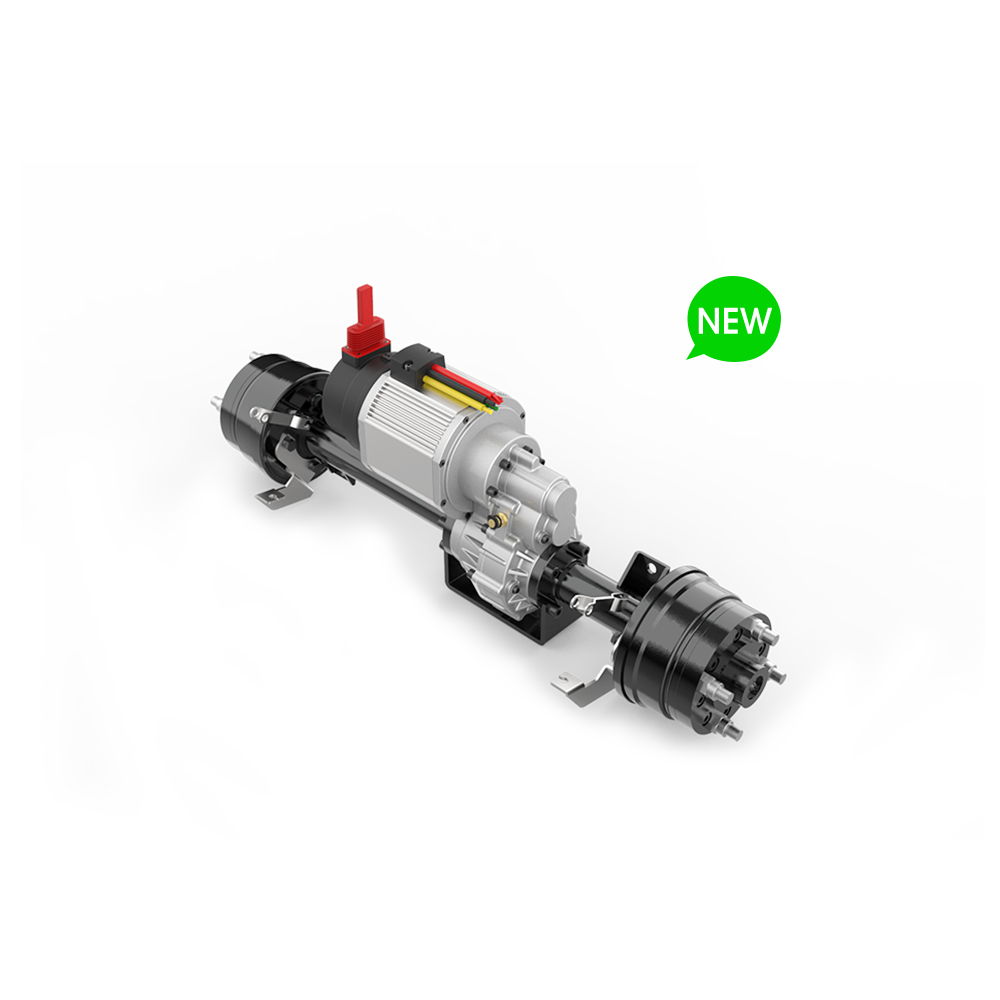
A damaged driveshaft can indeed cause damage to the transmission through vibration, abnormal load, and the failure of connecting parts. Vibration can accelerate wear on transmission components, a fracture can directly impact the transmission structure, and uneven load can affect its operational efficiency, thereby increasing the risk of failure and potentially leading to complete transmission failure.
Vibration Transmission and Amplification
It is significant to balance the driveshafts in order to make the vehicle run smoothly and flawlessly. While driving, the shaft undergoes an unbelievable amount of torque from the engine, which gets transmitted all the way through the driveshaft to reach the wheels. However, any sort of imbalance in the driveshaft causes a disturbance in the whole system, thus inducing vibrations. The moment this driveshaft either becomes bent, worn, or unbalanced, all the forces are transferred to the transmission. Even small vibrations develop over time and then negatively affect different parts of the transmission.
Vibration transmission affects the comforts of the driver, but at the same time, it can increase the wear occurrence of internal transmission gears. The effect is more so at moments when changing gears, during which the internal components of the transmission are required to withstand asymmetric forces that usually lead to poorer engagement of the gears. The faster the engine spins, the higher the amplitude of vibrations, which also affects the synchronizers and clutch of the transmission. Synchronizers are supposed to smoothen the transition from one gear to another; however, vibration may throw them out of the game, resulting in difficulty in shifting gears.

Added to this is an inherent limitation in the transmission’s design to carry torque loads beyond the limits specified, so vibration amplifies the wear of those parts, which might lead to early failures at bearings in the transmission that fail prematurely because of disturbances like abnormal noise or difficult shifting. The vehicle owner often blames the transmission itself, thinking that it is disturbance-free, but it is a damaged driveshaft that causes the high power-flow vibration issue.
In the worst scenarios, long vibrations fracture a casing – in parts of it where maximum stress is exercised. Since continuous mechanical vibrations lead to cracking mostly through fatigue, the cracks will rupture the sealing integrity of the transmission and cause a failure or breach risk.
Damage to Connecting Parts

The damage a broken driveshaft can cause is not restricted to the driveshaft itself but also involves the transmission via the parts connected to it. The integral parts that relate to the driveshaft and the transmission are, for example, the unions and couplings at the connection points within the driveshafts. These are the focus and work of successful power transfer. If any of these parts connect, they often become sacrificial components during damage to the driveshaft. For instance, bent or unbalanced driveshafts exert additional strain on their universal joints.
This universal joint is a vital component when transferring power from the transmission to the wheels. When the driveshaft is unbalanced, the action of the universal joint will get out of sync. Out of this abnormal load buildup, the hinges will get worn out slowly and could even develop cracks. In severe conditions, the universal joint breaks. Hence, power transfer is directly interrupted.
Other than the universal joint, other parts link the transmission and driveshaft that can also be damaged. For instance, consider the case in which a part of the joint driveshaft to the differential is unsupported: the driveshaft would damage the differential’s output shaft as it probes too much — that is, overload — because a damaged driveshaft failed to allow free movement. Critical components such as these affect the power that the transmission transfers, making the shifting process less efficient, producing a less smooth shifting process at worst, and ending with transmission failure.
The damage to these connecting parts tends to be very difficult to identify. Their mode of wear and fatigue follows a long timeline, making detection difficult during routine controls. However, once damaged, the stability of the entire power system and the lifetime of the transmission are bound to be highly reduced, and repair costs are bound to shoot up.
Direct Impact of Driveshaft Fracture on the Transmission
Typical cars experience a sudden event through a driveshaft fracture, and the effect can be very devastating for the vehicle. A broken driveshaft prevents power from reaching the wheels smoothly, so the vehicle can no longer drive. The effect experienced by the drive itself is not merely that of power transfer. The driveshaft can also directly damage the casing of the transmission and be prone to create cracks or deformation, thus further compromising the sealing ability of the transmission.
With a fractured driveshaft, the output shaft of the transmission continues to rotate with no power coming at it, and this sudden impact of rotation can overload the internal gear systems in the transmission, thereby increasing the possibility of damage to the gears. This is especially critical for high-end automatic transmissions, where the torque shock caused by the fracture may misalign the gears, leading to incorrect gear engagement and difficulties in shifting or an inability to shift.

A cracked driveshaft not only causes physical impact but also affects the transmission’s lubrication system. A fractured driveshaft generally results in damage to the seals of the transmission and thus leads to lubricant leakage. This causes internal parts of the transmission to receive inadequate lubrication, which accelerates wear and increases overheating and friction inside the transmission, hence hastening the transmission failure. In serious cases, the transmission might be irreparable due to fractures in the driveshaft, thus requiring entire transmission replacement rather than just repairs of various components.
The damages caused by a driveshaft fracture are usually very apparent, and their repair costs tend to be astronomical. Apart from the repairs of the driveshaft, the vehicle owner must do a thorough inspection of the transmission to ensure that any affected component is repaired or replaced accordingly. Repair time here is lengthy and costlier, hence the need for prevention rather than repairs by any vehicle owner.
Abnormal Load on the Transmission
A defective driveshaft can typically cause an abnormal load on a transmission. Under normal circumstances, there are no restrictions in transmitting power between the driveshaft and the transmission; as well, the internal components of the transmission experience a more or less uniform load. But when the driveshaft fails, the load on the transmission gets skewed. This especially happens when the driveshaft is bent or out of balance, as all internal components of the transmission have to bear more shock loadings and this abnormal load.
Irregular shocks occur in the transmission because of this abnormal loading, especially at the time of shifting. The gears of the transmission face severe pressure during shifting. Usually, they engage with somewhat controlled force, but when that force is not balanced, the engagement process becomes disturbed. Such uneven enjoyment between gears leads to gear tooth chipping as well as an improper smooth shifting experience.
Moreover, an abnormal load can give rise to premature wear of the clutch of the transmission. The function of the clutch is to connect and disconnect the engine’s output from the power transfer through the transmission; when it is under abnormal load, it does so at a much faster rate than normal. A worn-out clutch does not only affect smooth shifting by the vehicle but also increases safety risks in driving as it makes it difficult for the vehicle to start or stop.
Abnormal load also increases the temperature in a transmission. The internal temperature of the transmission will increase under abnormal loads and at high friction conditions. When the temperature is higher than normal, something happens to the viscosity of the transmission fluid and reduces its lubrication competency. Injuries will happen at a quicker rate without effective lubrication, reducing friction and creating a vicious cycle that will eventually cause failure of the transmission.
Indirect Effects on the Lubrication System
The broken driveshaft causes some indirect results, including the failure of the lubrication system. A driveshaft works hand in hand with a transmission so it’s very important for the proper sealing of the driveshaft during power transfer to avoid compromising the seal of the transmission, more often when damaged, like when bent or broken. The seal has a failure, leading to loss of lubricant towards the insufficient lubrication on the components that leads to accelerated internal wear.
Lubricating oil is essential for transmission to give smooth operations of all kinds of moving parts. If any oil is leaking from the seals, then the gears, bearings, and clutch will be left without proper lubrication within the transmission. That causes friction to increase among them and generates a lot of heat, which reduces the performance of the lubricating oil and also very badly damages internal metal components, and increases the risk of failure.

The capacity of the transmission to dissipate heat reduces dramatically due to the lubricant system failure. Transmission fluids usually play a role in both lubrication and heat dissipation. An insufficient amount of fluid will increase the internal temperature of that transmission, which may lead to an overheating condition or even complete burnout. This increased temperature may deform metal parts, thereby deteriorating the precision of the overall system, leading to severe, irreversible damage.
Leakage of the lubricants, however, is one of the issues that needs to be revealed at an early stage, leaving vehicle owners with a long duration without realizing that they have a problem. By then, irreparable damage to the vehicle due to lack of lubrication could have occurred. Upon discovery of the leak, repair costs do not generally include just replacing the seals; more components of the transmission have to be replaced before repairs can be completed, thereby increasing repair costs even further.