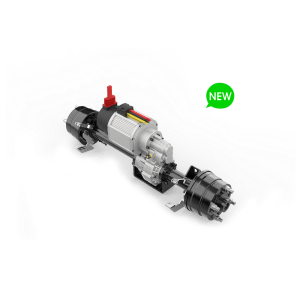
When choosing a transaxle suitable for heavy load transport, several key factors need to be considered. First is the power requirement, with the power range of the transaxle usually between 2.2KW and 7.5KW. Secondly, durability and reliability are important, with the transaxle’s service life needing to reach more than 5000 hours to ensure stable operation under long-term high load conditions.
Requirements for Transaxles in Heavy Load Transport
Choosing the right transaxle is crucial for heavy load transport. The power range of the transaxle is usually between 2.2KW and 7.5KW, which can meet different load demands. In agricultural machinery, a 3.0KW transaxle can drive heavy-duty tractors, while in construction equipment, a 7.5KW transaxle is suitable for large engineering vehicles. Durability and reliability are the core requirements for transaxles in heavy load transport. According to actual application conditions, the service life of the transaxle should reach more than 5000 hours.
The torque output of the transaxle must be large enough, usually between 100Nm and 500Nm, to ensure stable operation under high loads. High efficiency and low noise of the transaxle are also important considerations. In actual applications, the efficiency of the transaxle should reach more than 90% to reduce energy loss and operating costs. The noise level of the transaxle is controlled below 60dB, providing a more comfortable operating environment. Maintenance and upkeep costs of the transaxle are also key concerns for enterprises. Regular maintenance can extend the service life of the transaxle and reduce failure rates. Statistics show that the maintenance cost of the transaxle accounts for about 10% of the total equipment cost. When choosing a transaxle, enterprises should consider its ease of maintenance and repair costs. Specific requirements for transaxles in heavy load transport also include their ability to adapt to various complex working conditions. Transaxles operating in cold regions need to have low-temperature resistance, while those working in high-temperature environments require good heat dissipation.


Troubleshooting and Repair of Transaxles
During use, the transaxle may encounter excessive noise issues. The noise level should normally be controlled below 60dB. If it exceeds this value, check whether the bearings are worn or if the lubrication is insufficient. Replacing the bearings and adding lubrication are common solutions that can reduce noise and extend the transaxle’s service life. Overheating of the transaxle is another common fault. During high load operation, the temperature of the transaxle may rise above 80°C. At this point, check whether the cooling device is functioning properly or if there are any obstructions blocking the heat sink. If the cooling is insufficient, clean the heat sink or replace the cooling device promptly to ensure normal operation of the transaxle.

Insufficient torque output may cause the equipment to malfunction. The torque output of the transaxle should be between 100Nm and 500Nm. If the torque is insufficient, check the wear condition of the gears and the performance of the motor. If the gears are severely worn, replace them promptly; if the motor performance declines, consider replacing or repairing the motor. In heavy load conditions, the transaxle may have difficulty starting. Starting difficulties are usually due to insufficient motor power or controller faults. Check whether the motor power meets the requirements and ensure the controller parameters are set correctly. These adjustments can effectively solve starting problems and ensure normal operation of the equipment.

Loose bearings in the transaxle also need attention. Loose bearings affect the precision and lifespan of the transaxle. Regularly check the tightness of the bearings, and if looseness is found, tighten them promptly. If necessary, replace the bearings to ensure stable operation of the transaxle and extend the equipment’s service life. Oil leakage in the transaxle is a common maintenance issue. Oil leakage leads to insufficient lubrication, accelerating the wear of internal parts. Check whether the seals are intact, and if they are aging or damaged, replace them promptly. Maintaining good sealing performance can effectively prevent oil leakage and ensure normal operation of the transaxle.

How to Extend the Service Life of a Transaxle
Perform a comprehensive inspection every 500 hours, including replacing the lubrication and tightening the bearings. Statistics show that regular maintenance can extend the service life of the transaxle by 30%.
High-quality lubrication can effectively reduce friction and wear of parts. It is recommended to use industry-standard lubrication and replace it every 2000 hours of operation. The cost of replacing lubrication accounts for about 10% of the total maintenance cost, but the resulting extension of lifespan and performance improvement are significant. The ideal operating temperature of the transaxle should be maintained between 40°C and 60°C. Temperatures exceeding 80°C accelerate part aging and affect the performance and lifespan of the transaxle. For example, the cooling system of a well-known brand can effectively control temperature, ensuring stable operation of the transaxle under high load. Avoid long-term overload operation, maintaining within 80% of the rated power. For a 7.5KW transaxle, it is recommended to operate at around 6KW load. This not only improves efficiency but also reduces mechanical stress, extending the service life. The gears and bearings in the transaxle need to be inspected every 1000 hours, and replaced as needed based on wear conditions. Severely worn gears cause efficiency to drop and noise to increase, ultimately shortening the service life of the transaxle.
Ensure proper alignment and tightening of the transaxle with the equipment during installation to avoid additional stress and wear from improper installation. During commissioning, ensure all parameters are set correctly to avoid overload and overheating issues caused by incorrect parameters. Choosing industry-standard parts, such as high-strength steel gears and high-temperature resistant bearings, can significantly improve the durability and reliability of the transaxle. A certain brand’s high-strength steel gears have a service life 50% longer than ordinary gears. Trained operators can better grasp the key points of equipment operation and maintenance techniques, avoiding mechanical damage and faults caused by improper operation. Annual operational training can effectively improve the efficiency and lifespan of the equipment. Installing sensors to monitor parameters such as temperature, vibration, and speed can promptly detect potential problems and conduct preventive maintenance. If an abnormal temperature rise is detected through the monitoring system, stop the machine immediately for inspection to prevent damage from overheating.