
The drive shaft and the distribution of driving force in vehicles differ based on what type of vehicle you are looking at.
- Front-wheel Drive (FWD): There is no long drive shaft; the power immediately transmits the front wheels.
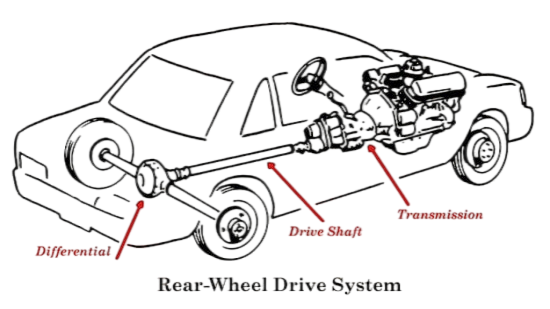
- Rear-wheel Drive (RWD):There is a long drive shaft extending from the front to the back, and the rear wheels have drive axles.
- Four-wheel Drive (4WD): There are two drive shafts, connecting the engine to the front and rear axles, with every wheel-wise pair having a chained or geared-up propeller.
Front-wheel Drive
In FWD vehicles, the drive shaft transfers power from the front of a longitudinal-mounted engine to a transaxle and then on to one or both driven wheels. The drive shaft must be kept rather short, typically 0.5 to 1 meter long. This short length design minimizes the loss of vector energy when it is transmitted, thereby increasing transmission efficiency by 5% which in turn increases acceleration.
Connected directly to the drive axles of each left and right front wheel near the front axle of a vehicle on either side are drive shafts. A direct link enables the front wheels to more efficiently accept and utilise engine propulsion, reducing a tenth from claimed 0-100km times. In the case of a traditional front-wheel drive design, the half shafts serve as both transmitters of torque and flex points during steering. Using CV joints (constant velocity) to compensate for tire movements at different angles.
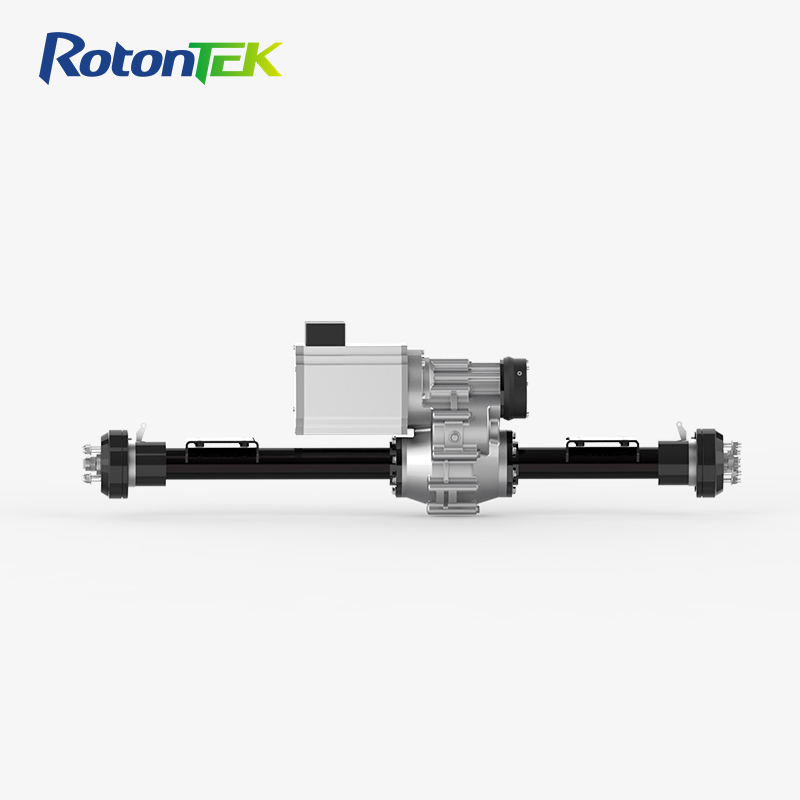

Along with being super light, the drive shaft is required to turn at high speeds and still be able to withstand a fail under all types of driving conditions which comes down as material quality & manufacturing precision. Over 70% of FWD vehicles are made using super-alloy steel and special machining process in the forging manufacturing, providing reliability, durability and lasting longer life with average an extra lifetime at least 20%.
A drive axle in front-wheel-drive car is also found at either end of the drive shaft but this time connected directly with wheels. The drive axle then converts this power coming from the drive shaft into torque on your wheels. In design, the drive axle is generally short and light to meet the front space arrangement limits while also ensuring that its total weight can be further reduced by about 2-3% for fuel-saving.
Rear-wheel Drive
In rear-wheel drive cars, the drive shaft connects the front of the engine the engine up front to the differential (a geared assembly that transmits power from an axle shaft between two wheels), which then distributes energy those thrilling back tires. Rear-wheel a system uses a longer drive shaft, this is due to the fact it has too carry the power going from front of engine all way back up-to rear wheels. This drive shaft needs to be stiff and strong enough in its long configuration, so it does not have vibrations or torsions at high speeds. Eighty per cent of all drive shafts in rear-wheel-drive applications are also made with these materials, increasing service life while providing higher level performance.

The drive shaft is coupled to the drive axle at points with special differentials which are able to be adapted for the power requirements of a vehicle as speeds and road surfaces change. The drive axle in rear-wheel-drive vehicles is located at the back of the vehicle and connects to a driveshaft, which affects both how much power gets transmitted to the rear wheels and also impacts overall performance. This drive layout is best applied in high-performance vehicles, or where passenger space and cargo volume are of higher priority than all-out performance, as with premium compact cars. The drive shafts of rear wheel driven vehicles, whose length and rigid design necessitates that they be dismantled into several parts for maintenance reasons can also result in a reduction to daily usage costs by around 15%.

Four-wheel Drive
In four-wheel drive systems, the geometry of the propeller shaft is a bit more complicated since it must distribute power from engine to all 4 wheels simultaneously. This layout typically has at least two drive shafts: one for the axle that is driving the front wheels, and a second connecting to a rear-wheel-drive vehicle. The goal of this design is to distribute power more instantaneously, with less propensity to break away on or off-road in complex and dynamically changing conditions than previous torque distribution set-ups enabling improved vehicle performance under these circumstances as much as 30% over the current-generation ALL4 system.
For four wheel drive, the main propeller transmits power from the engine to a central differential allowing all four wheels under torque by further front and rear shafts. It utilize highly flexible connection (such as universal joints or CV joint) that we adapt to dynamic vehicles on different terrain, improve the vehicle flexibility in all kinds of terrain up by 25%.
Low-friction surfaces like snow, mud or sand prove the advantage of four-wheel drive best in terms of power and traction. This four-wheel-drive configuration is common in off-road vehicles and some high-performance SUVs to ensure performance under harsh conditions.
Equally important are the drive axles in a four-wheel-drive system that reside at both ends of the car where they split power to each wheel. Four-wheel drive vehicles will typically have stronger and more intricate rack to support the greater transfer of forces as well as deal with harsher environments.
All-wheel drive uses the same basic principles as 4WD, but uses either the front-wheel drive or rear-wheel drive as primary drive in most situations, sending power to the other axle only when needed.
How to Distinguish Vehicle Drive Types
The layout/configuration of the drive shaft/axle is a major giveaway to figure out whether you are dealing with front-wheel-drive, rear-wheel-drive or all wheel drive.

Basic Identification Methods Here are the fundamental ways for identifying each drive type:
- Front-wheel Drive(FWD) : The drive shaft connects only with the front wheels. This can be seen by looking at the chassis and see if drive shaft only goes up to front wheels. In the engine, which is placed along with Trasversal Front Wheel Drive Machines and fuel to axle directly connects from gear box.
- Rear drive shaft: This connects from the front end engine to his rear-drive axle these are on RWD cars. The drive shaft runs in a straight line beneath the body of the vehicle from behind the front engine to before back wheels.
- Four wheel drive (4WD), is a system that uses both axles of the vehicle to provide power. In vehicles equipped with 4WD there are two shafts from which it receives power; one driveshaft connects the front wheels and another driveshaft for rear wheels. This can be verified by looking for two drive shafts extending from the central differential to front and rear wheels.