
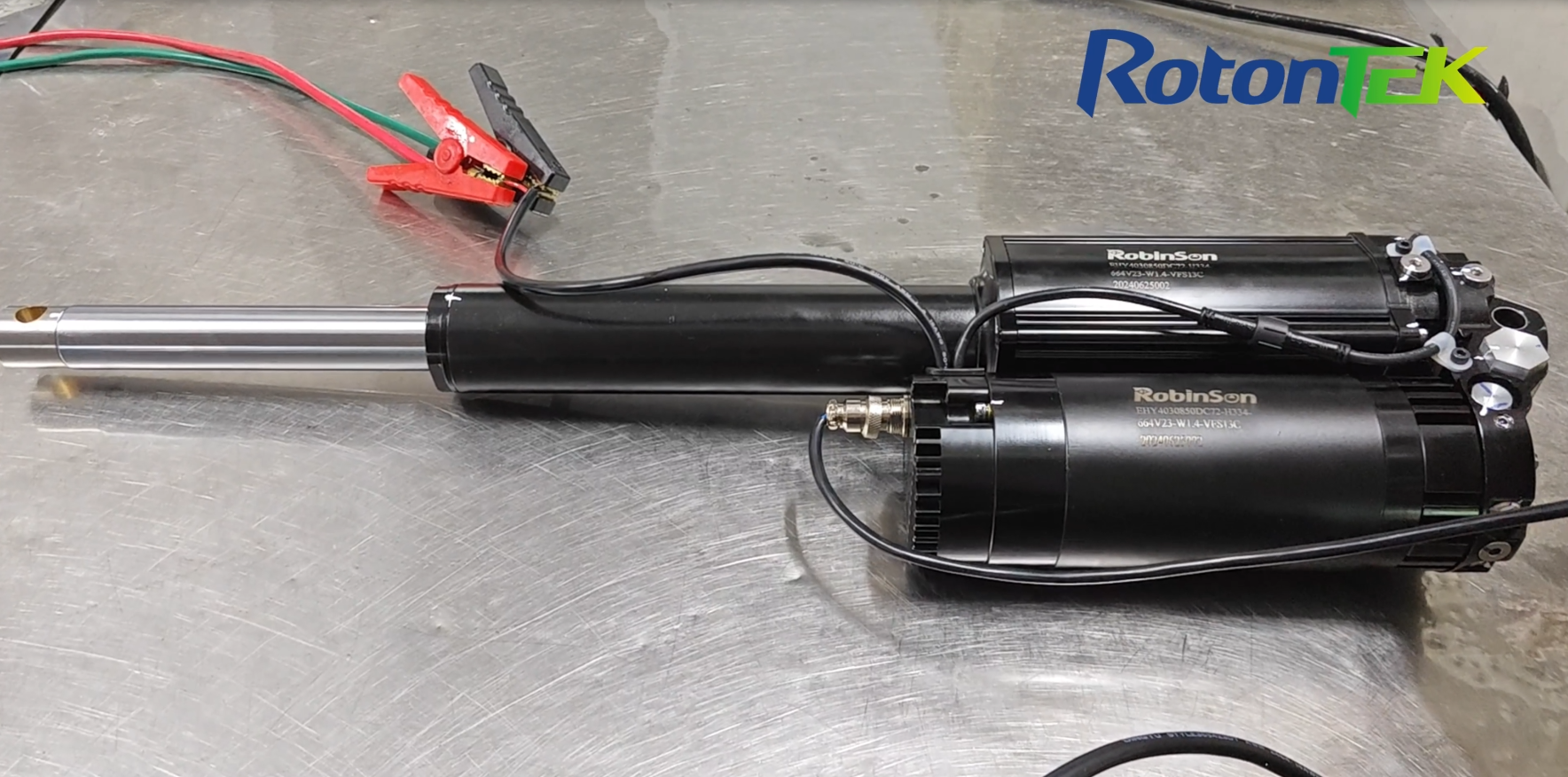
Electric hydraulic actuators are widely used in industries such as construction machinery, metallurgical equipment, and aerospace, where they deliver high force output and precise motion control.
However, these actuators typically operate in complex and demanding industrial environments, facing challenges such as sustained high-pressure conditions, frequent load variations, and exposure to extreme temperatures. These factors collectively impact their performance and reliability, necessitating robust design and operational considerations to ensure long-term stability.

Core Performance Demand For Electric Hydraulic Actuator
1. High Load Capacity
An electric hydraulic actuator must demonstrate exceptional load-bearing capabilities to meet the stringent demands of heavy machinery. This includes both static load capacity (maintain position under constant force) and dynamic load capacity (perform effectively under varying load conditions).
For example, in applications such as forging presses, heavy construction booms, and mining vehicles, actuators are often subjected to extremely high axial forces and dynamic impacts. High load capacity ensures that the actuator retains its structural integrity through repeated heavy-duty cycles without deformation or mechanical failure.
2. Long Service Life and Low Maintenance
In industrial environments such as steel mills or automated production lines that operate around the clock, unscheduled maintenance may trigger downtime and economic losses.
An electric hydraulic actuator with long service life and minimal maintenance requirements can reduce the frequency of replacements and inspections, thereby lowering operational costs for businesses and enhancing production continuity.
3. High-precision Control
Modern industrial processes require precise positioning and speed control, with tolerances often measured in fractions of a millimeter. This level of precision must be maintained throughout the entire working range, regardless of changes in load or environmental conditions.
Especially for aerospace manufacturing, semiconductor production, and automated robotics, high-precision control enables the electric hydraulic actuator to accurately follow programmed motion paths, achieving smooth speed regulation, acceleration, and deceleration.
4. Safety and Stability
Safety considerations are paramount, especially in high-pressure environments where failures can have severe consequences. The electric hydraulic actuator should be equipped with multiple safety features, including pressure relief systems, emergency stop functions, fail-safe mechanisms, and comprehensive monitoring systems.
Stability under varying working conditions guarantees consistent performance and lessens the risk of erratic behavior that could jeopardize safety.

How Demanding Environments Impact Electric Hydraulic Actuators
1. Accelerated Aging and Wear of Seals
The electric hydraulic actuators are often confronted with the challenges of high pressure, high temperature, and fluid contamination. These environmental factors, acting in concert, accelerate the degradation of seals, giving rise to hardening, surface cracking, and loss of elasticity.
Furthermore, damaged seals can cause internal and external leakage, bringing about power loss, decreased efficiency, and potential contamination. In severe cases, seal breakdown may result in complete function failure of the electro-hydraulic actuator.
2. Structural Deformation and Fatigue
High internal pressures create significant stress on the actuator cylinder, piston rod, end caps, and mounting points. This stress is often concentrated at sharp corners or material transitions.
On the other hand, repeated cycling between high and low pressures induces material fatigue, bringing about micro-cracks that can propagate over time, eventually causing structural failure.
3. Degradation of Hydraulic Oil Performance
An electric hydraulic actuator relies on consistent hydraulic fluid properties for efficient operation. However, temperature variations can greatly affect oil viscosity.
At elevated temperatures, the fluid becomes thinner, decreasing lubrication effectiveness and protective film strength. Conversely, under low temperatures, the oil thickens excessively, increasing flow resistance and overall energy consumption.
4. Bubble Formation and Cavitation
Pressure fluctuations can cause dissolved gases in the oil to form bubbles. When these bubbles collapse in high-pressure zones (cavitation), they generate shockwaves that erode metal surfaces, thereby contributing to pitting and premature component failure.
5. Thermal Management Issues
The conversion of hydraulic energy to mechanical work inherently generates heat, which becomes more pronounced during high-pressure operation. Temperature fluctuations prompt different materials in the actuator to expand and contract at different rates, which in turn can distort critical clearances, diminish sealing effectiveness, and undermine the precision of movements.
How to Maintain the Performance of Electric Hydraulic Actuators
1. Material and Structural Optimization
Electric hydraulic actuator components, such as the housing, piston rod, and mounting brackets, should be built with high-strength and high-toughness materials to resist deformation, fatigue, and corrosion.
Structural enhancements, including optimized wall thickness, smooth geometry transitions, and reinforced joints, can significantly cut down internal stress concentration and extend service life under repeated loading.
2. Advanced Sealing Systems
Multi-stage or composite sealing technology can effectively block contaminants while accommodating pressure fluctuations. Regular inspection and replacement are also vital to safeguard the integrity of the seal system.
3. Hydraulic Oil and Thermal Management
Select high-performance hydraulic oil with stable viscosity, strong anti-wear properties, and resistance to thermal degradation to ensure smooth and reliable hydraulic actuation.
Integrated thermal management mechanisms, such as internal cooling channels or temperature sensors, help regulate oil temperature and minimize the impact of thermal expansion on actuator precision.
4. Intelligent Monitoring and Maintenance
Regular monitoring of system parameters like pressure, temperature, flow, and vibration, combined with predictive maintenance techniques, can proactively identify potential efficiency losses due to leaks, component wear, or contamination.
Electric Hydraulic Actuators from Rotontek
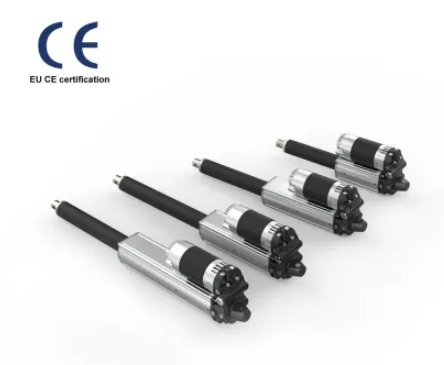
Certified by CE and EU standards, our electric hydraulic actuators provide a safe and reliable solution for a wide range of automation applications. With flexible installation options, they can easily adapt to various operational requirements, ensuring seamless integration across different environments.
Whether it’s the 0.6–1.5T, 2T, or 3T Electric Hydraulic Linear Actuator, all Rotontek models feature an integrated all-in-one structure that eliminates the need for external hoses, stopping the risk of oil leakage. The hydraulic unit, cylinder, control circuit, and limit switch are all housed within a compact, self-contained system. Compared to other actuators of the same size, this design delivers up to 50% greater thrust.
Conclusion
Electric hydraulic actuators are critical components in demanding industrial environments, requiring robust design and meticulous maintenance to keep stable performance. Our Rotontek hydraulic linear actuators, with their integrated design and high thrust capacity, address these challenges while enhancing reliability and efficiency.