
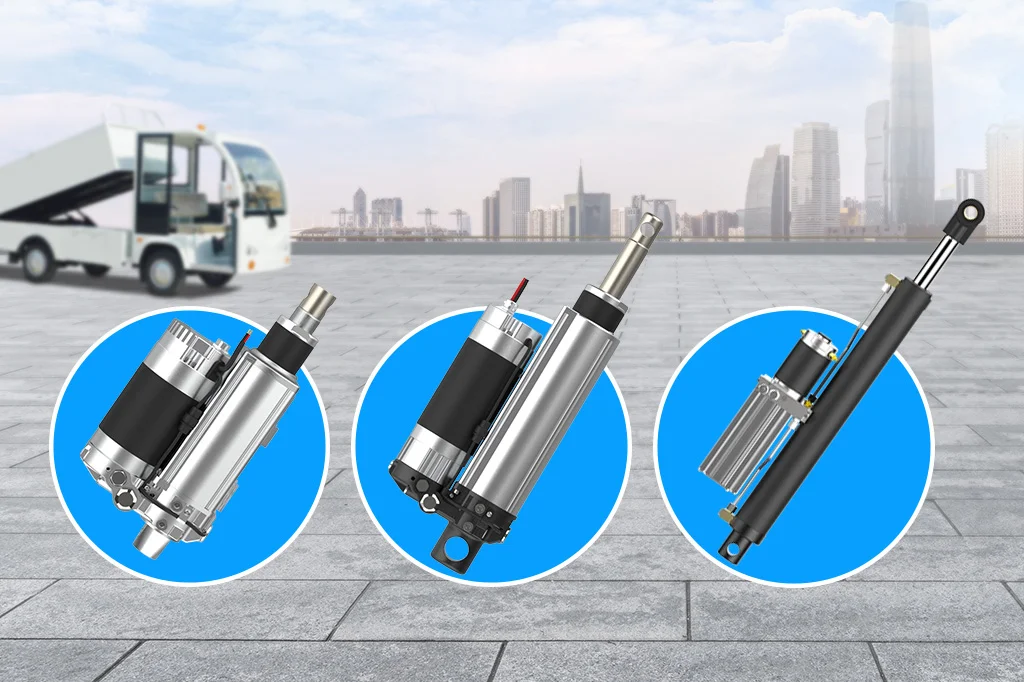
If you are using an electro hydraulic actuator for your application, make sure of the following key parameters such as power (5-15kW e.g.), Stroke (200-1000mm i.e.), and Response time (<0.1s).Collect the industry trend data to do market demand analysis, determine strategies on this basis, and apply the appropriate model.Lastly, make sure that the model you choose is an effective one by checking success stories as in Smart Factories, where a trial paved 20% more production efficiency solely with Rotontek application.
Market Trends Analysis

The growing demand for electro hydraulic actuator in manufacturing, aerospace & defense, and the automotive industry coupled with the growth of the energy sector is also set to increase market size by CAGR 40% over the next five years.
During the production process, electro hydraulic actuators use is 30% higher than before due to automated production lines in the manufacturing industry. Statista says that the manufacturing market for electro hydraulic actuators is projected to be a $15 billion industry by 2025.
The aerospace segment is demanding high precision and reliability, leading to a 25% year-on-year increase in the market share of electro hydraulic actuators. Boeing is able to save $2 million yearly in operating costs by using the electro hydraulic actuators on its Boeing 787 Dreamliner production line.
Industry Demand Strategy
The performance and life of electro hydraulic actuators can be greatly extended by selecting the appropriate materials for their construction, to suit the needs encountered in different areas. Below are examples that show the significance of and effect of material selection, backed by data.
Require high-temperature and corrosion-resistant materials in the manufacturing environment. Ergo, in its manufacturing equipment General Electric (GE) employs primarily stainless steel and titanium alloys. Stainless steel has an excellent resistance to corrosion, which makes it last up to 20 years in humid and acidic atmospheres. By using stainless steel material, GE in its electro hydraulic actuators decreased operating expenses related to maintenance by 15%. Titanium alloy, with a weight density of 4.51 g/cm³ and tensile strength of 1100 MPa, elevates its anti-wearing degree in severe operating environments.

Aerospace looks for lightweight, strong materials. In its 787 production line, Boeing utilizes carbon fiber composites and aluminum-lithium alloys for electro hydraulic actuators. They are way lighter than aluminum, which is a big benefit for certain high-stress conditions where structure weight must be minimized. Carbon fiber composites, with a density of about 1.6 g/cm³ and tensile strength up to 6000 MPa, are opaque in nature, making them very lightweight materials for aircraft structure applications. This results in a structural mass reduction of approximately 20%, leading to an overall fuel consumption reduction of approximately 15%.
Electro hydraulic Actuator Selection Guide
The following parameters must be considered when selecting electro hydraulic actuators, which are the key points to decide whether they can meet the requirements of various products. Here we have taken three kinds of electro hydraulic actuators from Rotontek as a demonstration to help you choose the model according to your industry requirements.
Rotontek’s 2T electro hydraulic actuator has an energy conversion efficiency of up to 95%, with just 5% energy loss per hour. Its thrust capacity is 2 tons (2000 kilograms), equivalent to pushing the weight of two medium-sized cars, with a displacement accuracy of ±0.1 millimeters, ensuring precise operation. The response time is 0.5 seconds, allowing for rapid deployment. Its mean time between failures (MTBF) exceeds 20,000 hours, providing reliable performance for about 2.3 years of continuous operation. The 2T electro hydraulic actuator can operate in agricultural equipment such as modern tractors and harvesters for up to 16 hours a day during the busy season, processing five hectares of farmland per hour or approximately 80 hectares daily, greatly boosting both productivity and machinery reliability.


An energy conversion efficiency of up to 96% per hour with Rotontek’s 3T electro hydraulic actuator, resulting in a significant reduction in energy loss. Its thrust capacity is 3 tons (3000 kg) and displacement accuracy of ±0.05 mm guarantees precise operation with high tolerances in demanding applications. It has a response time of just 0.3 seconds and integrates seamlessly within fast production lines. These actuators have an MTBF greater than 25,000 hours. The 3T electro hydraulic actuator can perform 120 precise operations per minute on an automatic assembly line in industrial automation applications, with a daily operation of more than 172,800 times, greatly enhancing production efficiency and product quality. For instance, in the automotive manufacturing industry, this actuator can handle heavy components on the assembly line, ensuring the continuity and accuracy of production configurations.
Rotontek’s EHC-6335500-16HC electro hydraulic actuator has energy transformation rates reaching 97%, resulting in a maximum of 3% efficiency loss after an entire hour. It can provide up to 6.3 tons (6300 kilograms) of thrust, the equivalent lifting force of six mid-size cars. It has displacement accuracy of ±0.03 millimeters, making it extremely precise in operation. The 0.2 second response time allows for quick actions. Its MTBF is higher than 30,000 hours, or the equivalent of almost 3.4 years of constant operation. Its thrust capacity of 6.3 tons can be used in heavy cargo transportation; its single operation can lift about two cubic meters of iron ore or similar materials, with a loading rate equivalent to 120 cubic meters per hour. This electro hydraulic actuator supports the movement and installation of large structures in construction projects, working 20 hours a day to enhance engineering efficiency while reducing the mechanical failure rate.


