

When we build electric mobility systems for our partners, understanding how to troubleshoot vehicle control unit (VCU) faults becomes essential. In many cases, a VCU issue can affect the performance of both the motor controller and the broader drivetrain. Since our systems at Rotontek rely on tight coordination between the motor controller and the vehicle control unit, diagnosing faults quickly helps prevent downtime and ensures consistent performance across electric vehicles, forklifts, AGVs, and other smart mobility equipment. By mastering the relationship between these two components, we give our customers safer, more reliable powertrain solutions.
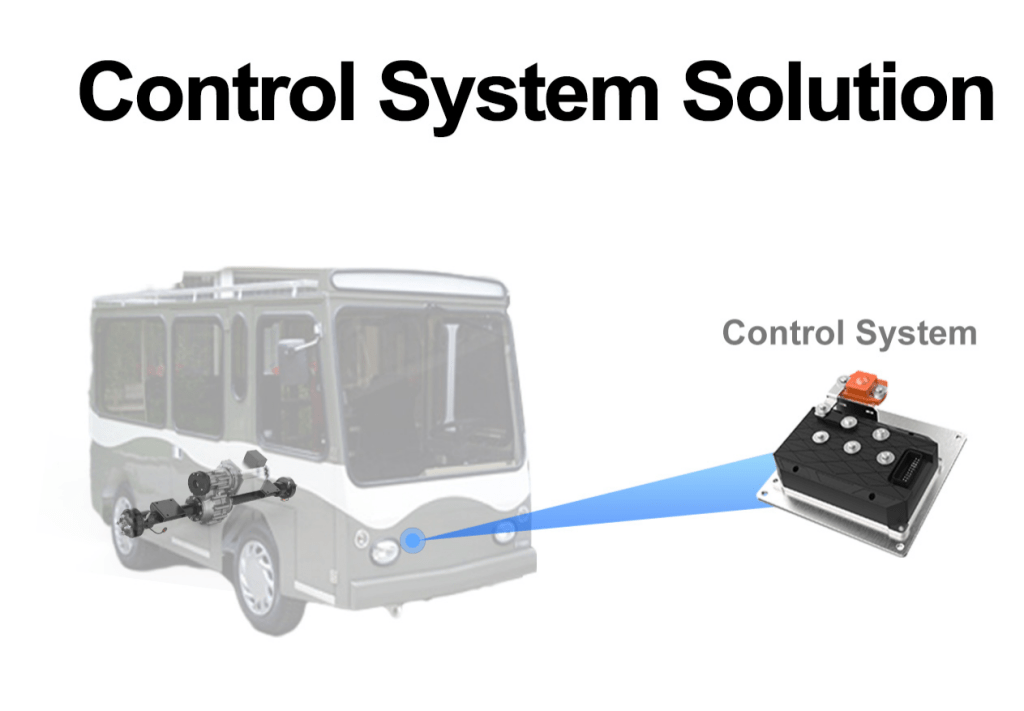
Identifying Early Warning Signs of VCU Issues
Whenever something goes wrong inside an electric vehicle’s powertrain, the first symptoms often point back to the VCU. Because the vehicle control unit governs communication, battery data interpretation, torque requests, and coordination with the motor controller, even a minor disruption can create noticeable behavior changes.
Our team typically watches for several warning signs:
- Sudden loss of throttle response
- Irregular torque output or delayed acceleration
- Unexpected braking behavior or missing regenerative feedback
- Communication errors between the motor controller and the vehicle control unit
- Battery readings that fluctuate or fail to update
Since the VCU acts as the central intelligence hub, any interruption to its decision-making process can ripple through the entire system. By catching these early indicators, we prevent damage and reduce the chance of system-wide failures. That’s why we encourage our partners to incorporate regular monitoring into their maintenance cycles. For OEM customers, these early checks save time, reduce operational costs, and keep electric mobility equipment functioning safely.
Systematic Diagnostic Approach to VCU Faults
Troubleshooting a vehicle control unit requires a structured process. Our engineering teams typically follow a step-by-step approach that helps isolate the root cause efficiently.
1. Verify Communication and Wiring Integrity
We begin by checking CAN-BUS wiring, connectors, and grounding. A loose pin or unstable voltage rail can interrupt communication between the VCU and the motor controller. Ensuring stable communication allows both systems to correctly exchange torque commands, speed demands, and sensor feedback.
2. Review Logs and Fault Codes
Modern VCU records fault histories with time stamps and detailed code descriptions. By reading these logs, we can identify patterns indicating where the issue originated—whether from a speed sensor, throttle input, battery module, or the motor controller itself. Our software tools simplify this process for our B2B customers.
3. Recalibration and Parameter Correction
In many cases, recalibrating torque maps, throttle curves, or braking parameters resolves inconsistencies. Since our Rotontek vehicle control unit manages battery protection, energy recovery, and power limiting functions, restoring parameters ensures harmonious operation with the motor controller.
This is also where our advanced product innovations come into play. For example, the ID600 series3-7.5kW Brushless Controller, designed by our Zhongshan Roton Intelligent Technology division, features AI smart speed control, IP55 protection, anti-slip climbing and efficient heat dissipation, allowing for consistent and predictable operation and making diagnostics far easier. When both the motor controller and vehicle control unit are engineered with cross-compatibility in mind, troubleshooting becomes significantly faster.
Practical Solutions and Preventive Measures for Better System Reliability
Solving a VCU fault is only half the job; preventing future failures is where long-term value is created. At Rotontek, we design our vehicle control unit and motor controller solutions with reliability and operational efficiency in mind.
One major advantage is our focus on advanced battery management and energy recovery. Because our vehicle control unit optimizes power draw and regenerates energy during braking, customers often experience longer operating cycles and significantly lower energy costs. This smart management reduces strain on both the battery and the motor controller during operation.
We also design specialized solutions for various industrial environments. Whether our customers need a heavy-duty forklift motor controller, a stable golf cart motor controller, or a precision-driven AGV motor controller, we deliver the performance characteristics each application requires. The flexibility across our product line is why many global OEMs trust us as their long-term motor controller supplier.
Reliable VCU Troubleshooting Starts With Intelligent System Design
Understanding the communication and power transfer between the VCU and the motor controller is essential for effectively diagnosing vehicle control unit faults in the context of electric mobility. At Rotontek, we design both parts to function together flawlessly, providing OEMs with long-term stability, intelligent energy optimization, and predictable performance. Our partners benefit from safer, more effective, and more lucrative electric vehicle platforms in addition to more seamless troubleshooting procedures when they invest in a strong vehicle control unit and a high-quality motor controller.