

The application of motor wheels into AGVs increases the level of power transmission efficiency, reduces frictional wear, and decreases the time spent on maintenance. Their compact structure allows for operations along narrow pathways, and flexible steering combined with high accuracy control enable smooth material handling, thereby optimizing workflow efficacy.
Efficient Power Transmission
Power transmission efficiency during the application of motor wheels with AGV systems has been hugely improved. In contrast to the conventional AGV transmission systems, which include a motor, gearbox, drive belt, couplings, and other components, the driving motor is integrated into the wheels of the motor wheels, thus forming an effective direct drive structure. It minimizes intermediate components and friction loss in power transmission, and therefore, the efficiency of transmission by motor wheels is increased to 90%-95%, while traditional mechanical transmission is approximately at 80%-85% efficiency. This is 5%-10% when it comes to improving efficiency, optimizing battery life, and saving energy costs by a high margin, thereby increasing the economic viability and operational efficiency of AGVs.
The direct drive characteristic of motor wheels can also enable them to respond promptly to power demands. Operating under heavy loads, an AGV with motor wheels is able to directly regulate motor torque by properly modulating the electric current; hence, flexible power adjustment is realized. Especially, under the complicated conditions of loading, the dynamic response advantage enables motor wheels to handle the variation in loads effectively to reduce impacts from fluctuations of load. Additionally, since the traditional transmission methods have longer chains of transmission, there would be some losses in torque during dynamic conditions, like that during start-stop operations, which resulted in waste of energy. Because of their tight integration, the motor and wheel contribute to superior instantaneous acceleration and braking performance, important in maintaining the operational stability and linear control of power output essential for AGVs.
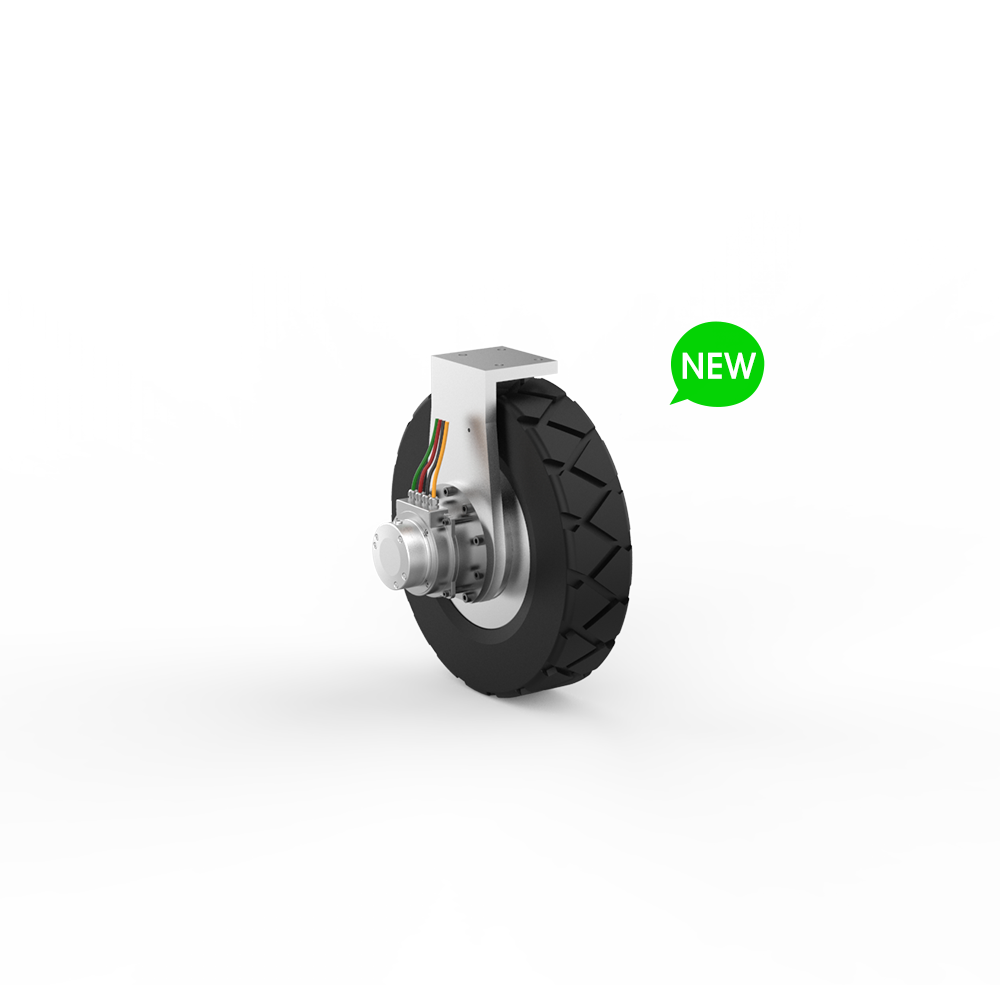
More Compact Design
The integration of the motor and wheel in the design of the motor wheel makes the overall layout of the AGV system more compact. In the case of a traditional transmission system, the need is usually to locate the motor inside the vehicle body and connect it with the drive wheel via drive shafts, gearboxes, or belts that demand considerable installation space. Motor wheels integrate the motor directly inside the wheel to save space, making the structure of the AGV more compact and flexible. Statistics show that AGVs using motor wheels experience a 15%-20% reduction in structural height compared to other transmission designs. Therefore, motor wheel-driven AGVs are allowed to work effectively even in enclosed spaces.
The compactness of the design in the motor wheel contributes much when it comes to narrow space and hallways. AGVs are applied to automated warehouses and workshops in factories where there are narrow aisles and very limited operating space. Traditional structures of AGVs have bigger height and volume because they need space for many transmission components, which makes them unable to turn and bypass obstacles easily. By compacting the design of motor wheels, the overall size of the vehicle can be reduced effectively, and the maneuverability and accessibility in narrow spaces for an AGV can be increased, thus making it applicable for efficient operation within a complicated environment.

The simplified design of motor wheels helps to reduce the overall weight of AGVs. Field test data show that motor wheels positively affect the endurance and energy efficiency of AGVs, at around a 10-15% reduction in total weight. More concretely, reduced weight contributes to lowering dynamic power consumption when AGVs have to start, stop, and manipulate heavy loads quite frequently, further extending battery life. This design enables the motor wheel AGVs to work effectively with reduced consumption of energy, hence meeting current industrial demands for efficiency and energy-saving solutions.
High-Precision Control
The high-precision control capability of the motor wheels makes them boast unparalleled advantages in the field of AGV applications, especially in those scenarios that require highly precise positioning and complicated path planning. Motor wheels integrate high-precision servo motors to realize precise speed and position control under dynamic conditions. Most motor wheels’ servo systems would involve feedback sensors and closed-loop control circuits to monitor, in real time, motor speed, torque, and position information, correcting at every turn the drive current to maintain precise control. Equipped with this level of precision control, motor wheels enable the AGV system to accomplish a positioning error in the range of ±0.1 millimeters, while for traditional mechanical transmission systems, the usual error margin is ±0.5 millimeters or more.
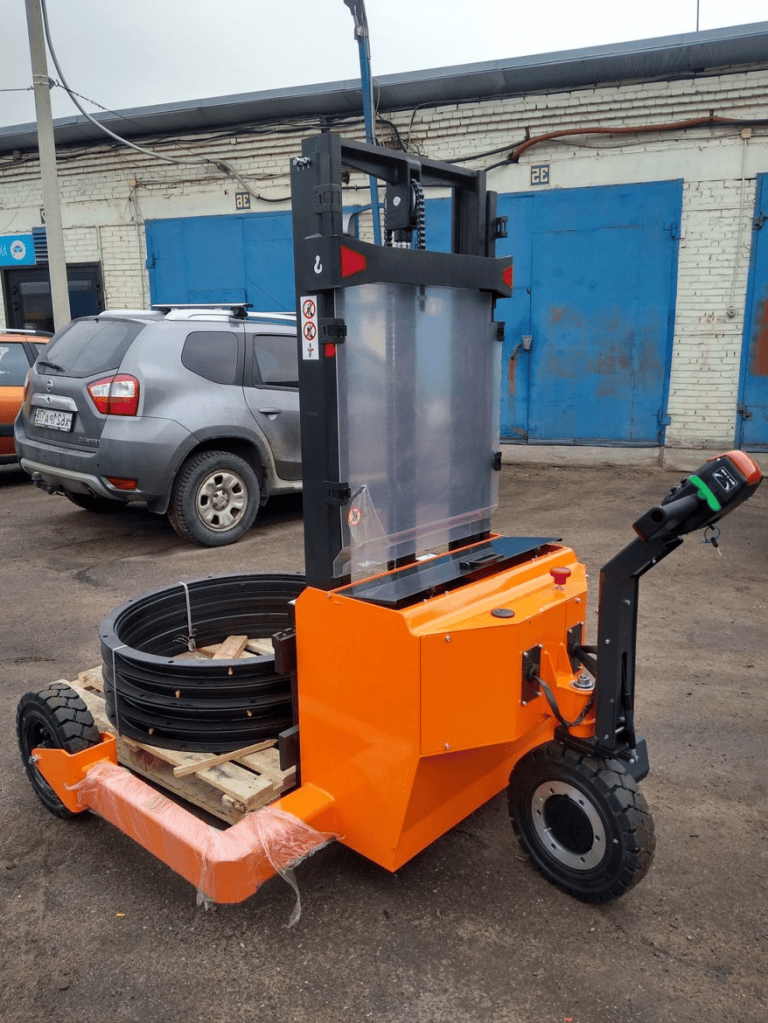
High precision control is not only related to the accuracy in positioning. It is equally essential for its speed and acceleration. The AGVs need to accelerate from rest, make sharp turns, avoid obstructions, decelerate, and stop smoothly within warehouses and factories. Traditional mechanical drive systems would always show some lag in response during such actions. On the contrary, with real-time accuracy, the motor wheels can respond quickly to commands. The motor wheels can precisely control the inner and outer wheel speed ratio in 90-degree corners or narrow paths, thus accomplishing smooth turnings that not only ensure safety for the load but also raise the level of operational stability and efficiency for AGVs. According to data, motor wheels can complete speed or direction adjustments within 0.1 seconds, which is hard for the previous system to achieve.
Another very important positive side of such high-precision control of motor wheels is dynamic adjustment. Under the high load conditions of operation, the motor wheels can operate in real-time adjustments of motor torque through the feedback function of the servo system so that it keeps the power output stably. For tasks that need high-precision load handling, like transportation of precision parts, stable control ability by motor wheels will make it possible for AGVs to finish a task with high precision and stability in complex path planning and dynamic environment, therefore greatly improving the success rate of tasks and operational safety.
Reduced Maintenance Costs
Therefore, the motor wheel structure significantly reduces maintenance costs for an AGV. In traditional mechanical transmission, gears, belts, couplings, and many other parts need to be replaced or serviced continuously due to friction, aging, and wear. Statistics can be shown that traditional transmission systems have an annual maintenance cost of about 3000 yuan, while for the AGVs made with motor wheels, this amount can be reduced to about 1500 yuan, saving almost half of the costs.

Motor wheels are designed with fewer wear-prone parts, further reducing the failure rate. Besides, the sealed design of motor wheels can protect internal structures from dust, moisture, and other external factors. Therefore, motor wheel AGVs are especially suitable for industrial environments with high dust or humidity. The sealed structure of motor wheels in dusty foundries can prevent dust from entering the motor and thus protect the driving system. Typical protection for motor wheels is at IP54 or above, which contributes to stability and robustness within the system, thereby elongating the life of your equipment.
The service life of motor wheels is longer. Usually, the motor wheels serve for 3 to 5 years on average, but other transmission systems need major component replacements or maintenance every 2 to 3 years. Because of the longer service life, replacement frequency will be reduced. This design makes AGVs more suitable for industrial applications that require long-term, uninterruptable processing. In this way, operational losses caused by equipment failure or maintenance downtime can be effectively reduced, while the value and operational benefits in the whole lifecycle of an AGV can be increased.
Enhanced Endurance
Efficiency benefits of motor wheels greatly increase the endurance of AGVs. In practice, AGVs usually use lithium batteries, and the capacity of batteries is directly related to the endurance of equipment. Because of this, the motor wheel structure decreases the friction and mechanical losses compared to the traditional transmission system, and it loses less energy when power is transmitted, using the energy from the battery more effectively. In the application data, it can be seen that AGVs using motor wheels enjoy 20% to 30% more endurance compared to those using traditional transmission systems, which in essence means that motor wheels can reduce the frequency of charging and greatly improve the efficiency of work.

Another aspect of the high-efficiency advantage of motor wheels is temperature control. Due to the difficulty in heat dissipation, traditional transmission systems are prone to overheating under high-load working conditions for a long period, which may lead to damage to the battery and affect the stability of the AGV. The reduction in friction and mechanical losses within the chain of transmission, the fundamental idea of the design of a motor wheel basically reduces temperature issues with respect to the rise in temperatures, pushing motor wheel systems to fall within reasonable temperature ranges that exclude device failure or reduction in performance based on high temperatures. Therefore, especially in continuous application scenarios, the AGVs run well with motor wheels where thermal stability is considered excellent since the risk of overheating downtimes is reduced and brings about an extension of time as far as uptimes by AGVs are concerned.
In modern warehousing and logistics centers, it is the motor wheels that drive the AGVs and minimize the downtime caused by recharging. In this regard, this design is quite valuable in high-efficiency production environments, especially in those 24/7 operating factories, because the endurance of the motor wheel-designed AGVs is much higher, thus leading to significantly increased operational efficiency.
Flexible Steering Capabilities
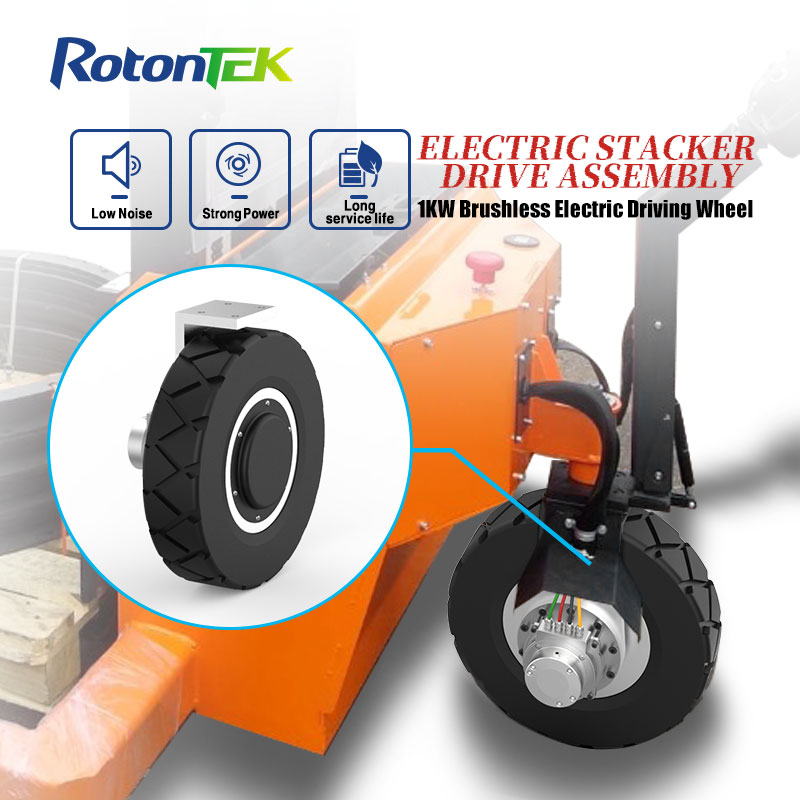
Motor wheels have superior steering flexibility compared to traditional drive methods. Most traditional drive methods rely on the steering axles or differential gears for steering, often requiring large-radius turning. However, motor wheels can independently control the speed of the left and right wheels, therefore allowing “zero-radius turning” (Zero Radius Turning), or 360-degree rotation in place. It is a very effective design for operations in narrow and crowded spaces, providing much power for AGV path planning and maneuverability.
With more turns in complex environments, wheel speed differentials made by the motor wheels can achieve very precise steering and agile movement. Research has shown that the minimum turning radius of the motor wheels is only 1-2 times of the wheel radius, while traditional drive methods require a minimum turning radius typically 3-5 times of the length of the vehicle. Meanwhile, the small-radius steering design minimizes not only the AGV turning time but also collision risks in narrow aisles, something extremely useful in complex terrains or space-constrained environments, such as densely shelved warehouses or narrow workshop aisles.
Motor wheels also ensure great stability during turns: their precision speed control system completely prevents any load wobbling or tilting. Traditional drive methods can only provide coarser speed control, which can easily result in load instability or even tumbling during high-speed turns. While motor wheels ensure fine speed adjustment during the turning process for assurance of cargo safety and integrity. More importantly, because of the high demand for automated warehousing, the motor-wheel-driven AGV will be very flexible and maintain stability on a high-speed trajectory in order to ensure effective and safe transportation of cargoes.


