
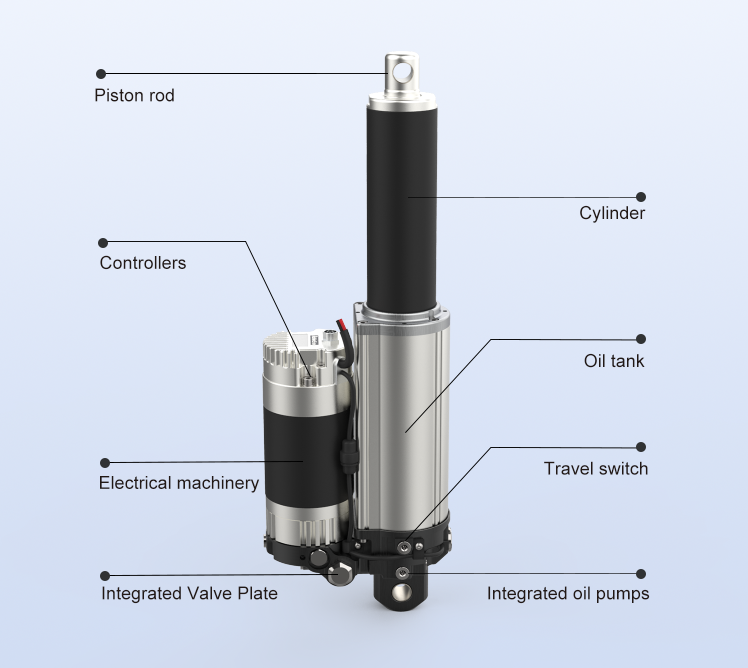
Understanding the core components of a hydraulic power unit is essential for selecting the right system for your application. As a supplier, we know that this knowledge helps you specify requirements accurately and communicate effectively with manufacturers. It ensures you get a unit that delivers the necessary performance and reliability for your specific operational demands. This foundational understanding is key to a successful partnership and a well-functioning hydraulic system.
Hydraulic Fluid Reservoir
The hydraulic fluid reservoir serves as the central storage tank for the system’s hydraulic fluid. Its primary functions are to hold a sufficient volume of fluid to accommodate the operational cycle, allow for air and contaminants to separate from the fluid, and aid in dissipating heat generated during system operation. Reservoirs are typically constructed from steel or aluminum and include essential features such as a breather cap to maintain atmospheric pressure, a sight glass or dipstick for fluid level monitoring, and baffle plates internally to slow fluid return and promote de-aeration. Proper reservoir sizing and maintenance are critical for the longevity and efficiency of the entire industrial hydraulic power unit, as it directly impacts fluid cleanliness and temperature control, which are vital for preventing component wear and failure.
Hydraulic Pump Assembly
The hydraulic pump assembly is the heart of the system, responsible for converting mechanical energy into hydraulic energy by moving fluid from the reservoir into the system under pressure. It is typically driven by an electric motor, internal combustion engine, or other power source. Common pump types include gear, vane, and piston pumps, each offering different performance characteristics in terms of pressure capability, flow rate, efficiency, and noise level. The selection of the pump is fundamental to the performance of an electric hydraulic power unit, as it determines the available flow and pressure that will be supplied to the actuators, directly influencing the force and speed of the machinery it operates.
System Control Valves
System control valves are the components that direct and regulate the flow and pressure of the hydraulic fluid to the actuators, such as cylinders or motors. They provide precise command over the system’s operation, including the direction of actuator movement, the force applied, and the speed of operation. The main types of valves are directional control valves, which determine the path of fluid flow; pressure control valves, which limit system pressure for safety and control; and flow control valves, which manage actuator speed by regulating flow rate. These valves can be operated manually, electrically, or hydraulically, and their integration and configuration are critical for achieving the desired machine function and operational safety.
Conclusion
Ultimately, a hydraulic power unit is a sophisticated assembly of interdependent components—the prime mover, pump, reservoir, valves, and filters—each playing a vital role in generating controlled force. The value lies in selecting a unit whose design and construction are precisely aligned with your operational requirements for durability and efficiency. By understanding these core principles, you can make a more informed decision, whether your project demands a standard configuration or a highly specialized system. For those seeking reliable solutions built with this level of consideration, exploring the engineered options from Rotontek can be a practical step forward.