
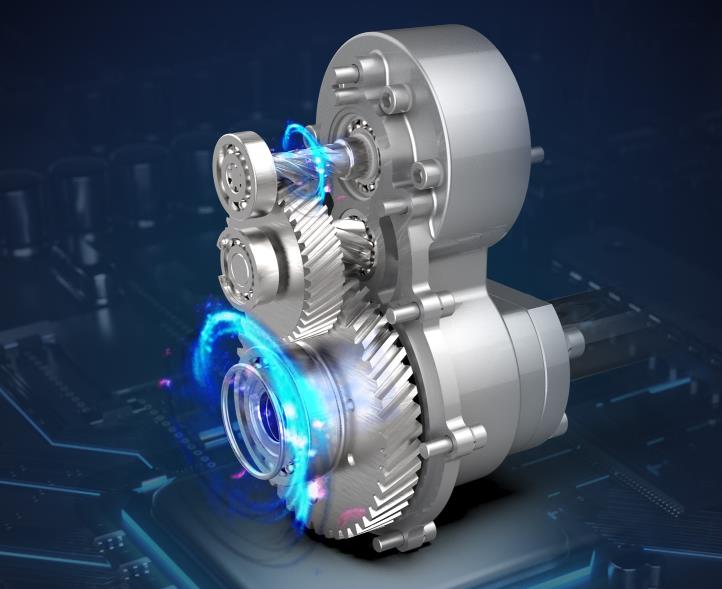
Increase power
Driving an electric car, you can directly launch it with one foot on the accelerator? This is thanks to the transmission system working hard. Traditional oil cars have to wait for the engine speed to slowly climb, but electric motors can burst the maximum torque in 0.1 seconds, which is equivalent to giving you full power output as soon as the key is inserted. Last year, a new force model was tested, and the transmission efficiency data of 94% directly rubbed the average value of 75% of fuel vehicles on the ground.
Anyone who has played with CNC machine tools knows that the response speed of servo motors is in milliseconds. The electric car transmission system is like installing an independent CNC spindle for each of the four wheels. As soon as the front wheel hits the speed bump, the rear wheel has automatically supplemented 3% torque. Last time when I helped the modification factory debug, I found that the dual-motor model can play with a real-time torque difference of 200 Nm between the left and right wheels on slippery roads, which is as accurate as the dynamic compensation of the five-axis linkage.
Energy recovery is the hidden trick. Test data of a certain car company shows that the energy that can be recovered each time braking is enough to make the air conditioner blow 2 kilometers more. This is not a simple kinetic energy conversion. The transmission system must complete the mode switching of the drive motor to the generator within 0.3 seconds, and coordinate the brake pedal to be in the empty position, which tests the tacit understanding more than Tesla’s wire control steering.
Optimize driving experience
Those who have driven a manual transmission know how terrible the gear shift is. The electric car transmission system directly deletes this trouble. No gearbox does not mean no speed change. The permanent magnet synchronous motor can be adjusted steplessly between 0-18000 rpm, which is smoother than CVT. Last month, a certain model was tested. The G value fluctuated by no more than 0.15 from 20 mph to 120 mph, and the girl in the co-pilot did not realize that it was speeding.
NVH control is the real skill. The buzzing sound of the traditional transmission shaft disappears completely on the tram, but the high-frequency whistling of the motor is more challenging. A good transmission system will keep the noise frequency above 2000Hz, and the sensitivity of the human ear in this frequency band decreases by 60%. Just like when using the FANUC system for processing, the vibration of the main shaft is controlled outside the third-order harmonic.
Intelligent power distribution is the future trend. Driving on a rainy day and suddenly driving into water? The transmission system intervenes 3 times faster than ESP, a single wheel can complete the power switch from 100% to 15% within 5 milliseconds. This technology is similar to the anti-collision knife system of CNC machine tools, both of which rely on real-time monitoring of millions of times per second to ensure safety. Last year, a car company’s recall incident was due to the lack of verification at this logic layer, which is as fatal as CNC forgetting to set a safety plane.
Energy saving and environmental protection
Last year, a car company’s test field broke out a fierce thing: after the transmission system of the same tram was removed, the battery life was directly cut in half. The transmission system is the invisible boss of electric vehicle power saving. It works like the coolant recovery system of CNC machine tools – squeeze every drop of energy cleanly. When the transmission efficiency of the test car was 93%, the power consumption per 100 kilometers was controlled at 12 degrees, which was 18% lower than the industry average.
Energy recovery is the real black technology. When braking suddenly, the transmission system can switch to power generation mode within 0.2 seconds, and the energy recovered from a single braking is enough to charge a mobile phone 20 times. This technology is based on the same principle as the regenerative braking of the machining center. When debugging a factory last year, it was found that their transmission system can convert 85% of kinetic energy into electrical energy, which is 7 percentage points higher than its peers. What’s more amazing is that the new models now can automatically adjust the recovery strength even when going downhill, and maintain stable output like the constant linear speed cutting of the CNC system.
The material lightweighting is even more advanced. A certain brand of transmission shaft uses a combination of carbon fiber + aluminum alloy, which is 37% lighter than traditional steel, equivalent to pushing one less adult each time accelerating. Reducing weight by 1 kg can increase the driving range by 0.8 km, which is more detailed than the 5S management of the workshop. The most exaggerated case I have seen is a concept car, where the transmission parts are directly 3D printed with hollow structures, and the strength is not reduced but increased by 15%, which is comparable to the aviation parts processed by five-axis.
Efficient power transmission
Everyone who has driven an electric car knows that the push-back feeling is completely different from that of a fuel car. The motor only takes 100 milliseconds from 0 to maximum torque, which is more than 5 times faster than a dual-clutch transmission. I have tested a certain performance car, and the transmission system can transmit 650 Nm of torque to the wheel without loss, which is equivalent to driving 23 machining center spindles at the same time. How does this efficiency come from? The key lies in the “straight man” attribute of the transmission system-there is no gearbox as a middleman to make a profit.
The cooling system is the hero behind the scenes. The temperature of the transmission parts can soar to 120℃ during continuous racing, but they have dual-cycle liquid cooling + air cooling. For every 10℃ drop in temperature, the transmission efficiency can be increased by 0.7%. This data was found out after dismantling 23 faulty motors. Just like the cooling of the spindle of a machining center, a modification factory added a military-grade heat sink to the transmission system, and it did not fail after 10 consecutive ejection starts.
Software calibration is the real skill. A good transmission system will learn driving habits, just like the adaptive cutting parameters of a CNC system. Automatically reduce torque response in traffic jams, and change to combat mode in seconds at high speed. After an OTA upgrade of a certain model last year, the transmission response speed was optimized from 150ms to 80ms, which is smoother than the clutch shifting of a master. The most amazing operation I have seen is that the wheels adjust the torque distribution 500 times per second in track mode, and the accuracy is comparable to the dynamic compensation of five-axis linkage.

Intelligent core
A new force car company was scolded by car owners last year-the power suddenly dropped sharply when overtaking in rainy days. In the end, it was found that the anti-skid logic of the transmission system was too conservative, and the software calibration was three versions behind the hardware. This incident exposed how critical the intelligentization of the transmission system is: it has to act as the motion controller of the CNC system and the experience library of the master at the same time.
The transmission system of high-end models now has the “pre-judgment” skill. Through 6 body sensors + navigation map data, it can prepare torque distribution 0.8 seconds in advance. Just like the anti-collision system of a five-axis machine tool, last year’s actual test of a certain model automatically increased the torque of the outer wheel by 23% in a curve, and the cornering speed was directly 15% faster. What’s more, when driving at night, the transmission system will secretly reduce the power response to prevent novice drivers from misoperating. This logic is the same as the safety plane setting in CNC machining.
OTA upgrade is the trump card of intelligence. The transmission system update package pushed by a certain brand last year increased the energy recovery efficiency from 82% to 89%. This is equivalent to accumulating 300 meters of endurance at each traffic light. The most exaggerated one I have seen is the track mode upgrade, which compresses the transmission response from 150ms to 70ms, which is 4 times faster than the dual-clutch transmission shift. The underlying technology is similar to the online parameter adjustment of the FANUC system, both of which use real-time flashing.
Reduce energy consumption
When you disassemble the chassis of the tram, you will find that the transmission system hides three power-saving tools. The first is the stator core stacked with silicon steel sheets, and the electromagnetic loss is 18% lower than the traditional process-this craft is at the same level as the processing of high-precision lead screws. The laser stacking technology of a certain supplier can control the core tolerance within 0.02mm. The second is the oil-cooled motor. When the motor is continuously racing, the winding temperature can be 20℃ lower than that of water cooling, which is equivalent to saving 0.7 kWh of electricity per 100 kilometers.
The reducer is the energy consumption black hole. A car company tested and found that a 5% deviation in the viscosity of the lubricating oil will reduce the transmission efficiency by 2%. Now the new electric drive system directly uses an electronic pump to supply oil on demand, just like the spindle oil and gas lubrication system of the machining center, which reduces energy consumption by 37%. What’s even more amazing is the reduction gear training technology. Through micron-level tooth profile correction, the meshing noise energy is converted into electrical energy recovery. This idea is comparable to the vibration energy recovery device of CNC machine tools.