
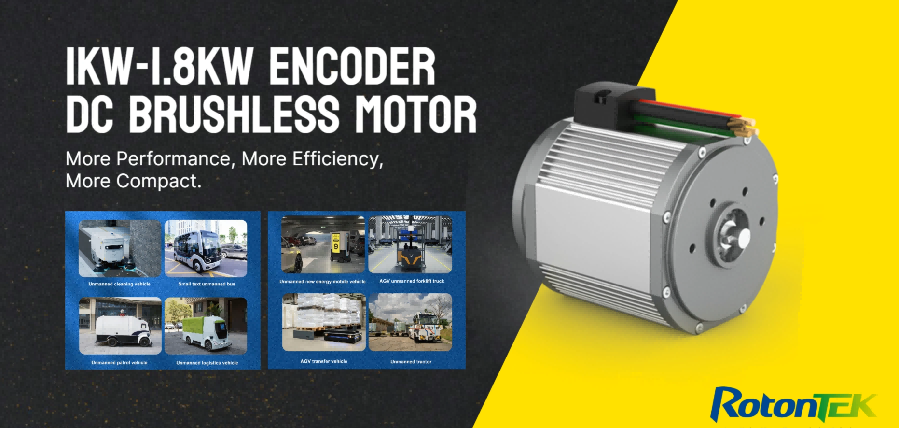
Understanding brushless DC (BLDC) motor technology is fundamental for us as a supplier to provide effective solutions. This knowledge allows us to match the right motor characteristics to your specific application needs, whether for industrial machinery or electric mobility. We can guide you on the benefits of efficiency, longevity, and control that this motor type offers. This ensures you receive a component that integrates seamlessly and performs reliably in your system.
My Internal Motor Design
A brushless DC motor fundamentally reimagines the traditional brushed motor by inverting its architecture. In a BLDC motor, the permanent magnets are located on the rotor, which is the part that spins. The wire windings, which generate magnetic fields, are situated on the stationary stator surrounding the rotor. This design eliminates the need for physical brushes and a commutator to transfer current to the spinning part. Instead, the motor relies on external electronic control to sequentially energize the stator windings, which pulls the magnetized rotor along. This inversion is key to the motor’s advantages, including reduced friction, lower maintenance, and the ability to dissipate heat more effectively from the stator. The absence of brush sparking also allows for operation in volatile environments. This robust internal design is a hallmark of a modern dc brushless motor, providing a reliable foundation for various demanding applications.
My Electronic Commutation System
The electronic commutation system is the intelligent brain that replaces the mechanical brush and commutator assembly. It consists of a controller and sensor or sensorless feedback system that precisely determines the rotor’s position. This information is used to electronically switch the current flowing through the stator windings in the correct sequence. By continuously energizing the windings just ahead of the rotor’s permanent magnets, the system creates a magnetic drag that results in smooth and continuous rotation. This precise control allows for exceptional speed regulation, high torque at low speeds, and efficient operation across a wide performance range. The sophistication of this system enables advanced features like programmable acceleration and deceleration profiles. This electronic control is a core component of an interior permanent magnet synchronous motor, ensuring optimal performance and responsiveness for complex drive tasks.
My Rotating Magnetic Fields
The principle of operation for a brushless DC motor hinges on the creation of a rotating magnetic field within the stator. The electronic controller delivers power to the stator windings in a specific, cyclical pattern. This sequential energization of the windings generates a magnetic field that effectively rotates around the stationary stator. The permanent magnets on the rotor are then attracted to this moving magnetic field, causing the rotor to turn in sync with it. The speed of the motor is directly controlled by the frequency at which the windings are switched, determining how fast the magnetic field rotates. The torque produced is related to the strength of the magnetic interaction between the rotor’s magnets and the stator’s field. This method of using a electronically generated rotating field to pull the rotor is what allows for such precise and efficient motion control without any physical contact.
Conclusion
Ultimately, a brushless DC motor represents a smarter, more durable approach to electrification, delivering the performance and reliability that modern applications demand. Its principles of electronic commutation and efficient magnetic design translate directly into lower lifetime costs and greater control. We are committed to refining this technology to solve real-world challenges in diverse sectors. To explore how our specific implementations can benefit your project or product, we invite you to learn more about our portfolio at Rotontek.