
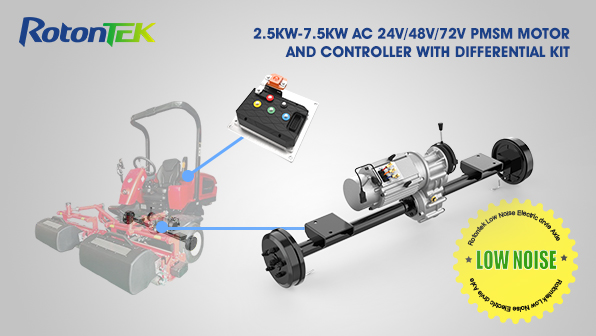
Understanding the transaxle is crucial for anyone involved with garden tractors, whether for maintenance, repair, or selection. As a supplier, we know that a clear, factual explanation of its function helps you make informed decisions about your equipment. This article breaks down the core components and operation of a garden tractor transaxle. Our aim is to provide you with the foundational knowledge needed to understand this vital drivetrain system.
Transaxle Power Transfer
A transaxle’s primary role in a garden tractor is to manage power transfer from the engine to the drive wheels. It combines the functions of a transmission, a differential, and an axle into a single, compact housing. The transmission component allows the operator to select different gear ratios, changing the tractor’s speed and torque. The integrated differential then enables the wheels to rotate at different speeds, which is essential for smooth turning. This consolidated design is efficient for the limited space available on a garden tractor chassis. For a durable and reliable unit, the design and quality of internal gears are paramount. Understanding this power flow is the first step in appreciating the complexity of a garden tractor transaxle and its critical role in the machine’s operation and maneuverability.
Transaxle Gear Reduction
Gear reduction is a fundamental mechanical process handled within the transaxle. An engine typically operates at high rotational speeds (RPMs) but produces relatively low torque, which is not ideal for moving a heavy tractor. The transaxle uses a set of precisely machined gears to significantly reduce this output speed while simultaneously multiplying the torque. This transformed power provides the necessary force to turn the wheels, pull heavy loads, and climb inclines without stalling the engine. The gear ratios can be changed by the operator to match the task, from low gears for high-torque jobs to high gears for transport. This principle is universal, whether the power source is a combustion engine or an electric motor in an electric transaxle, ensuring the machine has the power it needs to perform its intended work effectively and efficiently.
Transaxle Axle Connection
The final key function of a transaxle is its direct connection to the axles that drive the wheels. Unlike separate systems where a transmission sends power to a remote differential via a driveshaft, a transaxle has the differential built-in. Output shafts from this differential extend directly out of the transaxle casing to become, or connect directly to, the tractor’s axles. This direct connection minimizes power loss and mechanical complexity, making the entire drivetrain more robust and compact. The axle connection is also what allows the transaxle to manage the differential action, letting one wheel turn faster than the other during a turn. This integrated design is a key reason why transaxles are the preferred solution for many small to medium-sized vehicles, providing a reliable and direct link between the engine’s power and the tractor’s movement.
Conclusion
In summary, the transaxle is a fundamental component that dictates the durability, efficiency, and capability of your garden tractor. From traditional mechanical units to advanced integrated electric systems, its design directly impacts your machine’s performance. Choosing a well-engineered transaxle means investing in the long-term productivity and reliability of your equipment. For those seeking robust drivetrain solutions backed by specialized engineering, we invite you to explore the options available through Rotontek.