

Electric hydraulic actuators are compact devices that integrate a hydraulic unit, cylinder, control circuit, and limit switch, achieving high-precision, high-load mechanical motion control through electric drive and hydraulic transmission. They are widely used in industrial automation, construction machinery, and medical equipment.
Structure
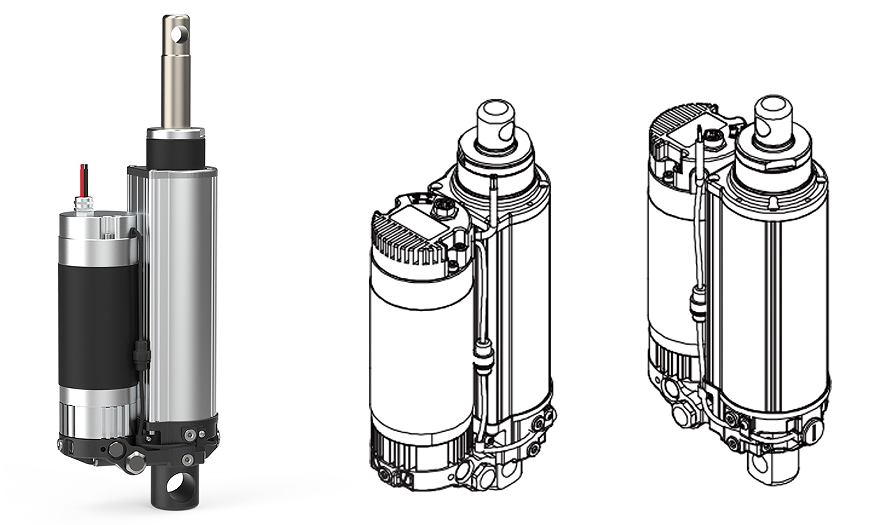
The electric hydraulic actuator produced by Rotontek consists of a compact “four-in-one” integrated structure, which integrates the hydraulic unit, cylinder, control circuit, and limit switch all into one unit without any exterior hoses or independent limit switches. This highly integrated design reduces the amount of external connection complexity, dramatically improving reliability and durability while making installation even more convenient.
The hydraulic unit is the power core of the electrohydraulic actuator and includes an efficient hydraulic pump and hydraulic valve block capable of providing precise and controllable hydraulic output. A typical hydraulic pump usually includes a high-efficiency gear pump or axial piston pump, which can provide as high as 700 bar and cater to different high-load conditions. The hydraulic valve group achieves precise control of movement by dynamically adjusting the flow and direction of the hydraulic oil.

The cylinder is the execution part of the system, in which hydraulic energy is transformed into mechanical energy output. The linear or rotary motion of the piston realizes mechanical action. The adoption of high-strength materials and the precision machining of the cylinder ensure its excellent fatigue resistance and durability. The inner wall is treated with precision grinding to effectively reduce friction loss and improve transmission efficiency, extending the service life.
It obtains the external signals, then processes, amplifies and regulates them into the control of operating parameters of the hydraulic unit. The inbuilt intelligent electronic module adopts DDC advanced technology in integration and, together with the real-time feedback of a limit switch, it assures precise control of stroke position. Ensuring such a feedback loop results in the high precision and stability of the system.
The limit switch monitors and limits the actuator’s motion range, preventing overtravel that could damage the equipment. Signals provided by the limit switch allow the control system to adjust motion status in real time, ensuring the safe operation of the actuator.
This “four-in-one” design is particularly appropriate for applications requiring high demands in such areas as industrial automation, marine engineering, and high-precision manufacturing equipment, on the aspects of space, reliability, and long life. Its compact structure design ensures excellent performance of long service life and functional ability while significantly reducing the system maintenance complexity and frequency.
Working Principle
The working principle of the electro-hydraulic actuator is that it uses the hydraulic transmission energy conversion process to create mechanical motion through the coordinated operation of an electric motor, hydraulic pump, and hydraulic cylinder. The whole process starts when command signals are received by the electronic control unit, which then drives the motor. The motor drives the hydraulic pump, which pressurizes and delivers hydraulic oil to the hydraulic cylinder. The pressure in the fluid pushes against the piston inside the hydraulic cylinder to realize linear or rotary motion in a given track.
A high-precision implementation of the actuator calls for a closed-loop control system that will continuously provide information about the actual condition of the hydraulic cylinder with pressure and displacement sensors, sending a feedback signal to the unit that does the control. Based on this information, the control unit will change the motor speed and hydraulic oil flow to guarantee the precision matching of force output and motion position. The high-performance electro-hydraulic actuator is able to control the motion error within a micron range to satisfy the precision control requirement in complicated conditions.
Modern electro-hydraulic actuators usually employ technologies such as proportional control valves and pressure compensation, which can optimize hydraulic system distribution flow and pressure with a great variety of loads in operation; hence, they try to help the actuator cope with high-load or high-dynamics operations without serious performance changes while minimizing energy dissipation.
Function
The main function of the electro-hydraulic actuator is to convert electrical energy into mechanical energy. By efficiently outputting force and precisely controlling the motion through the hydraulic system, its functionalities can cover a wide range of applications, meeting operational requirements under complex environments and high-load conditions.
Electro-hydraulic actuators can provide powerful force output, suitable for situations that require high torque and heavy loads. The electrohydraulic actuators used in industrial machinery can drive hundreds of tons of load and provide stable force output. This makes them find very broad applications in construction machinery and logistics equipment.
The motion control of electro-hydraulic actuators has a high degree of precision. By using a closed-loop feedback system and proportional control technology, the actuator is capable of meeting micron-level accuracy, meeting the requirements of precision machining and automated production lines. It can perform stably in linear or rotary motions according to a pre-set trajectory.
Electrohydraulic actuators possess dynamic response features: they can rapidly alter their output force and motion position. With automated real-time adjustment needs, such as in automated sorting or dynamic suspension systems, the actuator can perform adjustments in milliseconds to ensure a fast and certain response.
The versatility of electro-hydraulic actuators is also reflected in their adaptability to complex conditions: extreme temperature, high humidity, and high vibration; all these situations are able to keep the actuator in a normal working status. This functionality makes them indispensable in aerospace, marine engineering, and industrial automation.

Applications
The application fields of electro-hydraulic actuators span many industries, and their high efficiency with precise control characteristics make them a core component in sectors such as cleaning equipment, agricultural machinery, multi-functional vehicles, and medical devices.
In cleaning equipment, electro-hydraulic actuators find wide applications in sweepers and high-pressure cleaners. These devices require actuators to provide precise angle and pressure control for efficient and comprehensive cleaning operations. In an automated sweeper, the height and angle of the brush head are changed with the help of an electrohydraulic actuator to adapt efficiently to various types of terrain.
The main applications of electro-hydraulic actuators in agricultural machinery are combined harvesters and sowing equipment. These machines require actuators to run fast and precisely in a complicated farmland environment. On a modern combine harvester, the height and angle of the header are regulated by an electro-hydraulic actuator to meet the harvesting needs of different crops and reduce crop loss to improve efficiency.
In multi-functional vehicles, such as lift platform trucks and snowplows, electro-hydraulic actuators are used. A lift platform truck uses the actuator to flexibly adjust the height to adapt to different situations in construction or maintenance. In snowplows, it controls the angle and position of the snow blade during operation, ensuring efficiency.
The medical equipment field also needs the support of an electro-hydraulic actuator. It is used in adjusting the height and tilt angle and also for supporting the back for comfort purposes of patients, which offers easy operation for healthcare workers. In a modern medical bed, the smooth, noiseless, and multi-directional adjustments are achieved with the support of the electro-hydraulic actuator, by which load-carrying capacity is much improved, along with great accuracy.
Electro-hydraulic actuators can be applied to the lifting and tilting control of forks in forklifts and other logistics equipment. With the precise action of an actuator, a forklift is able to handle and stack rapidly in heavy load conditions, greatly improving storage and logistics efficiency. This kind of technological application is very suitable for high-frequency operations in modern intelligent logistics centers.
Applications
Among the largest features of the electro-hydraulic actuators by Rotontek is their great precision in control. Combining electric signals with hydraulic power provides high-precision motion and position control of mechanical systems. Further, the introduction of a closed-loop feedback control system strictly limits control errors at the micron or millisecond level in various application scenarios. This accuracy is essential in fields such as medical equipment and industrial robotics.
Another important advantage of the electro-hydraulic actuator is the high power density. Compared with traditional actuators, electro-hydraulic actuators can provide powerful output in compact structural design. Even under narrow spaces, such as aircraft, mobile machinery, or lift platforms, the electro-hydraulic actuators are able to provide tens of tons of thrust or torque output. Therefore, it has become an ideal choice for high-load applications.
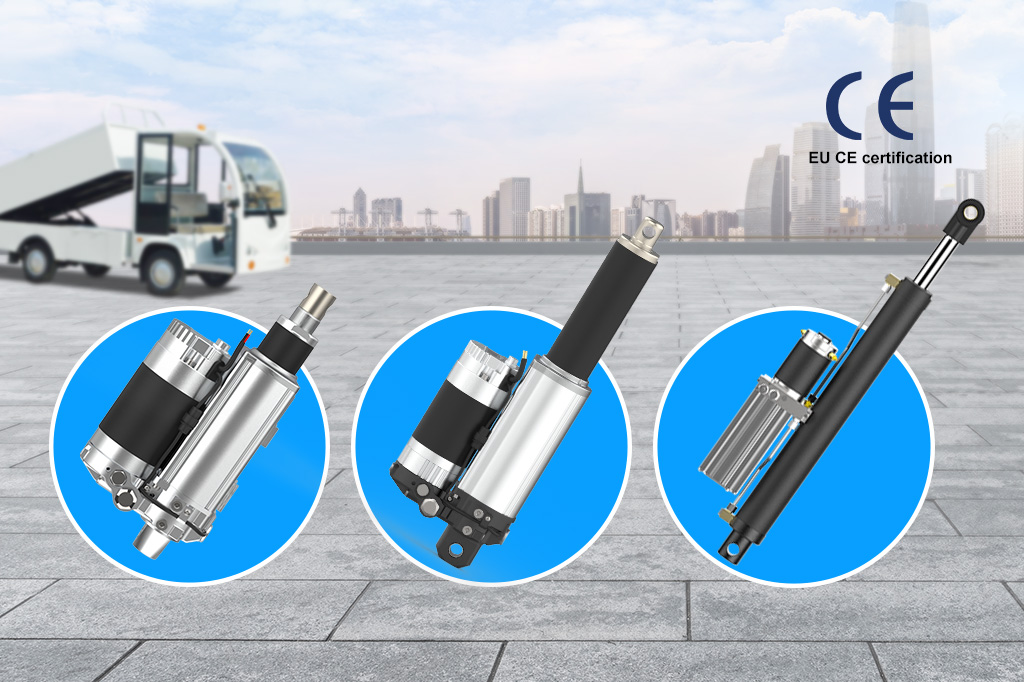
Fast response speed is another important characteristic of electro-hydraulic actuators. By means of proportional control and digital processing of signals, the response of an electro-hydraulic actuator can reach a millisecond level fast. This is really important in applications that need real-time adjustments. For example, in automated production lines, it can quickly adapt to load changes and remain highly efficient; in automotive suspension systems, it can adjust the stiffness in real-time with road conditions, which significantly improves handling performance and ride comfort.
In terms of energy efficiency, the performance of electro-hydraulic actuators is excellent. With advanced pressure compensation and energy recovery technologies, their efficiency ratio can generally be higher than 90%, which is improved by 20%-30% compared with traditional hydraulic systems. Besides, the power output of an electro-hydraulic actuator self-regulates according to the actual load, thus avoiding energy waste and further reducing operating costs.
Electro-hydraulic actuators are also highly valued for their flexibility in the industry. Their modular design makes installation easier and supports various interfaces and control protocols for easy integration into existing systems. This flexibility not only reduces the cost of equipment development and upgrades but also allows greater freedom in engineering design, especially in projects with complex or customized requirements.
Safety is a core competitive advantage of electro-hydraulic actuators in critical applications. With overload protection, hydraulic pressure limiters, and emergency stop integrated, electro-hydraulic actuators can ensure safety for both equipment and personnel under conditions of high load or sudden fault. This highly reliable design makes them widely used in high-risk fields such as aerospace and medical devices, providing strong support for safe operation.


