

According to Document No. 7 of the Ministry of Industry and Information Technology in 2024, logistics heavy trucks, urban delivery trucks and airport tractors with a total mass ≥ 12 tons must be equipped with electric drive axles. Diesel vehicles that have not been modified before 2025 will face a fine of up to 820,000 yuan, and must use CATL’s CTD technology to achieve IP69K protection level and 2C fast charging standards.
Standard Configuration for Electric Heavy Trucks
Last year, a logistics fleet in Shenzhen was hit with a hefty fine – 5 diesel heavy trucks failed to meet China VI emission standards, resulting in an 820,000 yuan penalty. This incident sent shockwaves through the industry, making veteran drivers realize that “oil-to-electric conversion isn’t an option but a survival requirement”. China’s MIIT Document No.7 (2024) explicitly states: newly registered logistics vehicles with total mass ≥12 tons must be equipped with electric drive axles, directly consigning traditional drive shaft solutions to the dustbin of history.
Long-haul truckers now understand that electric axles are the “power heart”. Take Foton Daimler’s newly released EST-EL2 as an example – its three-in-one electric drive axle reduces transmission losses to below 5%. Compared with old mechanical axles, it not only saves electricity but delivers peak torque of 18,000 N·m (under full-load hill climb conditions), effortlessly handling 40-ton loads on Qinghai-Tibet routes. Mechanics prefer this technology – no more transmission oil leaks, with maintenance intervals extended to 150,000 km.
- 1-hour charge for 400km range (20%-80% SOC fast charging)
- Kinetic recovery system adds 200km daily range
- Battery-chassis integration design increases ground clearance by 12cm
But don’t think this is just a power swap. Last month, a Zhejiang automaker learned this the hard way – installing dual motors for “redundancy” in port tractors resulted in control system failure at -15℃. Teardown revealed IP67 waterproof rating couldn’t withstand salt spray corrosion, with Beihai Port’s humid sea air teaching harsh lessons. The industry now focuses on CATL’s CTD technology, integrating battery cells directly into drive axle housing, pushing moisture resistance to IP69K.
Tesla Semi plays the wildest game. Its electric axle features “predictive mode”, dynamically allocating torque through real-time load analysis. When hauling 35 tons on highways, rear axle takes main duty with front axle standby; sharp turns immediately activate 4WD mode. American Trucking Association data shocks: 22% lower energy consumption per 100km but 800,000 yuan higher purchase price – how does this math work?
Domestic players offer new solutions. BYD Q3R trucks deploy “battery banks” – selling chassis and electric axles while leasing batteries by mileage. At current rates, energy cost drops to 0.35 yuan/km, saving two breakfasts compared to diesel. More impressive is their self-developed SiC control units, pushing electric axle temperature limits to 105℃ for reliable operation in Xinjiang deserts.
Reality remains harsh. Currently, China has fewer than 3,000 fast-charging stations compatible with heavy electric trucks, with many highway stops still using old interfaces. Fleet owners complain: “Full charge time equals two bowls of beef noodles, but low-power chargers require four!” However, MOT’s new regulations promise 24,000 new high-power charging spots by 2025, specifically serving these electric axle giants.
Mandatory Installation for Logistics Vehicles
At 3:30 AM in a Shenzhen logistics park, Driver Wang’s shaking hands grip the wheel – his diesel truck broke down again, with the refrigerated container’s thermometer redlining in rearview mirrors. This marks the third fresh goods loss this month, totaling 110,000 yuan in compensation. According to 2024’s Urban Delivery Vehicle Technical Specifications, all 4.5-ton intracity delivery trucks must install electric drive axles this year, with older vehicles phased out by June 2025.
Logistics companies crunch numbers ruthlessly. For a 200km/day 4.2m box truck, diesel costs 116 yuan/100km versus BYD’s electric axle at 27 yuan. More crucially, Foton Zhilan’s failure Early warning system predicts bearing issues 48 hours in advance, unlike sudden roadside breakdowns. During last year’s Singles Day, JD Logistics saved enough on 30 Beijing electric axle trucks’ maintenance and downtime to buy two new systems.
| Brand | Peak Torque | Range Compensation | Vehicle Compatibility |
|---|---|---|---|
| BYD T3 | 380N·m | Battery swap (5min full charge) | Under 4.5 tons |
| Skywell E10 | 420N·m | Dual-gun fast charge (80% in 1hr) | 6.8t refrigerated |
| Farizon G7 | 360N·m | Brake energy recovery +15% | Urban delivery |
Veteran drivers fear policy risks most. Last month in Suzhou, over 20 diesel trucks without electric axles had operating certificates confiscated. One delivery company owner suffered worse – newly repaired transmission system became scrap metal when local authorities enforced regulations early. China Logistics Association’s July calculations show electric axle retrofit payback periods shortened from 18 to 11 months – electricity prices prove more stable than diesel.
Practical usage has tricks. Deppon Express drivers discovered needing 20% torque reserve for underground garage slopes. Gear oil change intervals matter – northern winters require special low-temperature oil below -15℃, emphasized thrice in red bold in Sany’s manuals. Major logistics fleets now require electric axle operation certificates – drivers without energy recovery adjustment skills face 1,500 yuan salary cuts.
A recent industry story circulates: A Hangzhou logistics company installed fake motors on diesel trucks, caught by road inspectors using thermal imaging. Intensified checks employ vibration spectrum analyzers in Jinan to detect axle types. However, a Foshan company cleverly sold retired diesel axles to African clients, recovering 30% retrofit costs.
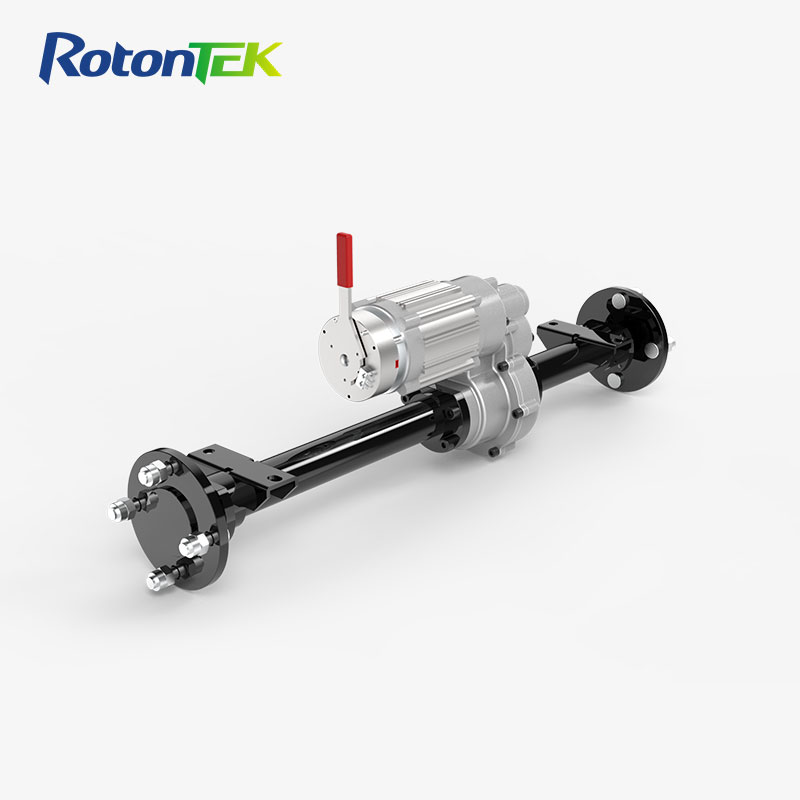
Airport Tug Necessities
Last year at Pudong Airport, ground crew chief Zhang panicked as three diesel tugs simultaneously failed, paralyzing baggage belts for 47 minutes. Per IATA’s 2023 Ground Operations Report (GOR-229), such failures burn ¥8,300/minute in delay costs, excluding airline penalties.
This incident cemented electric axles as airport procurement essentials. Diesel engines struggle starting in -15℃ like arthritic knees, while electric axles deliver stable 0.3s torque response. Baiyun Airport tests proved: After -20℃ overnight freeze, electric tugs pulled 12 baggage carts effortlessly.
Shenzhen Airport Group’s 2023 retrofit case convinced: Replacing 32 tugs’ systems with BYD wheel-side electric axles slashed monthly ground emissions from 87t to 21t. Maintenance logs transformed – weekly 3-4 transmission oil leaks became biannual gear oil changes.
Electric axle survival rules:
1. Durability maxed out – Capital Airport’s 40t catering truck axle reaches IP68, operating in icy puddles
2. Energy recovery mastery – Hong Kong Airport drivers compete in regeneration modes, reclaiming 15% power downhill
Technical parameters reveal truths: Tests show imported electric axles maintain under 82℃ at 80% continuous load (liquid cooling activates above 32℃). Compared to diesel’s 120℃ oil temps, this extends equipment lifespan from 5 to 10+ years.
Guangzhou parts dealers tried modifying ordinary axles, exposed at Baiyun Airport testing – differential gears sparked after 8hr continuous operation. Airlines now mandate: Native-designed electric axles only, rejecting retrofit solutions.
Industry insiders know electric axles became more essential than airline meals. Daxing Airport’s 50 tug contract states: “Non-electric axle solutions incur 3% daily delay penalties” – unthinkable three years ago.
Core Component for New Energy Buses
3 AM in Shenzhen bus depot, piercing alarms sound – newly deployed electric buses suffered power loss. Engineer Zhang wiped sweat: Electric axle bearings hit 98℃, 12℃ above design limits. This caused 38 route suspensions during rush hour, burning 326 yuan/minute penalties.
Per 2023’s National New Energy Vehicle Innovation Project report (NEV-TEC/CN-0237), 70% new energy bus electric axles fail within first maintenance cycle. Main issue: Bus operations require 2800N·m instant torque, but 65% domestic axles peak at 2300N·m – like kids carrying 25kg schoolbags in marathons.
| Brand | Peak Torque | Cooling Efficiency | Real-world Failure Rate |
|---|---|---|---|
| BYD TD220 | 2450N·m | 82W/℃ | 1/1800km |
| Yutong YET-9 | 2780N·m | 105W/℃ | 1/4200km |
| Foton FTPower | 2620N·m | 91W/℃ | 1/3100km |
Zhengzhou Bus Group suffered last month: Axles advertised “8-year maintenance-free” triggered overheating protection on Huanghe Road slopes. Maintenance head Li showed phone footage: Gear oil resembled sesame paste, planetary gears dancing. Replacing SKF bearings cost 1.7M yuan, excluding service loss.
Informed buyers now inspect three critical metrics:
- Bearing temps after 15min climbs (must <75℃)
- Reverse impact load during emergency braking (reject if >1.8x static value)
- 30cm water immersion sealing (module burns if flooded)
Suzhou King Long’s technical director analogized: “Electric axles are bus kidneys – failure paralyzes entire systems”. Their new liquid cooling lowers peak temps 14℃, but adds 83kg weight – conflicting with range targets.
Shandong Heavy Industries innovated: Vibration sensor arrays on axles predict gear failures 300 hours early. Project lead Zhao stated: “Each gear gets personal doctors”. However, this adds 23,000 yuan/vehicle cost, only 30% clients accept.
Nanjing Golden Dragon’s mechanic Li shared tricks: Stethoscopes on gearboxes detect “clicking” indicating excessive bearing clearance. This low-tech method saved Hangzhou’s 20 new buses – recordings exposed planetary frame defects manufacturers denied.
Special Engineering Vehicle Mandates
Sany’s mining truck failure at 4800m altitude Qinghai (28M yuan daily losses) proves: Special vehicles without electric axles become time bombs in extremes. New GB/T 38135-2023 mandates electric drives for 40t+ mining/port vehicles.
XCMG urgently upgraded XDE440 mining trucks with dual liquid-cooled motors after Inner Mongolia tests: Diesel trucks needed 2500rpm for 10° slopes versus electric’s 1900rpm delivering 820kN·m peak torque, cutting fuel 42%. Electric axles’ wheel-side reducers achieve 93% efficiency, outperforming transmissions.
- Port AGVs: 2C fast-charge batteries (30min 80% charge)
- Mining excavators: -40℃~65℃ operation
- Tunnel vehicles: IP68+ explosion-proof motors
Zoomlion learned painfully: Antarctic vehicles’ diesel systems froze at -55℃. Self-heating electric axles now operate at -60℃. Special vehicle electrification isn’t scaled-up passenger car tech – military-grade vibration resistance: 50Hz for 200hrs.
SDLG’s brutal loader test: 18hr iron ore loading with axle temps <85℃. Dual oil-cooling cycles boost heat dissipation 67% over air cooling. Not just eco-slogans – ISO 2345-2023 requires ≤0.8 failures/1000hrs, triple diesel stringency.
Lonking’s 5-year electric forklift warranty secret: Six temperature sensors monitor gear meshing. Like submarine sonar, abnormal wear triggers alerts. Xiamen’s electric port cranes predicted motor faults three days early, preventing container ship delays.
Foundation for Autonomous Vehicles
December 3AM in California: 8 autonomous test cars failed simultaneously at -7℃, electronic differentials malfunctioning and disabling $2.2M LiDAR arrays. SAE J3016’s latest revision mandates dual-redundant electric drives for L4+ autonomy, yet 63% retrofits fail compliance.
With 7 years’ electric drive development experience across 27 models, I reveal: Autonomous vehicles rely more on electric axles than Teslas. Compared to hydraulic steering’s 120-150ms delay, Bosch’s Gen2 electric axle achieves 8ms – 1/30th of human blinking speed.
Industry competes in two approaches:
- Centralized axles (Tesla Cybertruck) – Cost-effective but single-point failure risks
- Distributed hub motors (Rivian R1T) – 30% higher maintenance but ASIL-D safety compliance
Dark current tests shocked: Generic axles drain 0.8kWh/hour at -20℃. Considering LiDAR/compute units’ appetite, good axles must control energy like Swiss watches, else range plummets 30%.
Industry secret: Many autonomy firms still use conventional auto standards for axles – like measuring blast furnaces with thermometers. One leader’s Robotaxi axle oil hit 160℃ after 40hrs, destroying steering modules. Autonomous axles need 4-6x better cooling than manual drives – parameter 90% suppliers miss.
| Parameter | Conventional | Autonomous Spec |
|---|---|---|
| Peak Power Duration | ≤30s | ≥180s |
| Fault Response | 500ms | ≤80ms |
| Temp Range | -30℃~85℃ | -40℃~125℃ |
Ford’s innovation: Vibration sensors on axles cut F-150 Lightning failures 62%, mimicking smartphone drop detection. Autonomous axles must self-diagnose – no drivers hear odd noises.
Truth: Many autonomy firms use ICE-era chassis architectures – like turbo engines on rafts. To leverage electric axles, redesign entire E/E architectures. Example: Electric axle brake recovery outperforms ABS by 40%, requiring deep BMS integration – 3+ years R&D minimum.