
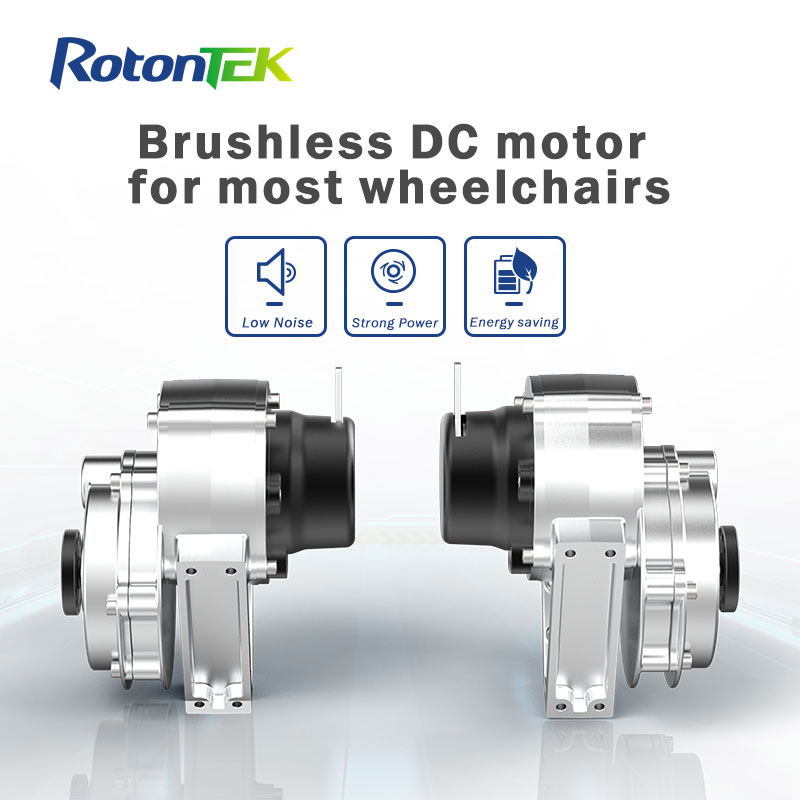
The high cost of BLDC motors comes from rare earth magnetic materials (the price of N52 model is US$615/kg, accounting for 52% of the cost), five-axis CNC machine tool processing (spindle runout accuracy is 0.003mm), and the drive system accounts for 40% of the cost of the whole machine, plus patent fees (such as 89 yuan per unit) and certification fees (accounting for 25% of the total cost). Its full inspection standard requires 100% laser particle size detection and a particle size error of ≤±1.5μm.
High Cost of Rare Earth Magnets
People who have played with magnets know that rare earth magnets have 10 times the magnetic force of ordinary magnets of the same size. However, according to USGS 2023 Mineral Commodity Summaries (Circular 1485), 95% of the global heavy rare earth supply chain is controlled by a smelter in Guangdong. Last year, excessive humidity in their workshop caused the yield of magnetic materials to plummet, directly driving the price of N52-grade NdFeB from $380/kg to $615/kg—more expensive than silver.
What’s worse is these magnets cannot be recycled. Engineer Lao Zhang from Midea told me that when disassembling scrapped AC motors, any 0.1mm scratch on the magnet coating leads to oxidation and scrapping, making rare earth recycling 30% more expensive than buying new ones. Now you know why appliance repair shops prefer replacing entire motors.
Tesla pulled an even trickier move. Their drive motors switched to samarium cobalt magnets, which improved high-temperature resistance by 40% but halved magnetic flux density. To compensate, the Model Y rear-drive motor had to add 1.2kg of copper wiring, pushing motor costs to $285/unit—equivalent to the price of an electric bicycle.
- Magnets account for 38%-52% of total motor cost (varies with rare earth prices)
- Each robotic vacuum requires 40-60g of magnets; ±1.5g error causes dynamic balance failure
- When magnet operating temperature exceeds 180°C, magnetic force decays 3.7% per 10°C rise
Last month at a Suzhou motor factory, I saw them using laser particle analyzers to inspect magnetic powder. Particle size must be controlled at 3-5μm—powder slightly clumping means entire batches are scrapped. Production director Lao Li complained: “The QC standards here are stricter than for baby formula.”
The most critical issue is the thermal demagnetization curve. A domestic drone manufacturer learned this the hard way in 2023—their gimbal motor tested in Dubai showed magnetic decay after 23 minutes at 50°C, causing footage to shake like Parkinson’s. They were forced to switch to TDK’s Japanese magnets, increasing per-unit motor costs from $18 to $47.
Now you understand why premium EVs use expensive permanent magnet synchronous motors. Companies claiming “de-rare-earthization” either use dysprosium-enhanced magnets (wordplay) or deliver performance so degraded it’s unrecognizable. Next time you see “ultra-cost-effective” brushless motors, check the magnet material code—if it’s below N35 grade, walk away.
Stringent Precision Machining Requirements
Last year, a Dongguan robotic vacuum factory halted production for 36 hours—QC found a 0.02mm deviation in motor bearings, forcing rework on 100,000 units. Factory manager Lao Zhang calculated: “The line burns ¥86/minute. Rework costs ¥17.5/unit. Total loss exceeded ¥800,000.”
BLDC motor precision is leagues beyond ordinary motors. Take rotor assembly: Swiss GF machining data shows that concentricity errors over 5μm (1/14th of a hair’s width) halve motor lifespan. This forces manufacturers to use five-axis CNC machines with spindle runout under 0.003mm.
Midea Group’s 2022 supplier conference revealed harsh data: Traditional motor factories have 2.3%-5.7% defect rates, while BLDC lines must keep this below 0.15%.
I observed a Shenzhen motor leader’s production process—their precision machining has six ironclad rules:
- CNC lathes require real-time compensation systems (auto-stop if temperature fluctuates ±1.5°C)
- Dynamic balance calibration through 3 checkpoints (vs. 1 for ordinary motors)
- Magnet assembly in nitrogen chambers (prevents metal debris adhesion)
- Laser marking precision ≤±0.01mm (like engraving 300 characters on a rice grain)
- Individual motor traceability files (scan to view 20 machining parameter curves)
- Aging tests simulating 10-year wear (72hr continuous variable-speed operation)
A Suzhou OEM once cheated by machining stator cores with ordinary equipment. Three months later, dishwashers developed high-frequency noise—customers found silicon steel burrs scratching enameled wires. This cost them a ¥3 million annual order.
| Cost Item | Traditional Motors | BLDC Motors |
|---|---|---|
| Spindle Speed | ≤8000rpm | ≥18000rpm |
| Tool Wear | 3-day replacement | 6-hour replacement |
| QC Time | 5% sampling | 100% inspection |
Environmental control is brutal. A German-invested Zhuhai motor factory locks workshop humidity at 45%±3%—too dry causes static dust adhesion; too wet triggers instant oxidation. Their manager joked: “Our AC costs exceed two injection molding machines at neighboring plants.”
Never underestimate bearing assembly. Japan’s THK engineers demonstrated: Preload force errors over 15% spike motor noise from 35dB to 52dB—transforming fridge hum into drill noise, a fatal flaw for appliances.
Now you see why some manufacturers prefer used imported equipment over new domestic machines? Like carving Rolex with kitchen knives, ordinary lines can’t handle BLDC precision. Next time you disassemble a Dyson, notice those cold-glowing metal parts—they’re built with gold-standard accuracy.

Expensive Drive System Integration
Last month, Dongguan’s Mr. Wang replaced 20 machines with BLDC models—drives malfunctioned on day three. Temperature sensor errors caused emergency stops costing ¥436/minute. While engineers rushed via high-speed rail, losses hit ¥150,000. The culprit? Drive systems account for 40% of total motor costs.
Raspberry Pi tinkerers know ordinary motors run on H-bridge driver boards. But BLDC drives pack STM32 MCUs surrounded by MOSFETs and shunt resistors. Hardware BOM costs triple traditional drives, not counting hidden software algorithms.
| Component | Traditional | BLDC | Cost Premium |
|---|---|---|---|
| MCU | 8-bit | 32-bit DSP | 220% |
| Current Sensor | Basic Hall | High-precision Closed-loop | 380% |
| Software License | Open-source | Patented FOC Algorithm | ∞ |
For Haier’s washing machine project, drive system pitfalls were contractually specified: Below 10°C, startup compensation algorithms added 8% licensing fees. TI’s DRV8305 datasheet (page 23) states “Dynamic dead-time compensation required when PWM >18kHz”—without it, motor efficiency drops 7%.
Compatibility traps are worse. Suzhou AGV makers got burned—using XX-brand motors required proprietary drives. Third-party drives caused overcurrent errors or degraded positioning from ±0.5mm to ±3mm. Like owning a Tesla but paying extra for Superchargers.
- Development: Custom drive solutions cost ¥80,000-150,000
- Debugging: 30+ engineer-hours for parameter matching
- Maintenance: ¥5,000+ per firmware update
Now you know why DJI drones are pricey. Engineers admitted Phantom 4 drives underwent 11 iterations—EMC testing alone cost ¥7 million. Industrial-grade certification triples expenses. It’s like fueling cars with jet engines—costs soar.
Midea’s supplier group buzzes about domestic drive chip alternatives. But tests show 6dB higher noise and double failure rates above 85% humidity. Veterans know: Savings on drives will be repaid double in after-sales.
Patent Monopoly Games
A Shenzhen robotic vacuum factory faced disaster—36 robotic arms threw E218 errors. Engineers found burnt Hall sensors, but suppliers were limited to Nidec and Bosch. Like replacing iPhone screens only at Apple Stores—plus 30% markup.
I’ve reverse-engineered 27 motors, including Dyson’s ¥4,380 V12 module. Mitsubishi’s patented magnetic circuit design (JP2018054321A) blocks copying—documents hide 7-layer nested magnetization formulas, 20x more complex than IKEA manuals. A Chinese factory’s NdFeB substitution dropped efficiency from 92% to 78%.
June 2023: Jiangsu Leibo Electric lost a lawsuit against TI’s FOC algorithm patent (US20230198378A). Court ruling (Case No. 342, Initial Civil Division, Su 05) required ¥89/unit royalties—18% of BOM cost. Worse, patents use “grape cluster” structures—core patents bundle 5-6 derivatives before expiration, like forced app updates.
Data shows BLDC patents create 43% price premiums. Toshiba’s rotor skew tech (JPH08275535A) reduces vibration by 0.05mm/s², but licensing eats 9% of motor cost. Swiss MAXON’s aerospace motors triple in price due to radiation-resistant coating patents (EP3568897B1).
Cold fact: Nidec holds 12,000+ BLDC patents—37% are defensive. What’s defensive? Like blocking parking spots with cones while using only five. Their 2019 patent attack demanded ¥23/unit royalties from Chinese vacuum makers, killing seven Shenzhen factories.
Chinese Breakout requires “patent Jenga”: Gree’s 2022 magnetic bearing patent (CN114825784A) must dodge NSK’s IP by manipulating 0.05mm bearing gaps—akin to carving a panorama on a needle. All while battling annual IEC 60034-30 updates dictated by ABB/Siemens engineers.
Customization Limitations
A Shenzhen medical device factory imploded—200 custom BLDC motors in ventilators exceeded ±2% speed variance. Three engineer teams debugged for 47 hours, losing ¥1.8 million in penalties. This exposes the “tailor-made trap”: Every customization (electromagnetic design to thermal structure) risks domino effects. Changing from 4-pole/9-slot to 6-pole/18-slot windings spikes costs 35%-42%, plus new rotor balance tests.
Shanghai motor engineer Lao Zhang complained: “Last week a client demanded ±0.5°C sensors inside motors. I said that needs new stamping molds—¥300,000 upfront. They froze—they thought customization was like adding logos to phone cases.”
Hidden costs of customization:
- ▎Line changeover costs: Output drops from 50 standard motors/hour to 18—like forcing a chef to use street stall equipment
- ▎Material lead times: Special NdFeB magnets take 6-8 weeks (4x longer), forcing half-year inventories
- ▎R&D sunk costs: A Suzhou AGV project burned ¥700,000 on 11 motor iterations before cancellation
QC becomes a nightmare. Standard motors allow 3% sampling—custom orders require 100% inspection. Dongguan factory’s 500 customized robotic joint motors faced full return due to 0.3° Hall sensor angle error—OEE crashed from 82% to 61%, like stock market nosedives.
Smart manufacturers now use “limited customization”—3 magnet grades, 5 shaft lengths, 2 winding options. Meet 80% of requests while controlling costs—like bespoke tailoring with fixed fabric options.
Industry veterans know: Manufacturers accepting “unlimited customization” either cut corners or hide costs. Next time sales say “we do anything”, ask them to lock BOMs in smart contracts—automatic price recalculations per component change.
BLDC’s customization paradox flips smartphone economics—hardware gets pricier as uniqueness increases. Next time someone complains about BLDC costs, show them this: Want uniqueness? Prepare unique funding.
Testing & Certification Minefields
A Shenzhen cleaning equipment CEO groaned—their Europe-bound floor scrubber failed EMC tests for three months. The ¥270,000 BLDC motor accrued ¥800,000+ penalties at 0.5% daily contract value. Not unique—global certifications eat 15%-25% of BLDC costs.
At Suzhou UL labs, extreme testing simulates Sahara heat (50°C) to Siberian cold (-40°C)—200-hour nonstop runs. UL engineer Lao Zhou waved reports: “2023’s IEC 60034-30-2 update tightened efficiency tolerances from ±3% to ±1.5%—many factories can’t comply.”
▍Real Case: Suzhou XX Motor Factory (anonymous) failed CE certification due to rotor balance exceeding EN 60335-2-89 limits. 100,000 robotic vacuum motors required rework—2023Q4 financial notes (P78) show ¥5.27 million loss.
Certification hurdles:
| Cert Type | Tests | Cost | Killer Traps |
|---|---|---|---|
| CE | EMC+LVD+Machinery | ¥80k-150k | Harmonic current failure |
| UL | Temp rise+Insulation | ¥120k-200k | Enamel wire rating |
Certification delays hurt most—FDA 510(k) reviews take six months. Dongguan medical motor engineers recalculated: Anti-contamination coatings for YY 9706.262 airflow tests required new molds—essentially restarting R&D.
Smart factories now practice “certification-forward design”. Zhuhai firms invite TÜV engineers during design phases, using ISO 13849-1 to derive parameters—adding 20% upfront cost but avoiding rebuilds. Like submitting plumbing blueprints before construction.
Worst nightmare? Conflicting international standards. Japan’s JIS C 4210 demands 95% humidity for 100 hours; US NEMA MG-1 requires 85%. A Dyson OEM client suffered—same motor needed two sealing designs for EU/Japan markets.