Choosing the right hydraulic power unit (HPU) for your system is more critical than you might think. The wrong unit can lead to inefficiencies, increased costs, and even potential system failures. At Rotontek, we specialize in providing innovative solutions with our EHA actuators, which work seamlessly with industrial hydraulic power units. The goal is to ensure your hydraulic systems run smoothly while maintaining energy efficiency, even in demanding environments. Here’s a closer look at how to make the right choice.
Understanding the Role of an Industrial Hydraulic Power Unit
An industrial hydraulic power unit (HPU) is the heart of many hydraulic systems, providing the necessary power to move machinery and equipment efficiently. These systems convert mechanical energy into hydraulic energy, and the HPU plays a significant role in ensuring that the system operates effectively. Choosing the right HPU means selecting one that matches the specific needs of your application—whether it’s for high-speed movement, heavy lifting, or precision control. For instance, Rotontek’s EHA actuator pairs perfectly with an industrial HPU, ensuring smooth operation under the most demanding conditions.
Why Choose Rotontek’s EHA Actuators for Your System?
When it comes to integrating EHA actuators into your hydraulic system, Rotontek offers a range of benefits. Our actuators combine the high power of hydraulic systems with the precision of electric control. The EHA actuator delivers high-force operation, making it ideal for various industries, from manufacturing to marine applications. It’s also compact, which makes it easy to fit into a variety of setups. The Rotontek EHA actuator features IP68 waterproof protection, making it an excellent choice for environments where the system might face exposure to water or harsh weather conditions. Paired with the right industrial hydraulic power unit, the EHA actuator ensures that your equipment performs at its best.
Selecting the Right Hydraulic Power Unit for Your Application
When selecting an industrial hydraulic power unit, it’s important to consider factors like system size, pressure requirements, and energy efficiency. A key aspect to keep in mind is how well the unit will integrate with other components, such as the EHA actuator. At Rotontek, we offer systems that are designed for easy integration, ensuring that all parts of your hydraulic system work in harmony. For high-speed applications or those requiring high levels of energy efficiency, choosing a reliable industrial hydraulic power unit that works with our EHA actuators can enhance performance and reduce operational costs.
Conclusion
In conclusion, choosing the right industrial hydraulic power unit and integrating it with the right actuator, such as the EHA actuator from Rotontek, is vital to the success of your hydraulic systems. With its superior features, such as high-force operation and IP68 waterproof protection, Rotontek ensures that your system operates efficiently and reliably, even in the most demanding environments. Whether you’re building a new system or upgrading an existing one, we’re here to help you make the right choice for long-term performance and sustainability.
When it comes to driving machinery, understanding the type of electric motor that suits your application is crucial. Two of the most common types of motors are AC motors and DC motors. While both serve similar functions, they operate on different principles and are used in distinct applications. At Rotontek, we specialize in providing high-efficiency motor solutions, including our IPM synchronous motor series, designed to deliver exceptional performance and compact designs. Whether you’re looking for AC motors for industrial applications or precise control through IPM synchronous motors, our products aim to meet diverse needs with reliability and efficiency.
How IPM Synchronous Motors Work
An IPM synchronous motor uses permanent magnets embedded inside the rotor, which makes it different from traditional induction motors. This design leads to superior efficiency and better control over the motor’s performance. Rotontek’s IPM synchronous motors stand out for their ability to operate smoothly at varying speeds while maintaining high torque, which is essential in applications requiring precision control, such as in robotics or electric vehicles.
AC Motors: Versatility and Power
Unlike DC motors, AC motors rely on alternating current to create a rotating magnetic field. They are generally more robust and cost-effective, making them the preferred choice for large-scale industrial systems. AC motors are versatile and can handle varying loads with consistent performance, which makes them ideal for everything from HVAC systems to electric vehicles. With Rotontek’s range of AC motors, engineers benefit from motors that are designed to deliver power and reliability, regardless of the application.
Why Rotontek’s Motors Stand Out
At Rotontek, we focus on producing high-performance motors that are tailored to modern applications. Our IPM synchronous motors offer cutting-edge technology with permanent magnets for increased efficiency and compact design. This makes them an excellent choice for industries such as electric mobility and automation, where size, power, and precision are key factors. Whether you need AC motors or IPM synchronous motors, Rotontek ensures that our products meet the highest standards of reliability and performance.
Conclusion
In conclusion, while both AC motors and DC motors have their place in the world of electric drive systems, their differences come down to the way they generate and control power. Rotontek‘s IPM synchronous motors are an excellent choice for applications that require high efficiency and precision control. Whether you’re working with industrial machinery or cutting-edge electric vehicles, the right motor can make all the difference in achieving optimal performance. Rotontek is here to support your engineering needs with high-quality, reliable motor solutions.
When it comes to electric vehicles (EVs), the motor plays a crucial role in determining efficiency, performance, and longevity. One of the most notable advancements in modern electric motor technology is the brushless motor, which offers several advantages over traditional brushed motors. At Rotontek, we specialize in motor speed controllers that help manage the intricacies of brushless motor systems, making them an ideal choice for electric vehicles like scooters, bicycles, and compact EVs. But what exactly makes brushless controllers such a popular choice for electric vehicles?
Enhanced Efficiency with Brushless Controllers
One of the key benefits of a brushless motor is its ability to run with higher efficiency than traditional motors. Rotontek provides motor speed controllers that precisely regulate the power output to the motor, optimizing energy use for longer rides or work shifts. Because brushless controllers eliminate the need for brushes to make physical contact with the motor’s rotor, they reduce friction, leading to reduced heat generation and improved overall efficiency. This translates into a more sustainable driving experience, whether you’re using an EV for personal transport or business purposes.
Longer Lifespan and Durability
The absence of brushes in a brushless motor reduces wear and tear, meaning that motors last significantly longer than their brushed counterparts. With Rotontek’s motor speed controller, the smart management system ensures that your brushless motor runs smoothly for a longer period without unnecessary wear on internal components. This longevity can be a game-changer, especially for applications like electric bicycles or forklifts, where the cost of maintenance is crucial for profitability.
Silent Operation and Smooth Ride
In addition to offering superior performance, brushless motors are known for their quieter operation compared to traditional brushed motors. Whether you’re commuting on an electric bike or using a forklift at a busy warehouse, the low-noise operation of a brushless motor makes it a preferred choice. Our Rotontek motor speed controllers are designed to provide a seamless and quiet ride, with enhanced stability and control for both the user and the vehicle.
Conclusion
Incorporating a brushless controller into your electric vehicle design brings numerous benefits: higher efficiency, longer lifespan, and a quieter, more comfortable ride. At Rotontek, we offer motor speed controllers that complement these features, ensuring that your electric vehicle delivers optimal performance while maintaining reliability and durability. Whether you are working with electric bicycles, golf carts, or other compact EVs, our solutions are tailored to suit your needs, helping you stay ahead in the rapidly evolving electric vehicle market.
In the past, industrial equipment selection often prioritized power, load capacity, and cost. However, as global supply chains place increasing emphasis on sustainability (ESG), noise control has emerged as a key benchmark for measuring equipment advancement, corporate social responsibility, and even regulatory compliance.
Consequently, more and more companies are now incorporating noise indicators into their core procurement evaluation systems.
This article explores the evolving trends in industrial noise and analyzes how Rotontek low-noise drive axles leverage technological innovation to meet increasingly stringent noise-compliance requirements.
What is Industrial Noise?
1. Definition and Primary Sources
Industrial noise refers to sounds generated during industrial production activities that are chaotic in frequency and intensity, causing interference or harm to people. Its sources are diverse, particularly in mobile mechanical equipment, primarily originating from the following components:
Power Transmission System:Electromagnetic noise and mechanical vibration generated by components such as motors, gearboxes, and drive shafts during high-speed operation.
Mechanical Impact and Friction: Hard impacts and sliding friction between components like gears and bearings during equipment startup, braking, and turning.
Gear Meshing: The impact and friction between gear teeth during power transmission is one of the main noise sources. Gear precision, material quality, and lubrication conditions directly affect noise levels.
2. Escalating Impact: From Operational Nuisance to Regulatory Liability
At one time, industrial noise was often viewed as a minor internal factory issue, but today it has evolved into a serious compliance challenge:
Invisible Threat to Employee Health:Prolonged exposure to high-noise environments not only causes hearing loss but may also trigger cardiovascular diseases, anxiety, insomnia, and other physical and mental health issues, directly bringing decreased productivity and increased labor costs.
Conflict with Urbanization: As cities expand, many factories are drawing closer to residential areas. Meanwhile, to avoid traffic peaks, more indoor operations, nighttime deliveries, and construction are scheduled for the night. Equipment roar easily triggers neighborhood disputes and environmental complaints.
Sensitivity of Specific Industries: Certain industries with extremely high environmental requirements have nearly zero tolerance for noise. For example,in glass manufacturing, high-decibel vibrations can compromise the structural integrity of fragile products or interfere with high-precision acoustic sensors.
Global Regulatory Trends for Industrial Noise
In response to the growing severity of noise problems, major global markets are adjusting their regulatory approaches, imposing higher requirements for noise control in industrial equipment:
European Union
The EU leads the world in noise control. On one hand, strict occupational health and safety regulations (such as the Physical Agents Directive on Noise) mandate that companies conduct noise assessments and implement controls in workplaces to protect worker health.
On the other hand, urban environmental regulations impose extremely strict limits on noise emissions from construction, logistics, and other equipment in residential areas. This makes low-noise equipment nearly standard in the EU market.
North America
Compared to the EU regulatory framework, which emphasizes community environmental protection, North America initially focused more on occupational health management within the workplace.
In fact, a low-noise working environment helps employees improve concentration and reduce communication barriers, thereby enhancing overall productivity.
As a result, many large manufacturing and logistics companies have made noise levels a key performance indicator (KPI) when evaluating suppliers, thus promoting green upgrades throughout the supply chain.
Asia
With the transformation from “Made in China” to “Intelligently Made in China,” and the pursuit of automation and intelligence in countries like Japan and South Korea, the entire Asian market shows strong demand for high-end, precision, low-failure-rate industrial equipment.
Low noise, as a reflection of equipment precision, good assembly quality, and stable operation, is gaining favor among more Asian buyers. It represents not only a better user experience but also a symbol of technological advancement.
How Rotontek Develops Low-noise Drive Axles
Facing increasingly stringent global noise regulations and strong market preference for low-noise equipment, Rotontek integrates quiet operation concepts into drive axle design through technological innovation, providing next-generation solutions aligned with future trends for industrial vehicle manufacturers.
1. Brushless Motors
Our low-noise drive axle systems adopt high-efficiency brushless motors, eliminating the friction between brushes and commutators during operation. This reduces electromagnetic noise at the source, as well as minimizing motor vibration and ensuring smoother operation.
2. System-level Low-Noise Design Principles
Rotontek optimizes the entire drive system for noise reduction—not just focusing on the motor itself:
Low-speed High-Torque Matching: Optimizing motor-controller matching for industrial vehicles’ frequent start-stop and low-speed operating conditions ensures high torque output at low speeds while avoiding unnecessary noise from high-speed operation.
High-precision Gears and Optimized Processes:Precision grinding of internal drive axle parts, specifically the gears, improves meshing accuracy, reducing tooth clearance and impact. Meanwhile, optimized gear tooth design makes the meshing process smoother, significantly reducing mechanical transmission noise.
Intelligent Electronic Soft Start: Advanced electronic control algorithms enable smooth vehicle startup and acceleration/deceleration, suppressing the jerking and noise caused by impact in traditional vehicle starts.
Beyond active noise reduction, our silent drive axle housing incorporates high-damping vibration-dampening materials and sound-insulating structures. These effectively absorb and block vibration and noise generated by internal mechanical components, preventing them from spreading outward and ensuring quiet equipment operation.
Rotontek Low-noise Drive Axle Product Series
At Rotontek, we apply the above noise reduction technologies across our full product range to meet the stringent requirements of different applications. Based on power and applications, we offer a clear three-series product matrix:
The 150W-500W series is designed for light mobility assist devices, emphasizing high torque and safety. For example, the 150W-300W ultra-lightweight silent drive axleweighs only 3kg and operates at noise levels as low as 55dB, delivering a quiet experience for electric wheelchairs, smart luggage, and more.
The 800W-1500W series covers industrial and commercial applications, delivering quiet yet powerful performance in a compact size—ideal for glass transportation tuggers, floor scrubbers, and more.
The 2500W-20KW series targets heavy-duty, high-performance scenarios, integrating differentials to provide robust and stable power for cleaning vehicles, amusement equipment, and beyond.
Conclusion
As noise regulations tighten globally, choosing the right drive axle supplier is a strategic decision that impacts both compliance and performance.
Whether you require a compact EV rear axle or a heavy-duty transaxle for industrial vehicles, Rotontek delivers the quiet, compliant, and efficient performance your equipment needs for the future.
The electrification wave is rapidly sweeping from passenger vehicles to various heavy-duty machinery. However, heavy-duty applications, with their unique operational demands, place far greater strain on drive systems than conventional equipment.
Many equipment manufacturers initially focus solely on motor power, overlooking the critical importance of integrated drive axle assembly matching. This oversight in selection is a root cause of insufficient power, premature motor burnout, structural failures, and poor overall energy efficiency.
This article provides a complete theoretical and practical selection methodology to help you precisely identify the optimal heavy-duty drive axle solution.
Performance Requirements for Heavy-Duty Electric Drive Axles
1. Power Output
The electric drive axle must not only propel the equipment under normal conditions but also deliver smooth, high-gradient starts under full load. The higher the gear ratio, the greater the starting torque, making “full-load hill starts” achievable.
2. Reliability
Subject to continuous vibration, dust ingress, and round-the-clock operation, the drive axle must exhibit exceptional fatigue life. The rigidity of the axle housing, the wear resistance of the gears, and the dynamic load capacity of the bearings directly determine whether the system can withstand vibration and heavy loads without fatigue failure.
3. Precision Control
When operating in confined spaces, power delivery must be finely tunable and responsive to ensure safe and accurate maneuvering. If backlash is excessive, even the most precise electronic control will result in mechanical slack and delayed response.
Selection Guide for Heavy-Duty Electric Drive Axles
Successful selection begins with rigorous physical calculations and operating condition analysis. The following are four core evaluation dimensions:
1. Equipment Load Assessment
As the foundation of selection, it requires the differentiation and quantification of two load types:
(1) Static Load vs. Dynamic Load
Static Load: (Equipment Dead Weight + Rated Capacity). This determines the axle housing strength and suspension load-bearing capacity.
Dynamic Load: Impact loads caused by road irregularities, rapid acceleration, or emergency braking. In heavy-duty scenarios, dynamic loads can reach 2–3 times the static load, acting as a primary cause of axle deformation or gear fatigue fracture.
(2) Critical Torque Calculations
Starting Torque: Must overcome static friction; typically, the torque required to break inertia far exceeds steady-state running torque.
Grade Climbing Torque: The wheel-end torque required to counteract gravity based on the maximum incline angle and total mass.
Traction Torque: For towing applications, this includes the rolling resistance and aerodynamic drag of the trailed load.
2. Power and Torque Matching Principles
(1) Rated Power vs Peak Power
Rated power determines continuous operation endurance and thermal balance; peak power determines the ability to overcome instantaneous obstacles.
(2) Speed Ratio Requirements
Heavy-duty does not mean simply pursuing low speed. A reasonable reduction ratio must balance maximum speed with low-speed climbing stability. Heavy-duty equipment typically pursues “low speed, high torque” rather than high speed.
3. Control System
The motor controller’s (MCU) field-oriented control algorithm directly affects drive “smoothness.” A good controller paired with a suitable drive axle enables stepless speed regulation, anti-rollback functionality, and improved response speed—fundamental for precise heavy-duty equipment maneuvering in confined spaces.
4. Environmental and Durability Considerations
(1) Ingress Protection (IP) Rating
Construction machinery and agricultural equipment must consider waterproof and dustproof capabilities.
(2) Operating Environment
High-Temperature: Requires high-grade insulation and specialized heat-resistant grease.
Extreme Cold: Must account for low-temperature start-up characteristics and avoid materials prone to cold brittleness.
High-Impact Conditions: Needs reinforced bearing specifications and increased housing wall thickness to ensure a long service life.
How the Rotontek Electric Drive Axle Meets Requirements
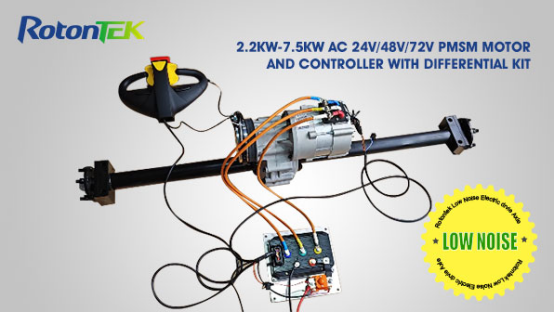
In respond to the stringent demands for power, durability, and precise control in heavy-load transportation equipment, our Rotontek 2.2KW-7.5KW BLDC Drive Axle integrates powerful performance with high efficiency, delivering a reliable solution.
1. Compact and High-Rigidity Design This electric drive axle features a compact layout and reinforced structural design, ensuring overall rigidity and exceptional strength to effectively resist deformation caused by heavy loads.
2. Precision Wear-Resistant Gear Technology The core transmission components—all-steel gearand theintegrated gear differential—are treated with special processes to achieve wear-resistant tooth surfaces.
This significantly enhances the gear’s fatigue strength while ensuring higher transmission efficiency is maintained during high-intensity, long-duration operation.
3. Powerful Output and Climbing Ability Leveraging the characteristics of the BLDC motor and precise gearbox matching, it delivers strong and stable torque even at low speeds, ensuring ample power output and reliable climbing performance.
4. Excellent Efficiency and Low Noise At Rotontek, weprioritize both power and environmental quality. By implementing precision gear tooth profiling and strict assembly tolerances, the operating noise is strictly controlled to ≤62dB.
Furthermore, the integrated differential optimizes energy consumption while enhancing maneuverability, realizing a balance of high efficiency, quiet operation, and smooth control.
5. Safety Protection
This 2.2KW-7.5KW electric drive axle integrates an advanced intelligent electromagnetic braking system.
In the event of a power failure or emergency, the brake responds quickly to achieve smooth and reliable braking, effectively preventing slope rollback and providing solid safety assurance for both personnel and cargo.
6. Flexible Customization Capability
Given the wide variety of installation spaces and performance requirements across different equipment, we offer in-depth customization services, allowing customers to adjust the rotational speed and shaft length according to specific needs.
Application Scenarios for 2.2KW-7.5KW Electric Drive Axle
1. Construction and Engineering Equipment
Concrete Transport Trucks: Addressing the operational characteristics of frequent start-stops and short-distance heavy loads, the drive axle’s high peak torque ensures smooth, fully-loaded starts and prevents the motor from frequently entering thermal protection due to overloading, significantly improving equipment uptime.
Building Material Handling Equipment:When operating in confined spaces like foundation pits or scaffolding, the precise BLDC control combined with the drive axle’s responsive feedback enables on-demand power delivery, allowing operators to maneuver effortlessly even in limited spaces.
2. Agricultural Machinery
Agricultural Trailers:Facing rough terrain and muddy conditions in fields, the highly sealed structure effectively prevents mud and sand intrusion. Coupled with high torque output at low speeds, it ensures the trailer does not get stuck or fail due to slippage in challenging sections.
Harvesting Machinery: It suppliesexceptionally stable power output during low-speed harvesting operations, reducing crop loss caused by speed fluctuations. Its excellent dustproof and waterproof design easily adapts to dusty and high-humidity field environments.
3. Specialized Transportation Equipment
Glass Loaders:Glass weighing several tons is extremely sensitive to transportation stability. The silent drive axle’s ultra-low vibration characteristics effectively prevent cargo damage caused by resonance or impact.
Heavy-Duty Material Handling Carts:Facilitates the zero-emission upgrade of factory logistics. The quiet operation eliminates the roar of traditional internal combustion engines in warehouses, while its robust load-bearing capacity enables efficient heavy-load transfer under demanding conditions.
Conclusion
Selection is not just about choosing a specification; it is about choosing a complete reliability engineering solution. Every Rotontek electric drive axle is born from a standardized production process. From raw materials to finished products, a rigorous quality control system ensures that each unit possesses exceptional quality and high reliability.
In the modern industrial landscape, the demand for compact yet incredibly powerful machinery has never been higher. As we look at the evolution of motion control, it is clear that the traditional separation between electrical precision and hydraulic strength is becoming a thing of the past. Our team at Rotontek has observed this shift firsthand, leading us to develop solutions that bridge the gap between these two worlds. By utilizing a high-performance hydraulic linear actuator, engineers can now achieve immense force without the cumbersome footprint of external pumps and hoses. This integration is not just about saving space; it is about redefining what a single unit can accomplish in demanding off-road and industrial sectors.
The Power of Seamless Integration
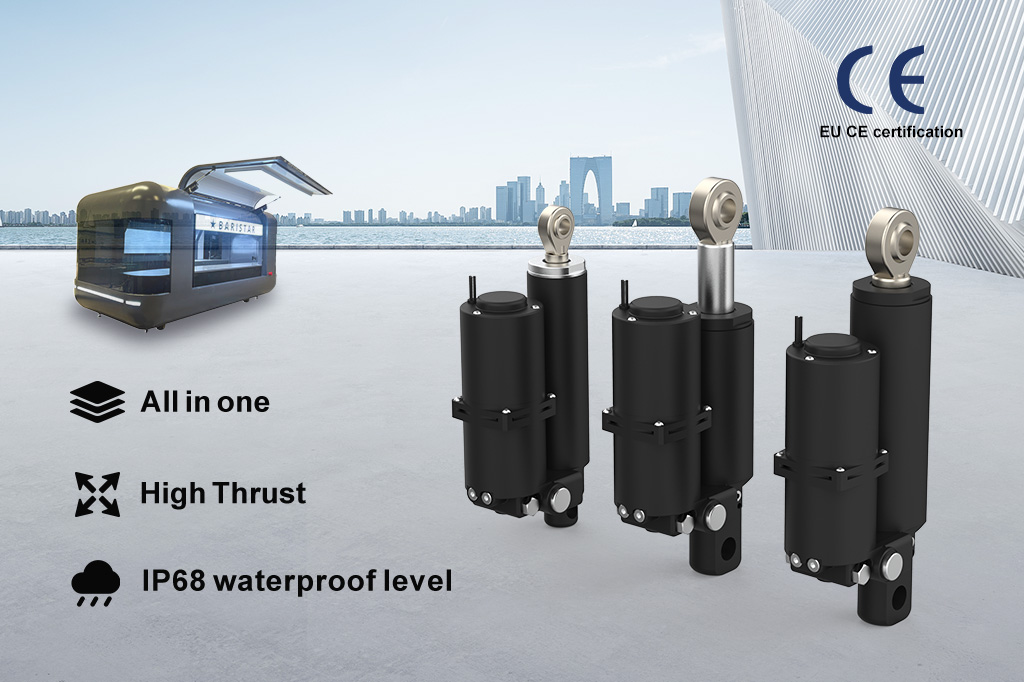
Efficiency in heavy-duty applications often comes down to how well a system manages energy conversion. We have focused our research on the electro-hydraulic linear actuator to solve the common problems of fluid leakage and energy loss found in older designs. By housing the motor, pump, and cylinder in a single, sealed assembly, we provide a system that delivers immediate response and high-speed operation. Our NEW 0.5-2.5T series exemplifies this, merging the raw lifting power of a hydraulic power unit with the smart control of electric signals. At Rotontek, we believe that providing a self-contained unit allows our partners to simplify their machine builds while significantly reducing maintenance intervals.
Built for the Elements
Industrial environments are rarely kind to sensitive machinery, which is why durability is a core pillar of our design philosophy. Whether a machine is operating in a dusty construction site or submerged in a marine application, the hardware must remain unfailing. Every electro-hydraulic linear actuator we produce is engineered to withstand extreme conditions, featuring IP68 waterproof protection to ensure it remains operational even underwater. This level of resilience is essential for off-road vehicles and UAVs that face unpredictable weather. By focusing on a “craftsman spirit,” we ensure that the internal components of the hydraulic linear actuator are shielded from contaminants, extending the lifespan of the equipment in ways traditional actuators simply cannot match.
Versatility Across High-Force Applications
The beauty of a modern hydraulic linear actuator lies in its versatility across different weight classes and speeds. In our 46,544m² facility, we test these units to handle loads ranging from 0.5 to 2.5 tons, ensuring they meet the diverse needs of our global clients in over 40 countries. These actuators are no longer limited to just one industry; they are found in everything from automated factory lines to advanced agricultural equipment. By combining our expertise in gear motors with advanced transmission technology, we help our customers transition to eco-friendly solutions that don’t sacrifice power. At Rotontek, we prioritize these customized motor solutions to help our clients break through routine technical limitations.
Conclusion
As global industries move toward smarter and more sustainable infrastructure, the equipment we choose to power that progress matters. The transition toward the electro-hydraulic linear actuator represents a significant step forward in making heavy-duty motion more accessible and reliable. We at Rotontek remain dedicated to pushing the boundaries of what integrated systems can do, ensuring that every hydraulic linear actuator leaving our floor is ready for the challenges of tomorrow. By choosing integrated designs, we are helping to build a future where power and precision coexist in perfect harmony.
When exploring the evolving world of electric drive systems, understanding the role of electric transaxles is key. These components are central to the performance and efficiency of electric vehicles (EVs), mobility solutions, and even industrial equipment. In our work at Rotontek, we’ve observed first-hand the critical function these units perform, especially when paired with our electric transaxle kits. In this article, we’ll delve into the advantages of adopting electric transaxle systems, especially in applications ranging from lawn mowers to electric mobility vehicles. We’ll also highlight how our electric transaxle kits provide comprehensive solutions for a range of industries, from heavy-duty machinery to consumer EV platforms.
The Role of Electric Transaxles in Modern Mobility
Electric transaxles are vital to a variety of vehicles, providing efficient power transmission while reducing mechanical complexity. Whether in compact mobility vehicles, golf carts, or even lawn mowers, the transaxle combines both the electric motor and transmission into a single unit, which reduces weight and simplifies vehicle design. At Rotontek, we’ve focused on designing transaxle systems that meet the rigorous demands of our clients while offering superior durability and performance.
Our electric transaxle kits are designed to be modular, allowing for flexibility in integration across different platforms. These kits not only enhance efficiency but also support various customization needs for clients who require tailored solutions for their mobility equipment. As electric mobility continues to rise, the need for such integrated solutions becomes more pressing, making Rotontek a trusted partner in this space.
Benefits of Using Rotontek’s Electric Transaxle Systems
One of the primary advantages of electric transaxles is their ability to improve energy efficiency. The integrated design ensures minimal energy loss during power transfer, which is especially important for vehicles like electric tractors or mobility scooters that require maximum battery utilization. At Rotontek, we prioritize energy-efficient designs, which means our clients experience longer-lasting power, reduced downtime, and better overall performance.
Our electric transaxle kits are designed with the customer in mind, ensuring they can integrate seamlessly with existing systems. We focus on ease of installation and adaptability, meaning that whether you’re developing a high-performance electric vehicle or building a utility solution, our kits provide the flexibility to meet diverse needs without compromising on power.
Why Choose Rotontek for Your Electric Drive Needs?
As a leading supplier in the field, Rotontek brings years of experience in manufacturing high-quality electric drive systems. Our team is dedicated to providing transaxle solutions that not only meet but exceed the performance standards required by industries such as mobility, landscaping, and even agriculture. We stand by our products, offering reliable, long-lasting solutions that are built to withstand demanding environments.
For companies and individuals looking to enhance their mobility platforms, Rotontek’s electric transaxle kits offer an optimal solution, delivering efficiency, adaptability, and performance that are essential in today’s fast-evolving market.
Conclusion
At Rotontek, we’re committed to shaping the future of electric mobility with innovative solutions like our electric transaxle and electric transaxle kits. These systems offer unmatched performance, reliability, and efficiency, making them an ideal choice for a range of applications. Whether you are developing an electric vehicle, mobility platform, or industrial machine, our transaxle solutions can meet your needs with excellence. As the demand for electric solutions continues to grow, Rotontek is here to provide the cutting-edge technology you need to stay ahead of the curve.
The rise of modern technology has necessitated greater efficiency, precision, and reliability in motor applications. BLDC motor has emerged as a game-changer across various industries, particularly due to their versatile properties and advantages over traditional motors. As a servo motor manufacturer, Rotontek has committed to enhancing these motors’ performance and capabilities through innovative controller designs.
How BLDC Motors Enhance Efficiency in Various Industries
BLDC motors are known for their high efficiency and low maintenance requirements compared to brushed DC or induction motors. The electronic commutation process employed in these motors eliminates the friction and wear associated with brushes, resulting in longer operational lifetimes and reduced maintenance needs. This is particularly valuable in demanding environments such as electric vehicles and robotics, where uptime is crucial for productivity. Additionally, at Rotontek, we offer specialized motor controllers that enhance these motors’ operational efficiency, making them ideal for various applications, from UAVs to medical devices.
The Role of Motor Controllers in Optimizing Performance
A BLDC motor alone cannot reach its full potential without an advanced motor controller. Our controllers, designed with innovative pulse width modulation (PWM) techniques and real-time feedback loops, ensure that BLDC motors operate smoothly and efficiently under variable load conditions. By optimizing current timing in response to Hall sensor feedback, we can maintain precise speed control, achieving ±1% speed regulation accuracy. This fine-tuning process translates directly to improved performance, particularly in applications such as automation and industrial equipment. With our B530H model that provides dual motor control, both power management and torque output can dramatically enhance operational efficiency, minimizing waste.
The Future of Electric Mobility and Automation
The demand for robust and efficient BLDC motors is skyrocketing, especially in electric mobility and automation sectors. As a servo motor manufacturer, we focus on developing controllers that provide seamless integration for various systems—be it e-bikes, electric scooters, or automated guided vehicles (AGVs). Our B530H controller, with its CAN-BUS programmability and dual-motor support, exemplifies the advancements we are making to address modern engineering needs. Safety and protection functions incorporated into our designs help optimize battery consumption while maximizing performance, making Rotontek products indispensable for contemporary electric mobility solutions.
Conclusion
The synergy between BLDC motors and advanced motor controllers cannot be overstated. At Rotontek, we are dedicated to pushing the boundaries of technology in electric mobility and industrial automation. Our commitment to providing efficient, reliable, and long-lasting BLDC motor solutions allows our partners to innovate and succeed in their respective fields. We believe that as industries continue to evolve, the importance of our integrated solutions will only grow, shaping a future driven by efficiency, precision, and sustainability.
In the drive for Industry 4.0 and intelligent warehousing, automated vehicles have become the standard for material handling. While the broader category of Automated Guided Vehicles (AGV) is widely recognized, a more specific and often cost-effective solution is the Automated Guided Cart (AGC). For manufacturers, OEMs, and logistics professionals, knowing the technical difference is crucial to selecting the right drive system for their automation goals.
At Rotontek, we supply the high-performance integrated motion solutions—from drive wheels to controllers—that power both these vehicle types. The difference between an AGV and an AGC isn’t about the motor technology, but rather the complexity of the vehicle structure, the method of guidance, and the payload capacity it is designed to manage. Simply put, the AGC is best understood as a subset of the AGV family, tailored for lighter, simpler, and more repetitive tasks.
AGV vs. AGC: Defining the Role and Scale
While the terms are often used interchangeably, industry experts generally use the distinction to categorize material handling robots based on size, payload, and navigational complexity.
Automated Guided Vehicle (AGV)
An AGV is the traditional, robust standard. These are vehicles built for significant tasks, often replacing electric forklifts, tuggers, or unit load handlers.
Size and Payload: AGVs are generally larger, heavier, and built for high-capacity transport, often carrying payloads from one ton up to many tons. They frequently lift or carry entire pallets or large unit loads.
Structure: They often feature complex structures, such as forks (for forklift AGVs), conveyors (for unit load AGVs), or high-power towing mechanisms.
Navigation: AGVs typically utilize more sophisticated or infrastructure-intensive guidance, including laser triangulation with reflectors, inductive wire guidance embedded in the floor, or high-end natural navigation (which technically categorizes them as Autonomous Mobile Robots or AMRs, though the lineage is the same).
Drive System Requirement: Due to their size and load, AGVs require heavy-duty, high-power drive systems capable of handling large starting torque and sustained high loads, often powered by a high-wattage brushless drive motor controller series.
Automated Guided Cart (AGC)
The AGC, on the other hand, is the streamlined, low-cost automation solution.
Size and Payload: AGCs are smaller, lower-profile, and lighter. They are designed to carry lighter loads, often up to a ton, or more commonly, they act as “under-ride” units, engaging and towing a separate cart or shelf whose wheels bear the main weight of the payload.
Structure: They are typically simple, low-height platforms with a pin-hook or lifting mechanism to engage a cart.
Navigation: AGCs often rely on the simplest form of automated guidance, such as following a painted line or magnetic tape adhered to the floor. This line-following technique is highly reliable, cost-effective, and easy to reroute, making them ideal for facilities needing quick deployment.
Drive System Requirement: AGCs prioritize compactness and cost-efficiency. They require reliable, low-power integrated solutions, making the AGV drive wheel an essential component for seamless integration.
The Critical Role of the AGV Drive Wheel and Controller
Regardless of whether a vehicle is a heavy-duty AGV or a compact AGC, its performance—precision, speed, and reliability—is defined by its integrated motion system. This is where Rotontek provides a decisive advantage, offering series of integrated drive solutions that power the full spectrum of automation requirements.
The Integrated AGV Drive Wheel Series
The core of an AGC or a light-to-mid-capacity AGV is the integrated drive unit. Our AGV drive wheel series combines a high-efficiency motor, a precise reduction gearbox, and the wheel/tire into a single, compact monoblock.
For example, our 1KW Brushless Electric Driving Wheel (DL1000-1-29) is ideal for various logistics transfer trucks and stackers:
Motor Type: Brushless Motor
Power Rating: 1 KW
Maximum Towing Weight: 4000 KG (on a cart)
Maximum Load Capacity (Single Wheel): 1000 KG
Protection Rating: IP66
This unit’s compact design and high IP rating make it perfect for the demanding, repetitive cycles required of both AGV and AGC applications in harsh warehouse environments.
Mastering Motion with the Brushless Drive Motor Controller
The brain of any autonomous vehicle is the motor controller. The efficiency and reliability of a brushless drive motor controller directly impact battery life, speed regulation, and positioning accuracy.
Rotontek’s ID200 Series Controller (Example):
This series, designed for 2 KW applications, offers:
Advanced Motor Control Algorithm: Utilizing DSP chips to provide precise control and reduced noise, crucial for accurate stopping and starting.
Anti-Slip Function: Engineered for steady performance when climbing slight inclines or overcoming small obstacles—a necessity in any warehouse.
Protection: Integrated features against overpressure, overcurrent, and overheating, ensuring the longevity of the entire drivetrain.
The controller allows OEMs to finely tune the vehicle’s parameters for different road conditions and specific operational requirements, whether it’s the high-speed transit of a larger AGV or the precise, low-speed indexing of an AGC on an assembly line.
Choosing the Right System for Your Business
The decision between an AGV and an AGC comes down to three operational factors:
Payload and Tonnage: If you are moving full pallets, towing multiple heavy carts, or require lifting capability, the heavier-duty AGV platform is the correct choice, requiring high-power Rotontek transaxles and high-wattage brushless drive motor controller systems.
Route and Flexibility: If the task is simple, fixed, and highly repetitive (e.g., assembly line part delivery), the AGC guided by magnetic tape is usually the most cost-effective and fastest to deploy.
Cost and Scalability: AGCs offer a lower entry cost and are easier to scale up, as the supporting infrastructure (magnetic tape) is simple to install and modify compared to the more complex infrastructure needed for some traditional AGV guidance methods.
Conclusion
The key takeaway for any partner is that both AGVs and AGCs are forms of Automated Guided Vehicles, and both rely on highly integrated, reliable drive solutions. At Rotontek, we focus on engineering the core components—the robust AGV drive wheel assemblies and the intelligent brushless drive motor controller series—to ensure your choice of automated vehicle, regardless of its classification, achieves maximum uptime and efficiency.
In the world of heavy hauling, construction, logistics, and specialized vehicle support, stability and effortless lifting are non-negotiable requirements. Historically, this meant painstaking manual cranking or complex hydraulic setups. Today, however, the industry is transitioning to automated, precise solutions, and leading that charge is the electric jack.
An electric jack is a motorized lifting and stabilizing device that replaces manual effort with electrical power. By integrating an electric motor with a high-strength mechanical transmission, it provides controlled, effortless movement for lifting, leveling, and supporting heavy loads. At Rotontek, we view this technology as a core component of efficiency and safety across various heavy-duty industries, offering a series of jacks designed for specific torque and stability challenges, from semi-trailers to specialized platforms.
The Mechanism: How Electric Jacks Convert Power to Lift
The core function of an electric jack is to take the rotational power of a motor and convert it into linear thrust—a process that must be highly reliable, self-locking, and efficient.
1. The Motor and Transmission System
Unlike manual jacks that rely on muscle power turning a handle, electric leveling jacks utilize a DC electric motor connected to a gearbox. This gearbox reduces the high-speed, low-torque output of the motor into a low-speed, high-torque force suitable for lifting thousands of kilograms.
Worm Gear/Screw: The reduced torque is applied to a high-strength screw shaft. As the screw rotates, a nut or collar travels up or down the shaft, extending or retracting the jack’s inner leg.
Self-Locking Feature: A crucial safety feature is the inherent self-locking capability of the worm gear or screw drive. This mechanism ensures that when the motor power is removed, the load cannot force the jack back down, keeping the raised object securely in position without the need for a continuous power supply. This stability is vital when stabilizing heavy vehicles or construction platforms.
2. Control and Safety
Modern electric jack systems move far beyond simple on/off switches. They feature advanced controls, including:
One-Touch Operation: Simplified controls, allow for single-button deployment and retraction, dramatically improving speed and ease of use.
Intelligent Sensing: In electric leveling jacks, built-in sensors or Hall Effect technology monitor the extension of multiple jacks simultaneously, allowing a centralized control unit to automatically adjust the height of each leg until the vehicle or platform is perfectly level.
Safety Brakes: Patented power-off brakes are often incorporated to ensure immediate lock-down in the event of power loss, adding an extra layer of safety during operation.
Versatility in Application: The Rotontek Leveling Jack Series
The versatility of the electric jack system is best demonstrated by the wide range of heavy-duty applications it serves. Rotontek offers distinct series tailored to specific industrial and transport needs, focusing on high tonnage capacity and robust durability.
One of the most demanding applications is supporting semi-trailers during loading and unloading when they are detached from the tractor. This requires supporting a significant portion of the trailer’s maximum gross weight, often on uneven terrain.
Operation: One-button operation (approx. 80 seconds to position)
Protection Grade: IP56 (Corrosion-resistant and weather-proof)
Stability Feature: Patented screw reverse mechanism for superior shock absorption.
This type of electric leveling jack prevents “trailer tipping” during forklift operations and eliminates the back-breaking manual cranking, which is a significant ergonomic and safety advantage in high-volume logistics centers. We also offer a 20T Electric Landing Gear series, which features a pioneering transmission design incorporating a ball screw mechanism for superior energy-efficiency compared to conventional trapezoidal screws.
2. Specialized Industrial and Agricultural Platforms
Beyond transportation, the demand for stable, adjustable support extends to complex machinery that must operate with precision on un-level ground.
Agricultural Machinery: Large-scale planting and harvesting equipment often needs quick, accurate leveling before deploying specialized booms or components to ensure uniform results across sloped fields.
Construction Equipment: Modular construction sites, temporary structures, and specialized heavy lifting equipment require rapid, fail-safe stabilization. The portability and power of an electric jack series provide the necessary rigidity and ease of deployment.
Aircraft Docking Systems: High-precision leveling and stabilization are essential for safety during aircraft maintenance and docking procedures.
3. Recreational Vehicle (RV) and Camper Leveling
While often seen in consumer applications, the underlying technology comes from the same robust industrial design principles. The need for precise, fast leveling in the RV industry—to ensure appliances function correctly and for user comfort—has driven the widespread adoption of multi-point electric leveling jacks. These systems use sensors to automatically determine the low corners and extend the jacks in sequence, achieving level in minutes, rather than the tedious manual process of using blocks and cranks.
The Rotontek Advantage: Durability and Customization
At Rotontek, our philosophy in the electric jack and leveling field centers on durability and tailored performance. Our jacks are manufactured from high-strength, high-quality steel with corrosion-resistant surface treatments, such as the electrophoretic process on our 10T jack, ensuring stable, long-term operation even in harsh outdoor and heavy-duty environments.
By offering a versatile series of jacks—from the high-efficiency ball screw designs in our trailer landing gear to the precision control found in our smaller lifting solutions—we ensure that every partner can find the specific torque, lift capacity, and control system required for their unique stabilization challenges.