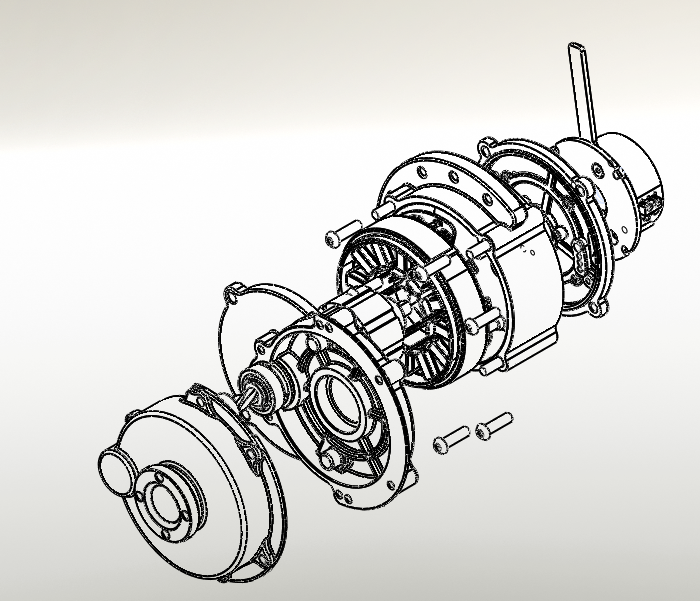
Manual transaxles allow drivers to choose and shift gears manually, whereas automatic transaxles automate gear shifting for the driver.
Basic Mechanics and Design
The design and mechanics of a transaxle are crucial in understanding its role in vehicle performance and efficiency. A transaxle combines the functions of the transmission, differential, and axle into a single integrated assembly. This design is particularly common in front-wheel drive vehicles, where the engine’s alignment is transverse.
How Manual Transaxles Work
Manual transaxles operate by allowing the driver to physically shift gears, usually through a stick shift and a clutch pedal. The driver engages different gears to adjust the torque and speed delivered to the wheels.
Gear Ratios and Operation
A key component in manual transaxles, gear ratios determine how many revolutions the engine makes to turn the wheels once. Higher gears have higher ratios, providing more speed but less power, suitable for cruising at high speeds. Lower gears, conversely, offer more power but less speed, ideal for acceleration or climbing hills. For example, a typical first gear ratio might be 3.5:1, meaning the engine turns 3.5 times for every wheel rotation.
Components of Manual Transaxles
Key components in manual transaxles include the clutch, gear selector fork, synchronizers, and various gears. The clutch engages and disengages the engine from the transmission to facilitate gear changes. The gear selector fork allows the driver to choose different gears. Synchronizers help in matching the gear speeds for smoother shifting.
How Automatic Transaxles Work
Automatic transaxles simplify driving by automatically changing gear ratios as the vehicle moves, without the need for a manual clutch.
Torque Converter and Planetary Gear Set
The torque converter in an automatic transaxle replaces the manual clutch and is responsible for transmitting and modulating power from the engine to the transmission. It uses fluid dynamics to transfer power, providing a variable amount of torque based on the speed of the vehicle. The planetary gear set, a compact and efficient gear system, allows for a range of gear ratios to be achieved from one central location. This system consists of a sun gear, planet gears, and a ring gear, working together to provide different gearing options.
Components of Automatic Transaxles
Automatic transaxles comprise several components, including the torque converter, planetary gear set, hydraulic control unit, and valve body. The hydraulic control unit and valve body work together to manage gear shifts based on the vehicle’s speed and engine load. They ensure smooth, timely, and efficient gear changes, optimizing both power and fuel efficiency.
The design and functionality of manual and automatic transaxles significantly impact the vehicle’s performance, fuel efficiency, and driving experience. While manual transaxles offer more control and often higher efficiency, automatic transaxles provide ease of use and comfort, especially in heavy traffic conditions. The choice between manual and automatic transaxles depends on the driver’s preference, driving conditions, and the specific performance characteristics desired.
Performance Comparison
Comparing the performance of manual and automatic transaxles involves looking at various factors such as shift quality, fuel efficiency, reliability, and the overall driving experience. Each type has its own set of strengths and weaknesses.
Shift Quality and Speed
Manual transaxles generally offer quicker and more direct control over gear changes, allowing drivers to choose the exact moment of shifting. This direct control can translate into faster acceleration and a more responsive driving experience, especially under high-performance or sporty driving conditions. Automatic transaxles, while they have improved significantly with advancements in technology, can sometimes lag slightly behind in terms of shift speed compared to their manual counterparts. However, modern automatics, especially those with dual-clutch systems, offer shift speeds (transmission speeds) that rival or even exceed those of manual transmissions.
Fuel Efficiency
Historically, manual transaxles held the upper hand in fuel efficiency due to their simpler, lighter design and more direct connection between the engine and wheels. A manual transaxle, lacking the hydraulic pump and the complex gear set of automatics, typically loses less power during transmission. Automatic transaxles, however, have closed the gap thanks to technological innovations like continuously variable transmissions (CVTs) and advanced electronic control systems. These systems optimize gear shifts and engine load to maximize fuel efficiency, often making modern automatics as or more efficient than their manual counterparts in terms of fuel consumption (fuel efficiency).
Reliability and Maintenance Requirements
In terms of reliability and maintenance, manual transaxles have fewer moving parts and are typically more straightforward to repair, often resulting in lower maintenance costs. The clutch is usually the component that needs replacing most frequently, and its lifespan varies based on driving habits and conditions. Automatic transaxles, with more complex designs and numerous electronic components, can be more prone to repair and might incur higher costs when issues arise. However, advancements in design and materials have significantly improved the longevity and reliability of automatic transmissions.
Driving Experience and Control
The driving experience differs notably between manual and automatic transaxles. Manual transmissions offer greater driver engagement, as controlling the clutch and gear shift requires more attention and skill. This control allows experienced drivers to harness the vehicle’s power and dynamics more effectively, especially in performance driving scenarios. Automatic transaxles, on the other hand, provide a more relaxed and often smoother driving experience, particularly in urban or congested driving environments. They free the driver from the need to continuously operate the clutch and shift gears, which can be particularly advantageous in heavy traffic.
In summary, the choice between manual and automatic transaxles depends largely on personal preference, driving style, and practical considerations such as fuel efficiency, maintenance costs, and typical driving conditions. While manuals offer more control and potentially lower maintenance costs, automatics provide ease of use and have been catching up rapidly in terms of fuel efficiency and performance capabilities.

Technological Advancements
The arena of transaxle technology has witnessed significant advancements over the years, with innovations aiming to enhance efficiency, performance, and the driving experience. These advancements not only improve the functionality of transmissions but also play a critical role in addressing broader issues like fuel economy and emissions.
Innovations in Manual Transaxles
Manual transaxles have seen improvements, particularly in the areas of material technology and design. The use of stronger, lighter materials such as carbon fiber or advanced alloys in gears and synchros reduces weight, thus improving vehicle efficiency and responsiveness. Advanced engineering has also led to more compact designs, facilitating smoother gear shifts and higher precision. Moreover, the integration of electronic systems like rev-matching technology, which automatically adjusts the engine speed during downshifting, helps in delivering a smoother and more efficient driving experience. These innovations collectively enhance the longevity, performance, and enjoyment of driving a manual transmission vehicle.
Innovations in Automatic Transaxles
The development in automatic transaxles has been groundbreaking, predominantly in the realm of electronic control and gear design. Modern automatics often feature more gears — 8-speed and 10-speed transmissions are becoming common. More gears allow the engine to operate closer to its optimal power band, delivering better fuel efficiency and performance. Additionally, the use of adaptive algorithms in the transmission’s computer can optimize shift patterns based on driving behavior and conditions, greatly enhancing efficiency and drive quality.
Another significant advancement is the incorporation of hybrid technology in automatic transmissions. This integration allows for reduced fuel consumption and emissions, meeting increasingly stringent environmental regulations. Hybrid systems can capture and reuse energy typically lost during braking, further enhancing fuel economy.
The Rise of Semi-Automatic and Dual-Clutch Transmissions
Semi-automatic and dual-clutch transmissions (DCTs) represent a fusion of manual precision and automatic convenience. A DCT essentially works with two separate clutches for odd and even gear sets. This design allows for near-instantaneous gear shifts, significantly reducing shift times and enhancing acceleration performance. DCTs provide a more engaging driving experience similar to a manual, but without the need for a clutch pedal. These transmissions are particularly popular in high-performance vehicles due to their ability to handle high torque loads efficiently while offering crisp, rapid gear changes. Their rising popularity underscores the automotive industry’s shift towards transmissions that combine the best of both worlds – the involvement and control of manuals with the comfort and ease of automatics.
From lighter materials and sophisticated electronic control systems to the introduction of hybrid technologies and DCTs, the evolution of transaxle technology continues to redefine the standards of automotive performance, efficiency, and driver enjoyment. Each advancement not only marks a step forward in automotive engineering but also caters to the ever-evolving demands and expectations of drivers and environmental considerations.

Advantages and Disadvantages
Evaluating manual and automatic transaxles involves a thorough understanding of their respective advantages and disadvantages. Each type offers different benefits and drawbacks, impacting a driver’s choice based on personal preference, driving style, and practical needs.
Manual Transaxle Advantages and Disadvantages
| Advantages | Disadvantages |
|---|---|
| Greater Control: Manual transmissions provide drivers with more direct control over the vehicle, allowing for more precise manipulation of engine power and torque. | Learning Curve: Operating a manual transaxle requires more skill and practice, particularly in mastering clutch control. |
| Higher Efficiency: Generally, manuals are more efficient, as they lose less power in the transmission process. | Driver Fatigue: Manual transmissions can be tiring to operate in heavy traffic or on long journeys, as they require constant engagement. |
| Lower Cost: Manuals typically have lower purchase prices and maintenance costs. For example, clutch replacement tends to be cheaper than repairing an automatic transmission. | Inconvenience: The need for frequent shifting can be inconvenient for some, especially in stop-and-go traffic. |
| Fun Factor: Many driving enthusiasts prefer manuals for the engaging and fun driving experience they offer. | Resale Value: In many markets, vehicles with manual transmissions can have lower resale values due to decreasing demand. |
Automatic Transaxle Advantages and Disadvantages
| Advantages | Disadvantages |
|---|---|
| Ease of Use: Automatics are easier to drive, especially for beginners, as they remove the need to manually change gears and operate a clutch. | Higher Cost: Automatics are generally more expensive to buy and repair. For instance, the replacement of a torque converter can be costlier than fixing a manual clutch. |
| Convenience in Traffic: They provide a more relaxed driving experience in congested traffic situations, with no need to continuously engage and disengage the clutch. | Less Control: They offer less direct control over gear changes, which might not appeal to driving enthusiasts. |
| Smoothness: Automatics tend to deliver smoother shifts and can be more comfortable over long distances. | Fuel Efficiency: Historically, automatics were less fuel-efficient, though this gap is narrowing with modern technologies. |
| Better for Hilly Areas: Automatics manage slopes and hills better, as they prevent the vehicle from rolling back. | Complexity: The complexity of automatic mechanisms can lead to higher vulnerability and repair costs when issues arise. |
The choice between manual and automatic transaxles largely hinges on personal preferences and priorities. Manuals tend to offer more control and lower costs, appealing to those who enjoy an engaging driving experience. Automatics, offering ease and convenience, are typically preferred by those looking for a stress-free and comfortable ride, especially in urban settings. As technology evolves, the line between these two types is becoming increasingly blurred, with each adopting some benefits of the other.

Environmental Impact
The environmental impact of transaxles, both manual and automatic, centers primarily around emissions and fuel economy. With increasing awareness of climate change and environmental degradation, automotive engineers and manufacturers focus intensively on reducing the environmental footprint of vehicles.
Emissions and Fuel Economy
The efficiency of a vehicle’s transmission plays a crucial role in its overall fuel economy and emissions. Historically, manual transmissions were seen as more efficient than automatics, primarily due to their simpler design and lower weight, leading to reduced fuel consumption and, consequently, lower CO2 emissions. For instance, manual transmissions can offer a fuel efficiency advantage of up to 5-15% over automatics, which translates into significant reductions in CO2 emissions over the lifetime of a vehicle.
However, the gap in fuel efficiency and emissions between manual and automatic transmissions has significantly narrowed. Modern automatics, especially those with more gears and advanced control systems, optimize gear shifts and minimize energy loss, bringing their efficiency closer to, or in some cases, surpassing that of manuals. Technologies such as Continuously Variable Transmissions (CVT) and Dual-Clutch Transmissions (DCT) further bridge this gap. CVTs, for example, offer infinite gear ratios to keep the engine running at its most efficient speed, thereby enhancing fuel efficiency and reducing emissions.
Advances in Eco-Friendly Designs
Recent advancements in transaxle designs aim at making both manual and automatic transmissions more environmentally friendly. Key developments include:
- Hybrid and Electric Vehicle Integration: Both manual and automatic transaxles adapt to the requirements of hybrid and electric vehicles. For instance, some hybrid vehicles use e-CVTs (electronic continuously variable transmissions), which combine an electric motor with a traditional transmission to improve efficiency and reduce emissions.
- Lightweight Materials: The use of lightweight materials such as aluminum or carbon fiber in transmission components reduces the overall weight of the vehicle, thereby improving fuel efficiency and reducing emissions.
- Advanced Lubricants: Newer, more advanced lubricants decrease friction in transmission components, leading to smoother operation and improved efficiency. This improvement in lubrication technology indirectly contributes to lower fuel consumption and emissions.
- Aerodynamic Design: Transmissions are becoming more compact and aerodynamically efficient, contributing to the overall aerodynamic efficiency of the vehicle, thus reducing drag and fuel consumption.
- Start-Stop Technology: This technology, which temporarily shuts off the engine while the vehicle is stationary and restarts it when the accelerator is pressed, is becoming increasingly common in both manual and automatic vehicles. It reduces idle time emissions, contributing to improved urban air quality and fuel savings.
These innovations demonstrate the automotive industry’s commitment to developing more sustainable and environmentally-friendly vehicles. Both manual and automatic transmissions continue to evolve, with a strong focus on reducing their environmental impact while enhancing performance and driver experience.
Referensi
- Transmission (mechanics)
- Manual transmission
- Automatic transmission
- Continuously Variable Transmission (CVT)
- Dual-clutch transmission
- Fuel efficiency
- Vehicle emissions control
- Hybrid electric vehicle
What makes manual transaxles more fuel-efficient than automatics?
How do the costs of maintaining manual versus automatic transaxles compare?
Which type of transaxle offers better control and driving engagement?
Are automatic transaxles less reliable than manual ones?
How do manual and automatic transaxles differ in terms of driving ease?
What advancements in automatic transaxles have improved their fuel efficiency?
Which transaxle type is better for hilly terrains?
Can manual transaxles be more advantageous in terms of vehicle resale value?