

Medical equipment requires reliable, precise, and quiet movement to ensure smooth operation and a better user experience. From rehabilitation beds and patient lifting systems to ultrasound examination tables and medical imaging equipment, electric linear actuators play an important role in modern medical device design.
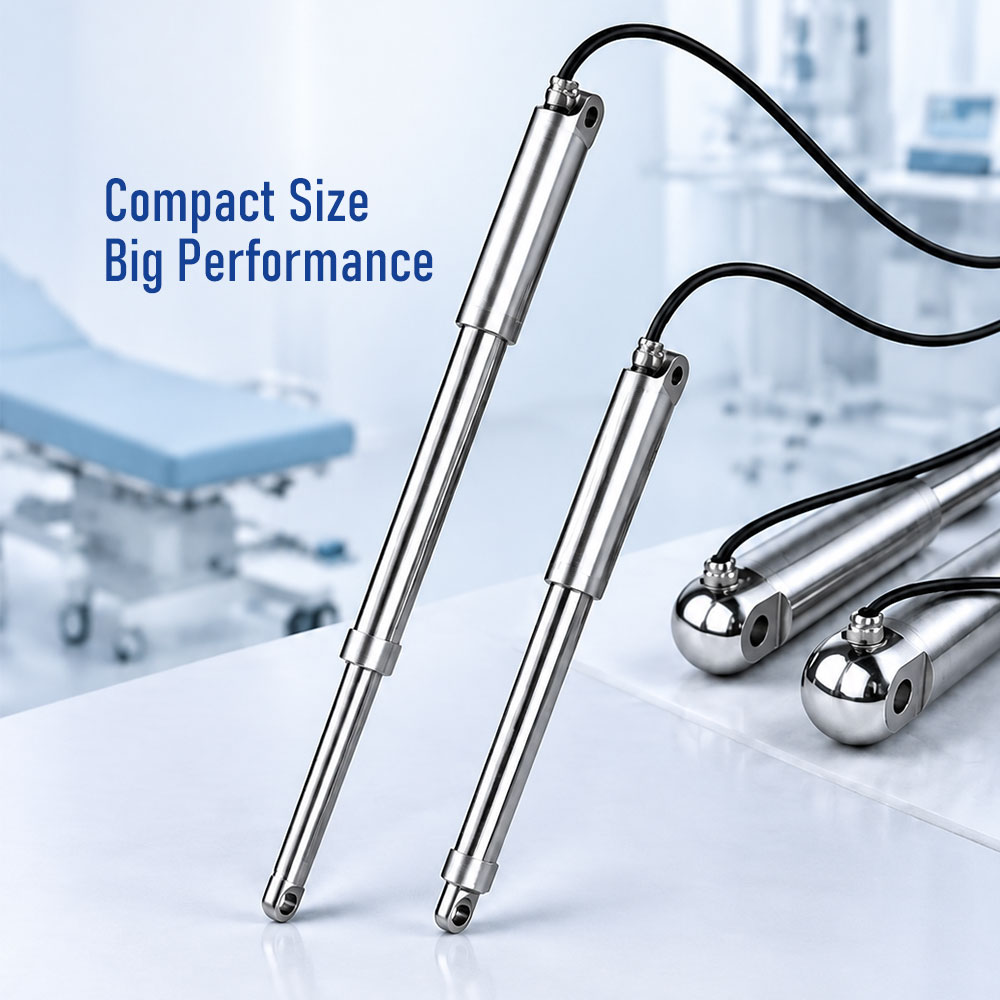
Choosing the right medical linear actuator is essential for equipment manufacturers. Factors such as pushing force, stroke length, operating speed, noise level, protection rating, and installation space all influence the performance and reliability of the final product.
In this guide, we will explore the key factors to consider when selecting an electric linear actuator for medical equipment and introduce a compact solution from Rotontek.
1. What Is a Medical Linear Actuator?
A medical linear actuator is an electromechanical device that converts electrical energy into straight-line motion. It is commonly used to lift, lower, tilt, push, or adjust different parts of medical and rehabilitation equipment.
Compared with manual adjustment mechanisms, electric linear actuators provide more convenient and controlled positioning.
Typical applications include:
-
Medical examination beds
-
Patient rehabilitation beds
-
Electric hospital beds
-
Lower limb rehabilitation equipment
-
Medical standing frames
-
Ultrasound examination tables
-
CT scanner positioning systems
-
Patient lifting and positioning equipment
For medical equipment manufacturers, selecting a suitable actuator helps optimize equipment structure, movement performance, and overall product design.
2. Six Key Factors When Choosing a Linear Actuator for Medical Equipment
2.1 Pushing Force and Pulling Force
Load capacity is one of the most important considerations when selecting an electric linear actuator.
Different medical applications require different force levels. For example, a rehabilitation bed may need to support both the weight of the patient and the moving structure.
Before selecting an actuator, manufacturers should consider:
-
Maximum pushing force
-
Maximum pulling force
-
Static and dynamic loads
-
Load distribution
-
Safety factors
-
Operating frequency
For applications requiring relatively high lifting force in a compact structure, the Rotontek JEA012 offers up to 2,500N pushing force and 900N pulling force.
2.2 Stroke Length and Installation Space
Medical equipment often has limited internal installation space. Therefore, actuator dimensions and stroke length must be carefully evaluated.
A compact actuator can help equipment manufacturers achieve a more integrated design without occupying excessive space.
Depending on the application, manufacturers should evaluate:
-
Retracted length
-
Extended length
-
Required stroke
-
Mounting positions
-
Installation clearance
The Rotontek JEA012 supports customized stroke lengths, with up to 400mm available for the medium-load version.
2.3 Low Noise Operation
Noise control is particularly important in medical environments.
Excessive mechanical noise may affect patient comfort and the overall user experience. A low-noise electric linear actuator helps create a quieter operating environment for medical beds and rehabilitation equipment.
The Rotontek JEA012 features an operating noise level of ≤52dB, making it suitable for applications where quiet movement is an important design consideration.
2.4 IP Protection Rating
Medical equipment may require protection against dust, moisture, and liquid exposure during cleaning and daily operation.
The IP protection rating is therefore an important specification when choosing a medical equipment actuator.
The JEA012 features an IP67 protection rating, providing dust-tight protection and protection against temporary immersion under specified test conditions.
This makes it suitable for equipment designs requiring a higher level of environmental protection.
2.5 Operating Voltage and Motor Configuration
Electric linear actuators are available in different voltage configurations depending on equipment requirements.
Common DC voltage options include 12V and 24V.
When choosing an actuator, manufacturers should consider:
-
Available power supply
-
Motor performance
-
Operating speed
-
Current consumption
-
Control system compatibility
-
Electrical limit control
The JEA012 provides three high-performance motor options in 12V and 24V configurations, allowing greater flexibility for equipment integration.
2.6 Position Feedback and Control
Accurate positioning is important for many medical applications.
Position feedback and electrical limit signals help equipment designers integrate actuators into automated control systems.
When developing medical equipment, it is important to evaluate the required control functions, feedback signals, and compatibility with the main controller.
3. Recommended Medical Applications for Compact Linear Actuators
A compact medical linear actuator can support different movement functions across various types of medical equipment.
Lower Limb Rehabilitation Beds
Rehabilitation beds require controlled adjustment to support different therapy positions.
Electric linear actuators can be integrated into lifting and positioning mechanisms to provide convenient movement during lower limb rehabilitation exercises.
Heavy-Duty Medical Standing Frames
Standing frames are used in rehabilitation environments to assist patients with supported standing activities.
A high-force linear actuator can provide the lifting and adjustment movement required by the equipment design.
Compact CT Scanner Tables
CT scanner tables require controlled positioning and smooth movement.
Compact electric actuators may be considered for auxiliary adjustment mechanisms, subject to the equipment’s specific load, positioning accuracy, and safety requirements.
Ultrasound Examination Beds
Height-adjustable ultrasound examination beds improve accessibility for medical professionals and patients.
Electric linear actuators provide a practical solution for integrating powered height adjustment into compact examination bed structures.
4. Rotontek JEA012: A Compact Medical Linear Actuator Solution
For equipment manufacturers looking for a compact actuator with relatively high force capacity, the Rotontek JEA012 offers a practical solution.
Designed for applications where installation space, lifting force, and operating noise are important, the JEA012 combines a compact structure with flexible motor and stroke configurations.
Key Specifications:
| Parameter | JEA012 |
|---|---|
| Maximum Pushing Force | 2,500N |
| Maximum Pulling Force | 900N |
| Maximum Speed | 10mm/s |
| Protection Rating | IP67 |
| Noise Level | ≤52dB |
| Motor Voltage | 12V / 24V |
| Maximum Stroke | Up to 400mm (Medium-Load Version) |
Key Advantages:
-
Compact design for space-constrained equipment
-
High pushing force up to 2,500N
-
Low-noise operation
-
IP67 protection
-
Stainless steel components
-
Customizable stroke length
-
Position feedback and electrical limit signals
-
Replaceable cable for convenient maintenance
Whether you are developing rehabilitation beds, medical standing frames, or examination tables, the JEA012 provides flexible integration possibilities.
5. Why Medical Equipment Manufacturers Need OEM Linear Actuator Solutions
Standard linear actuators may not always meet the specific structural and performance requirements of medical equipment.
For this reason, many medical equipment manufacturers prefer working directly with actuator suppliers that can support customization.
Important OEM considerations include:
-
Customized stroke length
-
Different motor voltage configurations
-
Pushing and pulling force requirements
-
Installation dimensions
-
Electrical connections
-
Feedback and limit switch configurations
-
Cable length and connector options
Working with an experienced linear actuator manufacturer allows equipment developers to select a solution that better matches their mechanical design and production requirements.
Rotontek provides electric motion and drive solutions for specialized equipment applications, supporting customized requirements for different OEM projects.
6. Frequently Asked Questions About Medical Linear Actuators
Q1: What is the difference between a standard linear actuator and a medical linear actuator?
Medical linear actuators are selected for specific requirements such as compact dimensions, controlled movement, low operating noise, and environmental protection. The exact requirements depend on the intended medical equipment and applicable regulations.
Q2: What pushing force is suitable for a medical linear actuator?
The required force depends on the moving load, mechanical structure, mounting angle, friction, and safety factors. The Rotontek JEA012 offers up to 2,500N pushing force and 900N pulling force.
Q3: Is IP67 suitable for medical equipment?
IP67 provides dust-tight protection and protection against temporary immersion under specified test conditions. However, it does not automatically mean that an actuator is suitable for every medical cleaning or disinfection process. Chemical compatibility and equipment-level validation should also be considered.
Q4: Can the stroke length of a medical linear actuator be customized?
Yes. Stroke length can be customized according to installation dimensions and movement requirements. The JEA012 offers up to 400mm stroke for its medium-load version.
Q5: Does Rotontek provide OEM linear actuator solutions?
Rotontek supports customized actuator configurations based on project requirements, including motor voltage, stroke length, force capacity, and installation dimensions. Contact our team to discuss your OEM project.
7. Find the Right Linear Actuator for Your Medical Equipment
Choosing the right electric linear actuator is an important step in developing reliable medical and rehabilitation equipment.
The Rotontek JEA012 combines compact dimensions, up to 2,500N pushing force, IP67 protection, and low-noise operation to support a wide range of equipment integration requirements.
Looking for a compact medical linear actuator for your next OEM project?
Contact Rotontek today to discuss your technical requirements and request a customized solution.
Rotontek – Reliable Electric Motion Solutions for OEM Manufacturers.