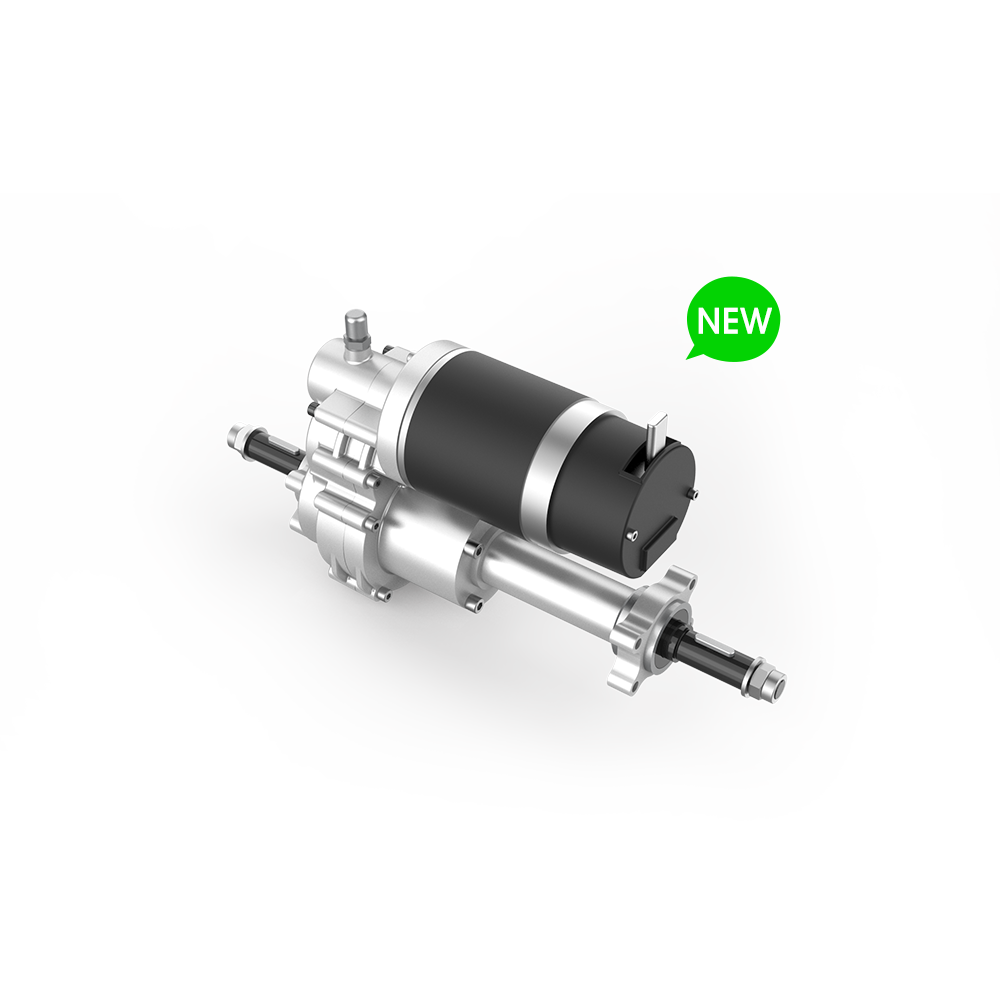
How Do I Select the Right Electric Transaxle for My Vehicle
When choosing an electric drive axle, consider power (e.g., 2-20 kW), load capacity (e.g., 2-10 tons), efficiency (a high-efficient system can save energy up to 30%), cost (with a price bracket between $1,500 and $5,000), or noise level (the ideal value of noise less than 50 dB).
Electric Golf Carts
It also works with 48V battery systems for electric golf carts, usually set with an approximate setting for a 3 to 4 kW electric drive system. Assuming it would run on 4 kW of electric power for the driving system, its top speed can go up to 30 km/h, which stays almost constant at 24 km/h. However, at 2.5 kW, the range lowers to around 18 to 20 km/h.
The service life of the batteries in an electric golf cart is about 1,000 charge cycles. At four uses a week, that works out to two years. Vehicles fitted with a more efficient drive can increase the lifespan of the batteries by about 15% to 20%. A 48V battery coupled to a high-efficiency electric drive would result in a range of about 45 km per charge, whereas a low-efficiency system may yield only a maximum range of 35 km.
The electric drive system has a maintenance and replacement cycle of about 2-3 years. On average, owners should conduct a major inspection once a year, with estimated costs ranging between $200 and $400. If a good quality drive system is used, the owner will save around 10%-15% on maintenance costs.
Noise levels for high-efficiency electric drive systems usually stay below 60dB, while noise levels for conventional fuel-powered golf carts exceed 70 dB.
While high-class electric drive systems can cost nearly $2,000, budget options fall in the range of $1,000 to $1,500. Within three years, a high-class drive system can save owners around $300 to $500 in maintenance costs, and energy expenses can also be reduced by about 10%.
Low-Speed Unmanned Patrol Vehicles
The average speed of low-speed unmanned patrol vehicles is about 8 to 15 km/h, and the rating of electric drive axles is generally between 1.5 kW and 3 kW.
The electric drive axle can provide about 2,000 hours of operation time, covering about 24,000 km at an average speed of 12 km/h. The annual maintenance cost is around $200 to $400. A high-efficiency drive system can reduce maintenance costs by 10%-15%.
The endurance of a 48V battery system matched with a 3 kW electric drive axle is about 6 to 8 hours. Assuming the battery capacity is 100Ah, the patrol distance enabled will be about 60 km. Efficiency differences between drive systems result in endurance variations of 5% to 10%.
An ideal electric drive system maintains noise levels below 54 dB, while poorer systems may exceed 70 dB.
High-efficiency electric drive systems typically cost $1,000 to $1,500, while lower-cost systems range from $500 to $800. Cost-effective drive systems can reduce operating costs by 15%-20% over five years.
Electric Trailers
Electric cleaning vehicles generally require between 2 kW and 5 kW of power. Their speed does not usually exceed 25 km/h. For example, a 2 kW electric drive system can work for 6 hours, cleaning a public area of 40,000 square meters continuously.
A high-efficiency system can consume 0.7 kWh to clean 5,000 square meters, while a low-efficiency system may consume 1 kWh—an increase of 40% in energy use. The annual electricity savings can amount to $300-$500 per vehicle.
The life of an electric cleaning vehicle drive axle ranges from 1,500 to 3,000 hours, with annual maintenance costs between $150 and $300. High-quality systems reduce long-term maintenance costs by 10%-15%.
High-quality electric drive systems cost $1,000 to $1,500, while lower-quality versions range from $500 to $800. Mid- to high-end products can save at least 15%-20% in operating costs over five years.
Advanced electric drive systems maintain noise levels below 54 dB, while traditional systems can reach 60 dB or higher.
Electric Cleaning Vehicles
The power consumption of electric trailers ranges between 3 kW and 7 kW. A 5 kW system can tow loads up to 5 tons, while a 6 kW system can handle 7 tons.
Efficiency differences result in up to 30% variation in energy use. A high-efficiency system may consume 1.2 kWh per hour, while a low-efficiency system may consume 1.8 kWh. High-efficiency systems can extend battery life to 3 years, while low-efficiency systems last only 2 years, adding $500 to $800 in replacement costs.
Common electric drive systems cost between $1,000 and $3,000. Higher-quality systems reduce yearly maintenance costs below $100, while cheaper systems may cost $200 to $300 annually.
A 6 kW drive system can run for 6 hours at full load, towing up to 5 tons.
Noise levels in modern systems typically remain below 54dB, while traditional systems often exceed 65dB.
Electric Glass Loaders
Electric glass loader drive systems range from 8 to 15 kW. Transporting glass panes weighing over 2 tons requires at least 12 kW of power.
High-efficiency systems consume 3.5 kWh per hour, compared to 4.5 kWh for conventional systems—resulting in annual electricity savings of about $1,000. Battery life can be extended by 10%-20%.
Prices for electric drive systems start at $1,500 and can reach $5,000. A mid-range system costs about $3,000. Maintenance costs for high-end systems average $400 annually, while low-end systems cost up to $600.
Mainstream systems can handle loads up to 5-10 tons. A 6 kW system can maintain a constant speed of 10 km/h for 6 hours at full load.
Modern electric drive systems produce noise levels below 54dB, while mechanical systems exceed65 dB.
The average lifespan of a high-quality system exceeds 6,000 hours, compared to 4,000 hours for lower-quality systems. A high-end system can reduce maintenance frequency by 30% and save $5,000 over its lifetime.