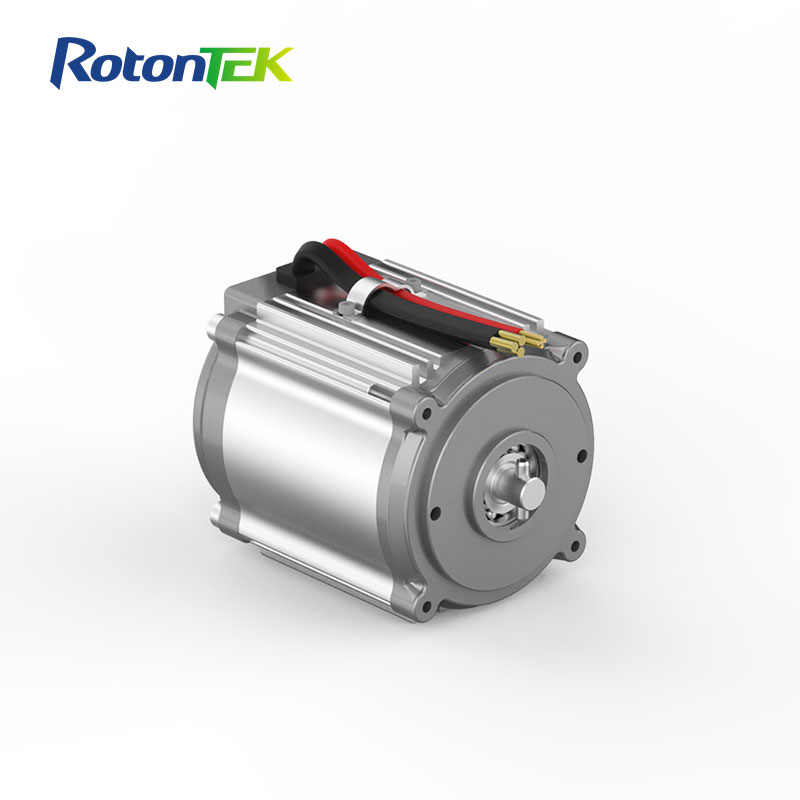
When selecting a PMSM motor, power ratings are a very important factor to consider as they reflect the ability of a motor. In general, the 500W motor-type may be applicable for lighter applications since it allows for higher efficiency and more space. In contrast, the 800W motor guarantees more torque or speed and, consequently, a higher output that may only be required in cases of high inclinations or heavier load conditions. In other words, a given power rating should generally correspond to the demand of a particular application to avoid unreasonable output types.
VS
Selecting the Right Controller
Matching Controllers with Motor Power and Features
Selecting a suitable controller involves ensuring its compatibility with the motor’s power and features, as well as the support of the motor’s requirements. As the ID200 controller can support different voltages of 24V, 36V, and 48V, it is suitable for a variety of power settings, which makes it an efficient match for both 500W and 800W motors. The product can provide up to 30A of continuous current for 60 minutes and can be overloaded to up to 60A for shorter periods, allowing its application in demanding situations. As the controller also features CAN and SCI communications, it allows for sophisticated control methods and can be integrated into modern management systems.
Detailed Overview of ID200 Series DC Brushless Controller
The ID200 series is designed to provide conscientious and comfortable users with mobility that the controller works free from noise or vibrations.The device’s power is valued at up to 75A of peak current for 10 seconds, resulting in potent and highly responsive operation. It supports PWM switching at 16 kHz, which ensures its quiet and smooth operation required for user comfort. In addition to its high-engine power, the controller is also equipped to meet a variety of safety requirements. It complies with the EN 12184, EN 55022, ISO7176-14, and IEC 801 Standards and can support its users in various environments. The device can be operated at the temperatures of -25°C to +50°C, which corresponds to the range of climates users can be expected to encounter.
Compatibility Considerations for Motor and Controller Pairing
Electrical Compatibility: Voltage and Current Requirements
The most important compatibility consideration between a motor and controller is electrical nature is the voltage requirement. The ID200 system can operate with a variety of voltages, supporting 24V, 36V, or 48V. The 800W motor I have selected functions within the same 24V/36V/48V range, so the compatibility is guaranteed. The motor would be mechanically incompatible with a system requiring a different voltage because of the manufacturing limits. The ID200 controller’s maximum continuous and intermittent current rating is 30A and 60 A, respectively. This is an adequate amount for both the 500W and the 800W motor, although the compatibility is not a direct factor because their currents are within the range.
Mechanical Integration: Size and Mounting
Both the motor and the controller need to fit seamlessly within the framework and must not interfere with the vehicle’s operation. Ensuring that these components can be mounted on standard mounting points and that they utilize compatible connectors, such as the MKG connector type with a standard pitch, are crucial aspects of mechanical compatibility. These features guarantee that components can be easily assembled and integrated.
The controller’s casing plays a vital role in protecting the component from mechanical shocks that occur during movement. Proper mounting is essential not only for protection but also for facilitating ongoing heat dissipation. Efficient heat management contributes significantly to the motor’s performance and to the longevity of all involved components, thus ensuring optimal functionality across a variety of applications.
Performance Optimization
Optimizing Motor Performance for Specific Applications
It is constantly crucial to choose a PMMS that matches the power needs of an application. Additionally, the preference should increase user satisfaction. Thus, the performance of the given system can be relatively higher; moreover, the device will have to attract users limited by size and opportunities. On the contrary, another motor may be an 800W option. It increases the given parameter twice, and such a wheel can be regarded effective in other scenarios not requiring additional speed and torque. In other words, outdoor uses or heavier users are different, and an 800W motor will meet the demands of the aforementioned scenario. The main decision requiring a preferential process is the deceleration rate or the rate of acceleration.
Installation Guidelines
Step-by-Step Installation Process for Motors and Controllers
To install a PMSM motor and the corresponding controller, the following details must be appropriately considered. The motor and the controller must be compatible with specifications and requirements based on voltage and current. The PMSM motor should be mounted, ensuring that it is firmly attached without mechanical stress and appropriately aligned. The motor should then be connected to the ID200 controller, and the cable or wire gauge and type used to connect the two should be able to handle the expected load. The wires should be connected based on the schematics explained in the manual. The user’s targeted operational features, including speed and acceleration, must be saved according to the user’s needs. However, each should then be tested separately to ensure the settings are appropriately saved and are functional.