
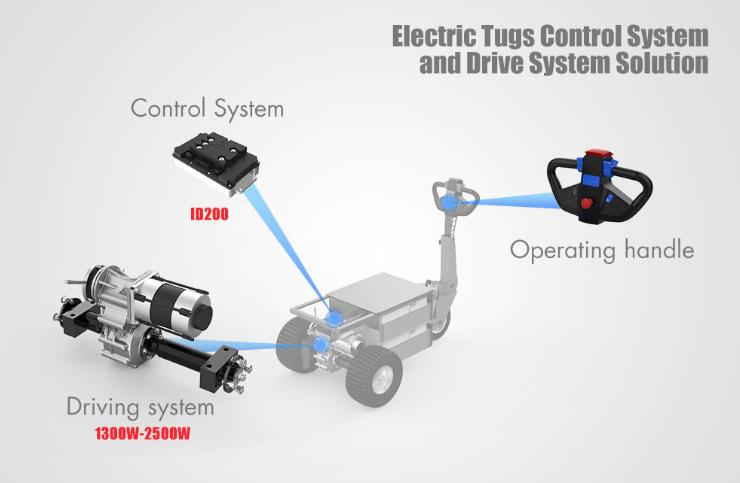
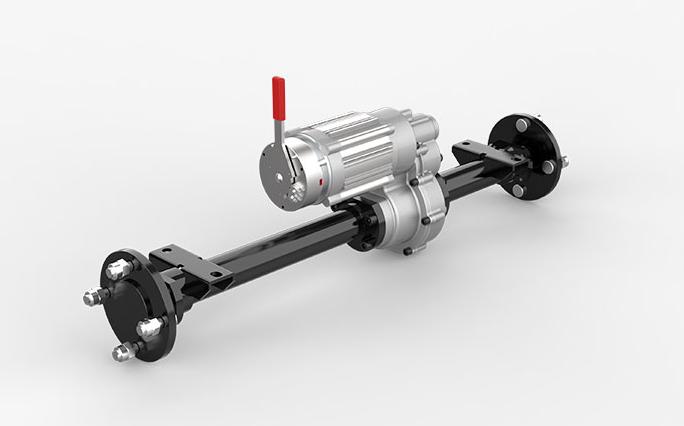
The electric transaxle is a critical component of the electric vehicle powertrain, integrating the electric motor, gearbox, and drive axle into a single unit.
Its primary functions are to regulate torque, control vehicle speed, and ensure smooth and efficient power delivery to the wheels.
Introduction
The weight of electric tugs strongly governs the necessary output power, torque capacity, and operational efficiency. With a broad spectrum of vehicle weights ranging from lightweight 1-ton tugs to heavy-duty 24-ton models, each tug has specific performance requirements. These requirements dictate the selection of the electric motor transaxle in vehicle design, as it must provide adequate power and efficiency to accommodate the operational conditions across different weight classes.
This blog will explore the correlation between electric axle parameters and weight, guiding you on how to choose the right electric motor axle for tugs of various weights.
Impact of Vehicle Weight on Power Requirements
Different weight classes impose distinct power output and energy consumption requirements. Understanding the weight impact is essential for selecting the most suitable electric axle.
1. Power Output Demands
- Startup:When starting from a stationary position, the vehicle must overcome inertia and rolling resistance, making this phase highly power-demanding. As vehicle weight increases, the electric axle must provide stronger initial power output to facilitate a fluid launch, preventing wheel slip or delayed response.
- Acceleration:A sustained power supply is critical for increasing speed from low velocity to the target operating range. Greater mass necessitates higher energy input, resulting in elevated peak power loads on the drivetrain.
- Hill Climbing:Inclined operation introduces additional gravitational load alongside rolling resistance. Heavier vehicles require more drive force from the electric axle to climb smoothly without power loss or wheel slippage.
2. Energy Efficiency Performance
Tug’s weight is positively correlated with energy consumption per unit distance (Wh/km). An efficient electric axle mitigates energy loss by improving drivetrain efficiency and reducing transmission losses. This is particularly important for heavy-duty vehicles.
Connection of Electric Axle Parameters to Weight
1. Torque
(1)Peak Torque
Peak torque refers to the maximum torque output that an electric drive axle system can achieve under short-term operating conditions. It determines the dynamic performance of the vehicle under high-load transient conditions such as rapid acceleration and hill starts.
The greater the vehicle weight, the higher the inertial torque and gravitational component that must be overcome during startup and slope driving. Insufficient peak torque will lead to failure to meet startup acceleration requirements, difficulty in hill starts, and even dangerous rollback incidents.
(2) Continuous Torque
Continuous torque represents the maximum stable torque output that an electric axle can maintain under thermally balanced conditions over extended periods. Continuous torque requirements primarily stem from the combined effects of rolling resistance and aerodynamic drag, where rolling resistance is positively correlated with total vehicle mass.
2. Gear Ratio
The gear ratio in electric axle systems, defined as the rotational speed ratio between the traction motor and the wheels, determines the power delivery characteristics.
A higher gear ratio (i.e., a greater reduction ratio) amplifies the motor torque output to the wheels, enabling stronger acceleration and improved load-carrying capacity. For heavier vehicles, increased wheel torque is necessary during starting and acceleration.
How to Choose Electric Axles for Tugs of Different Weights
By comprehensively evaluating vehicle design, operational requirements, and budget constraints, the most suitable electric axle can be chosen for tugs of different tonnages.
1. Vehicle Design and Technical Specifications
Different drive systems critically shape electric axle requirements. For instance, rear-wheel drive configurations typically demand electric axles with high torque output and enhanced durability to accommodate heavy loads and frequent start-stop operations. Furthermore, the electric axle’s dimensions and mounting position should be carefully matched with the overall vehicle design to optimize power transmission efficiency while maintaining proper balance and handling characteristics.
2. Application Scenarios and Working Conditions
Electric tugs operate in diverse environments, including urban roads, ports, mines, and construction sites. In harsh road conditions or high-load scenarios, electric axles must have superior heat dissipation and impact resistance to achieve stable long-term operation. For operations in noise-sensitive areas such as urban centers or ports, low-noise electric axles are particularly important to minimize environmental disturbance.
3. Cost and Budget
The price of electric axles is typically closely tied to their performance, materials, and manufacturing processes. With limited budgets, a balance must be struck between performance and cost to select the most cost-effective solution. Additionally, long-term factors such as maintenance costs and energy efficiency should be considered to ensure controllable overall operating expenses.
Risk for Incorrect Selection of Electric Axles
1. Undersized Axle
Selecting an electric axle with specifications below actual operational requirements compels the powertrain to operate in a continuous overload state. The primary symptom of this mismatch is sustained overheating, especially evident during heavy-load conditions or frequent start-stop cycles. This excessive thermal stress accelerates the degradation of critical drivetrain components, including gear sets, bearings, and lubrication systems. Furthermore, continuous overload operation may result in sudden breakdowns, compromising operational safety.
2. Oversized Axle
An excessively large axle means additional dead weight, directly boosting the vehicle’s overall mass and consequently enhancing battery energy consumption while lowering effective range. More critically, an oversized axle may fail to operate within its optimal efficiency range, potentially diminishing overall system efficiency under partial-load conditions. This overpowered scenario not only wastes energy but may also negatively impact the tug’s dynamic response characteristics.

Rotontek Electric Axles
At Rotontek, we furnish a comprehensive range of electric transaxles specifically designed to meet the diverse needs of electric tugs across various weight classes, from 1t to 24t. Here are three of our models:
1. Low Noise 250W Permanent Magnet Transaxle ND12-1-21
Our 250W Permanent Magnet Transaxle ND12-1-21 incorporates a differential with a DC permanent magnet brushless motor. Equipped with durable alloy steel quenched gears, it offers a lifespan of 5 times longer than those made from powder metallurgy gears. It is ideal for small machinery requiring efficient torque transfer, such as 1-1.5t electric tugs.
2. Low Noise 1500W BLDC Transaxle ND42-1-43.9G
The 1500W BLDC Transaxle ND42-1-43.9G is suitable for 6t electric tugs, ensuring efficient power utilization and robust performance. Featuring a two-stage transmission system, it delivers high torque at low speeds.
3. Low Noise 3000W BLDC/AC Transaxle ND53-1-80.9
This 3000W BLDC/AC Transaxle ND53-1-80.9 boasts high transmission efficiency, enabling high torque performance even at low speeds. It is perfect for 15-18t tugs. Its compact and robust design, along with advanced wear-resistant materials for the gears, results in low noise and a long service life. Additionally, its motor efficiency is up to 79.40%, maximizing energy utilization.
Conclusion
It’s imperative to match the axle’s specifications to the tug’s weight and intended use to achieve optimal results. With our diverse offerings, you’re equipped to make an informed decision that supports your electric tug’s performance and longevity.
The Fiat Ducato.
A van platform that is adopted by Ram, Citroen, Peugeot, Vauxhall is used by tradesmen and travellers in environments that often see them challenged by terrain.
It would be a game changer to provide an electric “on demand”
rear axle for low speed situations. It would maintain efficiency when not in use and perhaps re generate the on board systems used by traders and travellers.
I find it strange no-one has entered this market.