

We often stress that knowing the true electrical limits is crucial for long-term dependability when clients ask us how far they can safely push a system using a brushless drive motor controller or a 48V brushless controller. Our team at Rotontek works with the 48V architecture on a regular basis because we create power-dense drive systems for mobile machinery. As a result, we have a thorough understanding of how a brushless drive motor controller reacts when voltage exceeds its rated range, as well as the reasons behind the manufacturers’ chosen thresholds.
Understanding Why 48V Systems Have a Defined Ceiling
Although the label “48V” is used universally, a 48V brushless controller is never designed to operate at exactly 48 volts. Instead, the true operating window varies depending on battery type and system design. For example, a freshly charged lithium battery can easily reach 54V–58V. This means any modern brushless drive motor controller has to tolerate higher-than-nominal voltage without overheating or triggering protection modes.
In our experience, most robust industrial controllers—including the 48V brushless controller configurations we integrate into Rotontek drive wheel assemblies—can typically handle somewhere between 60V and 63V as their maximum safe input. Beyond that, MOSFET stress, capacitor thresholds, and thermal load rise sharply. As a result, control boards begin activating overvoltage protections to prevent failure.
That upper range depends on whether the controller is built for heavy-duty use, light-duty mobility, or automotive-grade performance. Since we engineer our controllers for demanding platforms like electric forklifts and AGV transfer trucks, our voltage tolerance sits at the higher end of the industry spectrum.
How Rotontek Designs High-Tolerance Brushless Controllers
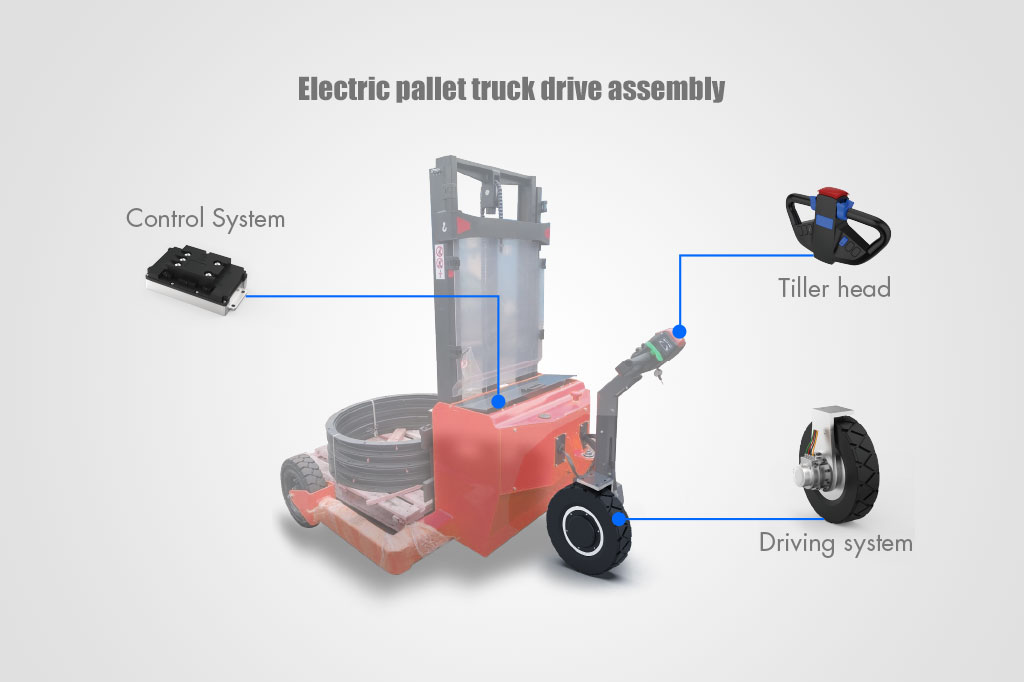
At Rotontek, we manufacture integrated electric-drive systems where the brushless drive motor controller, gearbox, motor, and wheel form a compact monoblock structure. This includes our popular 1KW Brushless Electric Driving Wheel DL1000-1-29, which pairs with either a traditional or high-performance 48V brushless controller.
Our engineering team builds these systems specifically for:
- Construction equipment
- AGV logistics vehicles
- Material-handling platforms
- Electric tractors and pallet movers
To support these mobile machines, we must ensure every brushless drive motor controller maintains stability during heavy-load starts, steep incline climbing, and fast travel on flat roads. That’s why our controllers are designed with a reinforced power stage, carefully selected capacitors, and thermal safeguards that allow them to withstand the voltage fluctuations typical in 48V lithium energy systems.
The DL1000-1-29 driving wheel highlights this design philosophy. With an IP66 ingress rating, low-noise reducer, and a high-strength gear train, the system can endure harsh industrial environments while maintaining precise response from its paired 48V brushless controller. And since many of our clients operate AGV fleets or electric forklifts around the clock, voltage stability is not just an engineering choice—it’s a business requirement.
So, What Is the Maximum Voltage of a 48V Controller?
Based on our field data and the performance testing we conduct on Rotontek platforms, a well-built 48V brushless controller typically caps out safely at about 60V–63V. Anything beyond that risks activating overvoltage protection or damaging the internal circuits.
Because every brushless drive motor controller functions as the brain of a battery-powered vehicle, we always advise operators to verify their battery’s peak voltage and ensure the charger is properly regulated. When overshoot occurs, even for a moment, it can shorten the lifespan of key components.
For the equipment we manufacture at Rotontek, we tune our systems to accommodate the upper end of the acceptable range. This ensures compatibility with industrial lithium packs and guarantees smooth operation under sudden load changes—like when a forklift initiates a heavy-load start or when an AGV transitions from low-speed maneuvering to high-speed travel.
Voltage Limits Matter—And Quality Controllers Make the Difference
To sum it up, the maximum voltage for a 48V brushless controller usually falls around 60–63 volts, depending on design quality and application requirements. From our perspective at Rotontek, building reliable mobile machinery means engineering every brushless drive motor controller to survive real-world voltage swings, not just textbook values.
That’s why we continue to design rugged, efficient controller systems that support our integrated drive wheels, including the DL1000-1-29. Whether it’s used in electric forklifts, AGV trucks, or other battery-powered vehicles, our 48V platform ensures the durability and precision our customers depend on.