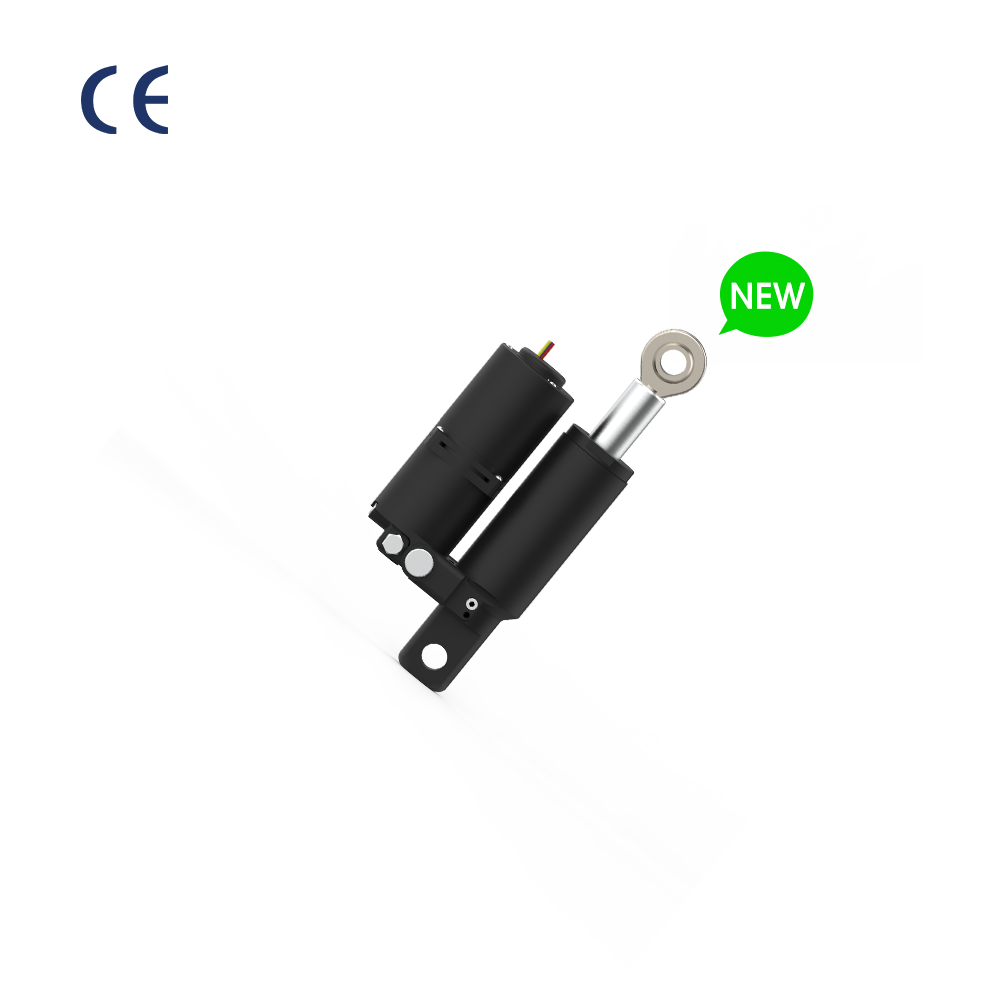
When consulting on purchasing actuators, many industries always ask: Why choose electro hydraulic actuators instead of traditional systems? With technology developing so quickly, most equipment will be used with more modern actuators. In particular, the performance, efficiency, versatility and reliability of electro hydraulic actuators are difficult to surpass with traditional actuators, and the return on investment of traditional actuators is lower. This is why consulting on this issue should first recommend electro hydraulic actuators.
What is an Electro Hydraulic Actuators
Definition
Before we understand electro hydraulic actuators, we need to know what actuators are. Actuators are core components in various machinery and industrial processes, and are mainly responsible for moving and controlling machinery or systems. The working principle of actuators is to convert energy, such as electrical energy, hydraulic energy or pneumatic energy, into kinetic energy, thereby generating linear or rotary motion, enabling machinery to perform specific tasks.
In fact, an electro hydraulic actuator combines the precision and control of electric actuators and the power and stability of a hydraulic system. The main principle is to convert electrical energy into mechanical and then into hydraulic power. Such energy conversion for a heavy load can more precisely control the operated forces and motion steps.
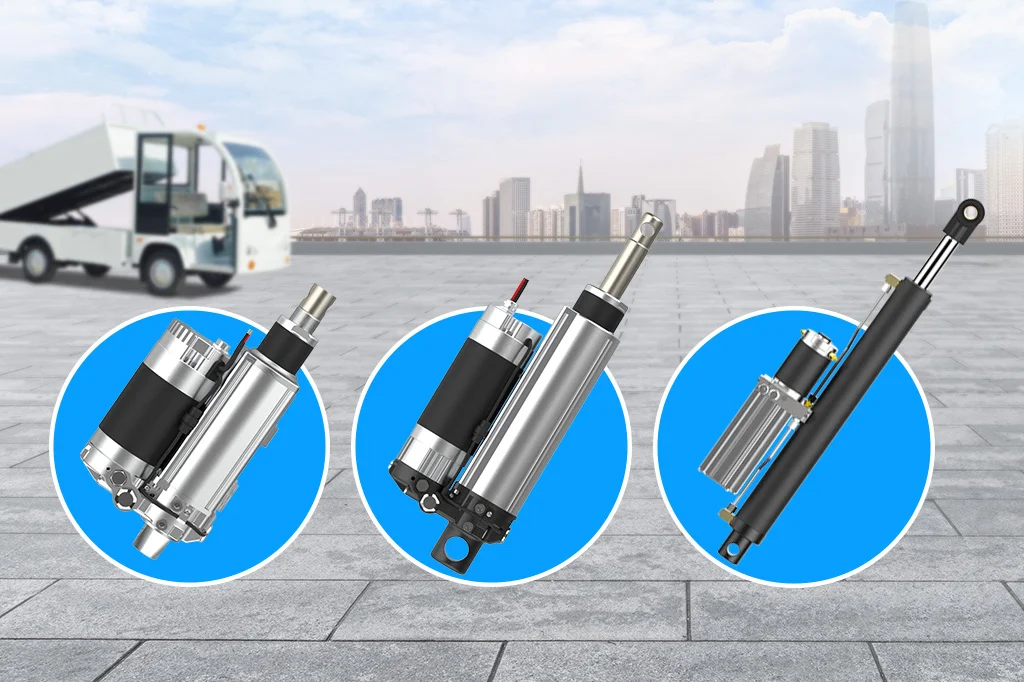
Electro hydraulic actuators are applied in numerous industries such as aerospace, automotive and industrial automation to name just a few, and have an increasingly growing global market that show no to little stagnation. As customers’ needs are changing and the demand for more efficient and reliable actuator products is ever-growing, the market size will be equal to US$118.2 billion by 2032.
Key Components
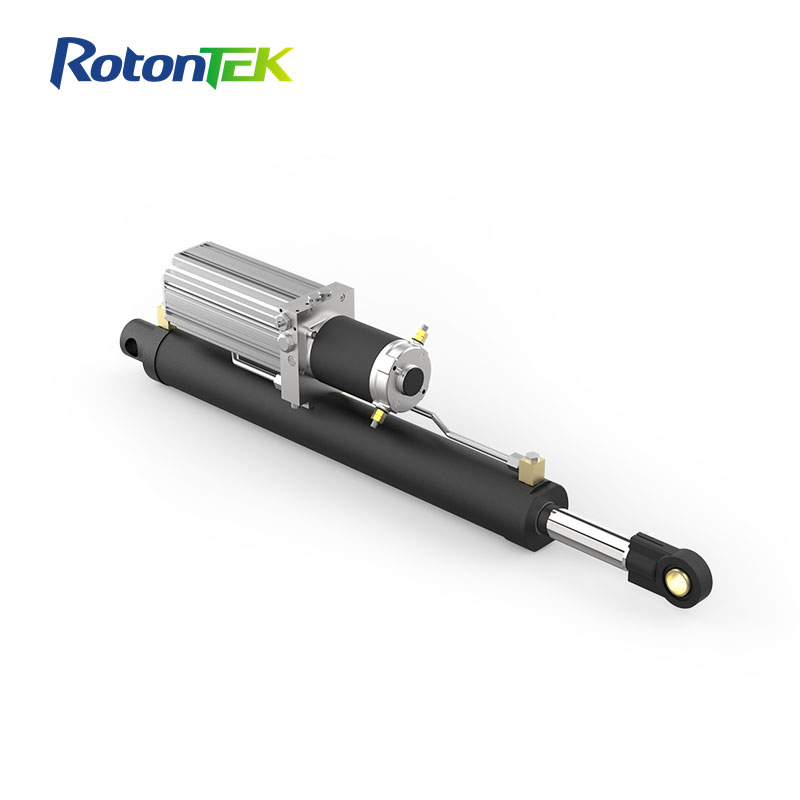
Here we take the electric hydraulic linear actuator of Rotontek, a leading enterprise, as an example. As shown in the figure below, let’s first understand the core components of the electric hydraulic actuator, mainly including motors, integrated oil pumps, controllers, cylinders, travel switches, etc.
These components are the advantages of integrated hydraulic and electrical systems, providing precise control, large force output and high efficiency, and each component has unique value. Its design allows seamless integration of electronic control and hydraulic power, and is superior to traditional actuators in force output, control accuracy and energy efficiency.

Motor
The motor is the driving force of the actuator, generally converting electrical energy into mechanical energy. The DC motor in the electric hydraulic actuator directly drives the oil pump, which is mainly used to generate the pressure required to move the actuator.
Here we take Rotontek’s electric hydraulic linear actuator as an example, so here we use Rotontek’s self-developed DC motor, which is famous for its high efficiency and low noise, which is far ahead of other ordinary motors.
Integrated oil pump
The oil pump is the main component for generating hydraulic pressure. The oil pump is directly integrated with the DC motor to ensure compact design and efficient energy transmission.
It converts the mechanical energy generated in the motor into hydraulic pressure to power the actuator’s movement. It provides the actuator with the efficiency of the hydraulic system and ensures the stability of operation.
Controller
The controller manages the operation of the actuator. It integrates advanced electronics and sensors to precisely control the movement of the actuator. Real-time feedback from the sensors enables the controller to dynamically adjust the operation to ensure accurate positioning and smooth movement.
Oil cylinder
The place where hydraulic pressure is converted into linear motion is called a oil cylinder. Inside the oil cylinder is a piston that is moved by the pressure generated by the oil pump. By moving it, you will perform various tasks such as lifting, pushing or pulling cargo.
Travel switch
Also known as a limit switch, the travel switch is a built-in safety feature. When the actuator reaches the set travel, it automatically cuts off the power to prevent overtravel and potential damage. The switch also helps keep the actuator in a self-locking state, ensuring the stability and safety of its static position.
Traditional Actuators: Three Basic Types
After looking at the electro hydraulic actuator, let’s go back to the traditional actuator to see what shortcomings or weaknesses have led to the gradual elimination of traditional actuators. Here, we mainly classify them from the perspective of energy conversion. There are three basic types of traditional common actuators, including hydraulic, pneumatic and electric.
Hydraulic Actuators
Hydraulic actuators are devices that convert fluid power directly into mechanical power. They provide a lot of force and control precision.
Unique advantages:
Since it converts hydraulic power resources directly into kinetic energy, it provides higher power output and more force than types such as electric and pneumatic actuators;
Precisely control fluid flow and pressure to achieve specified movements. Especially when manufacturing robots, the movement generated must be very precise, and the advantages of hydraulics are obvious;
Hydraulic technology can minimize energy losses while maintaining stable power output, which is relatively more durable and reliable than electric and pneumatic actuators;
Main weaknesses:
The fluid level needs to be checked regularly. In addition, when the seals need to be replaced, not all technicians are qualified to replace them or any other repairs, which can easily lead to fluid leakage and contamination problems.
In addition, the initial cost can be quite high due to the need for expensive pumps, fluid reserves and long pipes.
Pneumatic Actuators

Pneumatic actuators mainly use compressed air to enter the chamber, push the piston, and convert this movement into linear or rotary motion.
Unique advantages:
In some extremely dangerous environments, pneumatic actuators can ensure safety, mainly because they do not rely on electricity, so there is no electrical danger that conventional actuators have.
Because pneumatic actuators are directly compressed air movement, they can provide fast and sensitive movement.
Pneumatic actuators are simpler in design, easy to install and maintain, and can well avoid the problem of downtime affecting system operation.
Main weaknesses:
Because it is compressed air, the output force is smaller than that of hydraulic actuators.
Although pneumatic actuators do not rely on electricity, they require a continuous supply of compressed air. If they rely too much on air, the disadvantages will be magnified in areas with thin air.
Compared with hydraulic and electric actuators, pneumatic actuators will produce noise when releasing compressed air due to their simple operation mode.
Electric Actuators
Electric actuators convert electrical energy into mechanical motion, providing precision and versatility in use.
Unique advantages:
Because electric actuators are powered by electricity, highly accurate positioning and speed control can be adjusted.
This is mainly reflected in the seamless integration of electric actuators with digital control systems, and they can also be programmed and monitored on a computer interface to ensure safety.
Lower energy consumption, as electric actuators use electricity only when needed. less complex technology and less maintenance.
Main weaknesses:
Usually provide less force than hydraulic actuators;
Electric actuators are completely dependent on a stable power supply for any operation;
Usually used with complex control systems, which is why the initial price may be higher than pneumatic actuators.

Innovative Combination: Electro Hydraulic Linear Actuators
According to the above analysis, it can be seen that with the development of technology and the increase of demand, traditional actuators are not perfect so that the drawbacks will be more and more significant. Therefore, we integrate relatively good hydraulic and electric actuators together, which may achieve better complementary effects. Now, an analysis of the situation after such integration will follow.
Strengthened Advantages
Here you can refer to the compact electric hydraulic push rod launched by Rotontek, as shown in the product display in the video above. Electro hydraulic linear actuators can integrate the advantages of both, while optimizing or avoiding their inherent disadvantages.
Electro hydraulic actuators combine electronic control systems with hydraulic power to achieve precise and repeatable movement. At the same time, energy use is optimized, reducing consumption and operating costs. Studies have shown that electric hydraulic actuators save 30% energy compared to traditional hydraulic systems.
The combined electric hydraulic actuator has a wider range of applications and less maintenance than traditional hydraulic systems. In addition, it comes with advanced sensors and feedback mechanisms to achieve real-time adjustments to ensure optimal performance.
In addition, Rotontek’s four-in-one compact design for electric hydraulic actuators integrates hydraulic units, cylinders, control circuits and limit switches. Compared with other actuators of the same volume, this design can provide 50% higher thrust. And it adopts a durable design of high-quality aluminum alloy, with a waterproof rating of P65, it can withstand various harsh environments while still having a long service life and reducing the need for frequent replacement.
Optimized Weaknesses
Although traditional actuators have their limitations, Electro hydraulic actuators can effectively solve and optimize these weaknesses and turn weaknesses into advantages.
Traditional hydraulic actuators have serious fluid leakage problems in the later stage of use, resulting in efficiency loss and difficult maintenance. Electro hydraulic actuators use a sealed system design to minimize leakage, ensure consistent performance and reduce maintenance requirements.
Due to the characteristics of fluid dynamics, traditional hydraulic systems have a slow response speed. Electro hydraulic actuators use fast electrical control to effectively improve responsiveness and achieve faster and more accurate movement.
Most actuators generally have serious noise, while Rotontek’s electro hydraulic actuators keep the noise level below 65dBA, which is a more comfortable level. At the same time, this electro hydraulic actuator also comes with a power-off manual operation to ensure safety, and can be customized even if there are other needs.