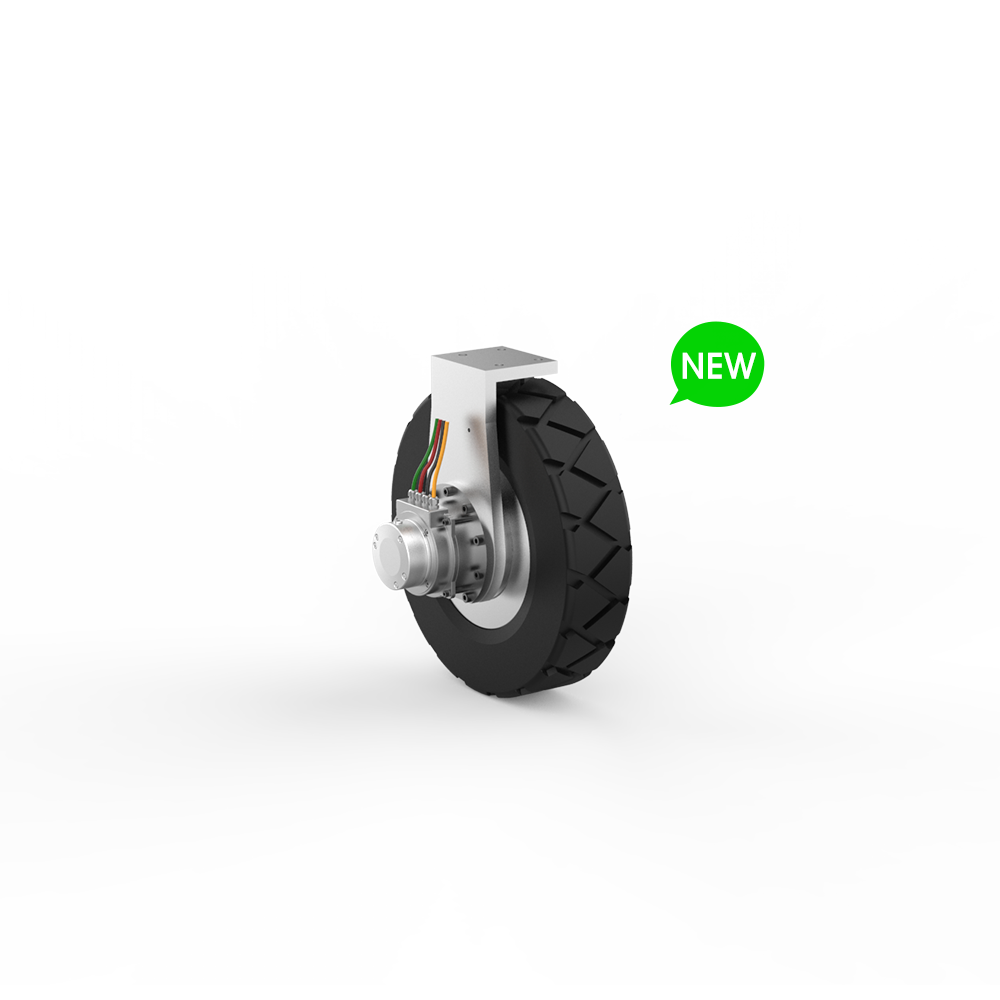
When choosing a motor wheel, you need to pay attention to noise (less than 60dB, 15%-25% noise optimization), materials (such as carbon fiber weight reduction of 15%), service life (up to 50,000 hours), energy consumption (90%-95% efficiency), installation efficiency (modularization saves 66% time) and power output (matching load capacity to avoid 50% shortening of life).
Low noise
Motor wheels below 60 decibels (dB) are generally considered to be the standard of “quiet”, which is close to the volume of normal human conversation (50-60dB) and far lower than the noise level of ordinary vacuum cleaners (70-85dB). Gear optimization design can reduce operating noise by 15%-25%. Adjusting the gear pitch and lubricant ratio can reduce the noise of an industrial motor wheel from 72dB to 58dB.
Using bearings with a precision level of P5 (ISO standard) can reduce vibration and noise by 30%. The motor wheel with imported Japanese bearings has a noise of only 55dB under full load, which is a full 10dB lower than the unoptimized product. The market price of this type of bearing is usually 20%-30% higher than that of ordinary bearings, and the service life can be extended by more than 50%.
The auxiliary motor wheels purchased by a hospital for the operating table require the noise not to exceed 50dB. These motor wheels suppress high-frequency noise below 20Hz. Motor wheels equipped with shock-absorbing pads can reduce the noise peak by up to 40%. The motor wheels of smart logistics vehicles reduce the noise from the original 65dB to less than 58dB. The operating noise of industrial equipment shall not exceed 60dB.
More than 65% of buyers consider noise as the main consideration when choosing motor wheels, and motor wheel noise problems caused by improper maintenance account for more than 30% of all after-sales problems.

Material
Aluminum alloy can reduce the weight of the whole machine by more than 30%. The wear rate of motor wheels with polyurethane coating is only 0.02mm/hour under high-speed operation (>1000rpm), while the wear rate of rubber materials is twice that. Carbon fiber composite materials have a tensile strength of more than 500MPa, while the density is only 1.8g/cm, which is 1/4 of steel. The use of carbon fiber motor wheels has reduced the total weight of the equipment by 15% and improved fuel efficiency by 8%.
A food processing plant reduced the failure rate from 5% to 1% by replacing stainless steel motor wheels, and the cleaning frequency was reduced by 20%. An oil drilling company used PTFE motor wheels to reduce the failure rate under high temperature conditions from 7% to 2%.

Service life
Most high-quality motor wheels have a service life of 20,000 to 50,000 hours, which is equivalent to 5 to 17 years of continuous operation under 8 hours of operation per day. Bearing life can be extended by 30%-50%. The failure rate of improved bearings has been reduced from the original 8% to 3%, and the annual maintenance cost has been reduced by 20%.
In industrial environments with humidity greater than 90% or temperatures exceeding 70℃, the life of ordinary steel motor wheels is usually shortened by 30%-40%. The replacement cycle of highly corrosion-resistant material motor wheels has been extended from the original 2 years to 5 years, saving more than 15% of operating expenses each year.
The average life of equipment with monthly lubrication and quarterly complete inspections is 25%-40% higher than that of equipment without regular maintenance. The establishment of an intelligent maintenance system has increased the average life of the motor wheel from 5 years to 7 years, while reducing unexpected downtime by 50%.
The maximum load capacity of the motor wheel is between 100 kg and 2000 kg, and the motor wheel with more than 400 hours of operation per month is replaced twice as often as the equipment with less than 200 hours. The average service life of the intelligent motor wheel with automatic load adjustment function has increased by about 35%.
The fatigue life of aluminum alloy materials in high-frequency vibration environments is 20% to 30% higher. An industrial equipment replaces a low-quality motor wheel once a year, and each replacement costs $500, while a high-quality motor wheel with a life of 5 years only costs $1500. High-quality motor wheels can save at least 30% of the overall cost. The failure rate of high-temperature resistant motor wheels in a 24-hour uninterrupted operation environment has dropped from 5% to 1%.

Energy consumption

For a motor wheel that works 8 hours a day, assuming an electricity price of $0.12/kWh, the daily operating cost is about $0.96, and $28.8 for a month (30 days). Compared with a motor wheel with a power consumption of 1.5 kW, the monthly energy consumption can be reduced by about 33%.
The efficiency of a high-efficiency motor wheel can reach 90%-95%, while the efficiency of ordinary motors is usually less than 85%. A motor with a rated power of 1 kW and a 10% increase in efficiency can save 0.1 kWh of electricity per hour. A device that runs 8 hours a day can save nearly 300 kWh of electricity in a year, which is converted into an electricity bill of about $36.
The energy consumption of a high-efficiency motor wheel can be reduced by 15%-20%. The monthly energy consumption of the energy-saving motor wheel dropped from 120,000 kWh to 96,000 kWh, directly reducing the electricity bill by $2,880. The standby power consumption of a 1 kW motor wheel in a non-working state is as low as 0.5 watt, while the standby power consumption of ordinary products on the market is usually 2-5 watts. In a 24-hour operation environment, the power consumption can be reduced by more than 20 kWh per year.
Intelligent control technology reduces the peak power utilization rate from 85% to 70%, reduces the overall energy consumption by 18%, saves $4,000 in electricity bills per year, and reduces carbon dioxide emissions by about 10 tons. The weight of the motor wheel made of aluminum alloy or carbon fiber can be reduced by 20%-30%. A factory replaced the lighter motor wheel and the starting energy consumption of the equipment decreased by 15%.
The 1 kW motor wheel performs best when the energy consumption fluctuation rate under constant load is less than 3%. Improve the magnetic matching of the stator and rotor, and the energy consumption fluctuation rate of the product is reduced from 5% to 1.8%. The unit power consumption of the new motor is expected to drop by 15%-20% compared with 2020.
Difficulty of installation

Complex installation process may extend the installation time by more than 50%. Traditional motor wheels require up to 8 steps to install. With the quick-clip motor wheel design, the installation time for each device is reduced from 2 hours to 40 minutes, and the installation efficiency is improved by 66%. A modular product weighs 12 kg, which is 20% lighter than traditional products. The entire process can be completed in 15 minutes.
The self-calibration smart motor wheel reduced tool rental costs by 40% in a one-year installation project, with a total cost savings of $3,500. The motor wheel cannot be directly adapted to existing equipment, and the installation cost may increase by 20%-30%. The average installation time of the robot-assisted motor wheel is reduced by 50%.
The motor wheel with special coating can withstand ambient temperatures up to 80°C and 90% humidity. The modern motor wheel is equipped with an intelligent detection system, which reduces 75% of the commissioning time.
Power

The motor wheel with a rated power of 1.5 kW typically has an output torque of 50 Newton meters (Nm), and industrial logistics vehicles can easily push goods weighing up to 500 kg. The output torque of a 1 kW motor wheel is 30 Nm, which is only suitable for light load scenarios below 300 kg.
The speed range of high-performance motor wheels is between 200 and 5000 revolutions per minute (RPM). Logistics companies use motor wheels with a speed of 3000 RPM in high-speed sorting equipment, which improves work efficiency by 20%, and the average daily cargo processing volume increases from 5,000 pieces to 6,000 pieces.
The energy conversion efficiency of high-efficiency motor wheels can reach 90%-95%, while the efficiency of traditional designs is usually less than 85%. Replacing high-efficiency motor wheels can save up to $2,500 in electricity costs each year and reduce 10 tons of carbon dioxide emissions.
The rated load of the motor wheel is 800 kg. If it is overloaded to 1,000 kg for a long time, the load rate of the power system will exceed 125%, and the life may be shortened by more than 50%. The maintenance cost may reach 30%-50% of the purchase cost. The PMSM motor wheel has a 25% higher power density than traditional induction motors and operates at less than 55 decibels. The market share of this type of motor wheel has exceeded 60%.
The intelligent motor wheel can reduce the power output to 50% of the rated value when running at low load, reducing the average operating cost of the motor wheel by 15%, and saving $1,000 in operating expenses per device per year. The maintenance cost of the motor wheel of the brushless DC motor (BLDC) can be reduced by 30%-40%. After using the BLDC motor wheel, the annual maintenance cost was reduced by $1,500, and the operating stability of the equipment was improved by 20%.
In high temperature environments (such as over 70℃), the motor efficiency may drop by 10%-15%. Replacing the high temperature durable motor wheel reduced the failure rate of the equipment from 8% to 2%, and the annual downtime was reduced by 50 hours.