What Size Hydraulic Power Unit do I Need?

Selecting the correct size for a hydraulic power unit is fundamental to the performance and longevity of your system. An undersized unit will fail to deliver the required force and speed, while an oversized one leads to unnecessary energy consumption and higher costs. We understand that navigating these specifications can be complex. This guide outlines the key factors to help you determine the appropriate size for your specific application needs.

Hydraulic System Pressure Requirements

Determining the necessary pressure is the first step in sizing your hydraulic power unit. The system pressure, measured in psi or bar, must be sufficient to generate the force required by your actuator to perform its work. This force is calculated by multiplying the pressure by the effective area of the cylinder’s piston. It is critical to ensure that all system components, including hoses, valves, and the cylinder itself, are rated for this maximum operating pressure to ensure safety and reliability. A correctly specified hydraulic power unit will operate efficiently within its designed pressure range, avoiding the strain and potential damage caused by over-pressurization while delivering consistent performance for your machinery’s tasks.

Hydraulic Cylinder Flow Calculations

The flow rate, measured in gallons per minute (GPM) or liters per minute (LPM), dictates the operational speed of your hydraulic cylinder. To calculate the required flow, you need the cylinder’s bore diameter, rod diameter, and the desired extension and retraction stroke speeds. The power unit’s pump must be capable of delivering this flow rate at the system’s operating pressure. An insufficient flow will result in slow, sluggish movement, whereas excessive flow can cause overheating and require larger, more expensive components. For systems like an electric hydraulic linear actuator, accurately matching the pump’s flow output to the cylinder’s volumetric displacement is essential for achieving the precise speed control and smooth motion required in automated applications.

Reservoir Capacity and Cooling Needs

The hydraulic reservoir’s primary role is to hold an adequate volume of fluid to supply the pump, allow for heat dissipation, and let contaminants settle. A general rule of thumb is a reservoir capacity of three to five times the pump’s flow rate per minute, but this can vary based on the system’s duty cycle and heat generation. In high-cycle applications, a larger reservoir or an external heat exchanger may be necessary to maintain optimal fluid temperature, as excessive heat accelerates fluid degradation and component wear. Proper sizing ensures stable fluid levels during all operational phases, provides sufficient surface area for air release, and contributes significantly to the overall cooling and filtration efficiency of the entire hydraulic system.

Conclusion

Choosing the right size hydraulic power unit is a balance of precise calculation and understanding product specifications. By focusing on your application’s force, speed, and environmental demands, you can select a system that delivers optimal performance and durability. Integrated solutions, like those we develop, can streamline this process by providing matched components in a single unit. For personalized assistance in selecting a unit that fits your specific project requirements, our team at Rotontek is ready to provide technical support and help you find a reliable solution.
What Comprises a Hydraulic Power Unit?

Understanding the core components of a hydraulic power unit is essential for selecting the right system for your application. As a supplier, we know that this knowledge helps you specify requirements accurately and communicate effectively with manufacturers. It ensures you get a unit that delivers the necessary performance and reliability for your specific operational demands. This foundational understanding is key to a successful partnership and a well-functioning hydraulic system.

Hydraulic Fluid Reservoir

The hydraulic fluid reservoir serves as the central storage tank for the system’s hydraulic fluid. Its primary functions are to hold a sufficient volume of fluid to accommodate the operational cycle, allow for air and contaminants to separate from the fluid, and aid in dissipating heat generated during system operation. Reservoirs are typically constructed from steel or aluminum and include essential features such as a breather cap to maintain atmospheric pressure, a sight glass or dipstick for fluid level monitoring, and baffle plates internally to slow fluid return and promote de-aeration. Proper reservoir sizing and maintenance are critical for the longevity and efficiency of the entire industrial hydraulic power unit, as it directly impacts fluid cleanliness and temperature control, which are vital for preventing component wear and failure.

Hydraulic Pump Assembly

The hydraulic pump assembly is the heart of the system, responsible for converting mechanical energy into hydraulic energy by moving fluid from the reservoir into the system under pressure. It is typically driven by an electric motor, internal combustion engine, or other power source. Common pump types include gear, vane, and piston pumps, each offering different performance characteristics in terms of pressure capability, flow rate, efficiency, and noise level. The selection of the pump is fundamental to the performance of an electric hydraulic power unit, as it determines the available flow and pressure that will be supplied to the actuators, directly influencing the force and speed of the machinery it operates.

System Control Valves

System control valves are the components that direct and regulate the flow and pressure of the hydraulic fluid to the actuators, such as cylinders or motors. They provide precise command over the system’s operation, including the direction of actuator movement, the force applied, and the speed of operation. The main types of valves are directional control valves, which determine the path of fluid flow; pressure control valves, which limit system pressure for safety and control; and flow control valves, which manage actuator speed by regulating flow rate. These valves can be operated manually, electrically, or hydraulically, and their integration and configuration are critical for achieving the desired machine function and operational safety.

Conclusion

Ultimately, a hydraulic power unit is a sophisticated assembly of interdependent components—the prime mover, pump, reservoir, valves, and filters—each playing a vital role in generating controlled force. The value lies in selecting a unit whose design and construction are precisely aligned with your operational requirements for durability and efficiency. By understanding these core principles, you can make a more informed decision, whether your project demands a standard configuration or a highly specialized system. For those seeking reliable solutions built with this level of consideration, exploring the engineered options from Rotontek can be a practical step forward.

How to Maintain Your Hydraulic Power Unit

As a supplier, we understand that a well-maintained hydraulic power unit is critical for your operational uptime and productivity. Proper maintenance prevents costly downtime and extends the system’s service life, protecting your investment. This guide outlines key maintenance tasks that you can perform to ensure reliable operation. Following these procedures helps maintain consistent performance and avoids unexpected failures.

Hydraulic Fluid Level Checks

Regularly checking the hydraulic fluid level is a fundamental maintenance task. We recommend inspecting the level with the unit turned off and on a level surface to get an accurate reading from the sight glass or dipstick. The fluid should be within the marked operating range; if it is low, top it up with the correct type of fluid specified for your system. Using the wrong fluid can cause damage. Always ensure the reservoir cap is clean before removal to prevent contamination. Consistent fluid level checks help prevent pump cavitation and ensure optimal system performance. For more information on durable systems, you can learn about our industrial hydraulic power unit.

Filter Replacement Procedures

Replacing hydraulic filters at scheduled intervals is vital for system cleanliness and longevity. We advise checking the filter condition and pressure indicators regularly. A clogged filter will show a higher pressure drop and should be replaced immediately to avoid bypassing and introducing contaminants into the system. Always use the correct replacement filter specified for your unit. When replacing, ensure the area around the filter housing is clean to prevent dirt from entering the hydraulic circuit during the swap. Proper filter maintenance protects sensitive components like pumps and valves from abrasive wear. This is a critical step for any electric hydraulic power unit to maintain efficiency.

System Leak Inspection Steps

Conducting thorough leak inspections helps preserve hydraulic fluid and system pressure. We suggest a visual inspection of all hoses, fittings, seals, and the reservoir for any signs of weeping, dripping, or puddling of fluid. Pay close attention to connection points and areas that show signs of wetness or accumulated dirt, which can indicate a slow leak. Also, listen for unusual hissing sounds that might signal a pressure leak. Addressing leaks promptly not only saves fluid but also prevents environmental issues and maintains system efficiency. Regular inspections should be part of your standard operating procedure to ensure a tight, reliable system.

Conclusion

Ultimately, maintaining your hydraulic power unit is a systematic process of observation, prevention, and timely action. By adhering to a disciplined routine of fluid management, component inspection, and contamination control, you safeguard your productivity and protect your capital investment. The specific needs may vary between a compact unit and a large industrial system, but the core principles of care remain constant. For tailored advice and reliable components, our expertise at Rotontek is here to support your operation’s efficiency and uptime goals.

What are the Applications of Hydraulic Power Units

Understanding the applications of hydraulic power units is crucial for selecting the right system for your needs. As a supplier, we see how these units provide the muscle for a vast range of machinery. Knowing where they are used helps you appreciate their versatility and reliability. This knowledge ensures you can make an informed decision for your specific operational requirements.

Industrial Machinery Operation

Hydraulic power units are fundamental to industrial machinery operation, providing the high force density required for demanding processes. They are the driving force behind machine tools like presses, injection molding machines, and metal shears, where precise and powerful linear motion is essential. In manufacturing automation, these units power robotic arms, clamps, and index tables, enabling efficient and repetitive heavy-duty tasks. Their ability to generate immense force from a compact power source makes them indispensable in environments like steel mills and foundries. The reliability of an industrial hydraulic power unit ensures continuous operation in harsh conditions, minimizing downtime. This makes them a cornerstone for productivity across various sectors, from plastics to primary metal production.

Construction Equipment Power

In the construction sector, hydraulic power is synonymous with raw power and control for heavy equipment. Excavators, bulldozers, and cranes rely on hydraulic systems to perform digging, lifting, and earthmoving tasks that would be impossible with other technologies. The high power-to-weight ratio allows for robust machinery that can operate efficiently on rough terrain. An electric hydraulic power unit is often used in applications where quieter operation and zero on-site emissions are beneficial, such as in urban construction projects. The durability of these systems ensures they can withstand the extreme shocks, vibrations, and contaminant exposure common on job sites. This reliability is critical for meeting project timelines and maintaining worksite safety.

Aerospace System Control

Hydraulic power units provide critical control and actuation in aerospace applications, where failure is not an option. They are responsible for operating flight control surfaces such as ailerons, rudders, and flaps, ensuring stable and responsive aircraft maneuverability. Landing gear systems also depend heavily on hydraulic power for reliable extension and retraction during takeoff and landing sequences. The systems are designed to be extremely lightweight yet capable of withstanding dramatic pressure and temperature fluctuations experienced at high altitudes. Redundancy is a key design principle, often featuring multiple independent systems to guarantee operation even in the event of a component failure. This makes hydraulic systems a trusted technology for maintaining the highest levels of safety and performance in aviation.

Conclusion

The applications for hydraulic power units are foundational to modern industry, enabling the heavy lifting, precise shaping, and controlled motion that build our world. From large-scale industrial projects to intricate manufacturing processes, the right unit provides the muscle and control needed to get the job done efficiently. Selecting a unit designed for your specific pressure, flow, and environmental requirements is crucial for performance and durability. For those seeking a reliable partner in hydraulic power, exploring the engineered solutions from Rotontek can be a strong step toward optimizing your operations.

What Is Electric-Trailer Landing Gear? A Practical Guide for Modern Fleet Operators

When we talk with logistics partners about improving yard efficiency and driver safety, the conversation often circles back to how an electric jack and fully integrated electric trailer landing gear systems are transforming routine trailer-support tasks. In our team at Rotontek, we’ve seen firsthand how replacing manual cranking with smart, motor-driven support technology dramatically reduces strain, speeds up operations, and boosts stability. Because electric jack systems and electric trailer landing gear work hand-in-hand, we rely on both technologies more than three times across our product lines to help fleets upgrade to modern, intelligent trailer-support solutions.

The Shift Toward Smarter Trailer Support

Over the years, many of our fleet customers have struggled with slow, labor-intensive manual jacks. Situations where the landing gear was hard to access or where operators had to couple and decouple trailers multiple times a day often led to unnecessary fatigue and delays. That’s why we’ve embraced electric jack innovation and strengthened it with complete electric trailer landing gear assemblies to eliminate these inefficiencies.

Electric-powered lifting dramatically changes daily workflows. With just the press of a button, operators can stabilize, lift, or level a trailer without struggling with crank handles—especially useful in tight spaces or adverse weather conditions. This fusion of an electric jack system with intelligent electric trailer landing gear has become a must-have for high-volume logistics hubs, cold-chain fleets, and multi-platform transport companies.

How Rotontek Redefines Electric Landing Gear Performance

At Rotontek, we’ve engineered electric trailer landing gear solutions that go far beyond basic motorized lifting. Our team’s goal is always the same—to create systems that simplify work, improve safety, and withstand extreme operating conditions.

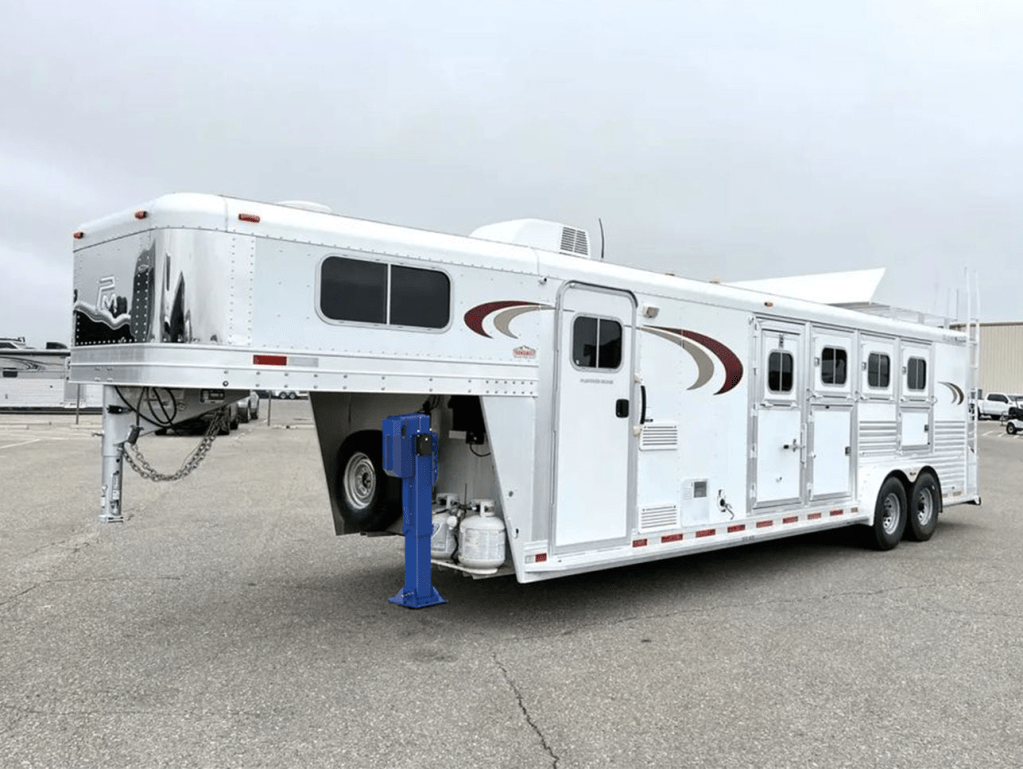
ND10T-NG350 Smart Electric Leveling Jack: One of our most trusted solutions is the 10-ton Smart Electric Leveling Jack ND10T-NG350, which plays a vital role when trailers are parked without a tractor. This electric jack prevents tipping during dock work, levels the trailer on uneven surfaces, and stops the undercarriage from sinking into soft yards.

We integrated a patented power-off brake system and a unique screw-stop mechanism to ensure maximum stability even if the power source is interrupted. This is where the real synergy of electric jack technology and electric trailer landing gear becomes clear—the combination enhances balancing, lifting precision, and overall safety.

NW-20TLD Electric Landing Gear for Semi-Trailers: Another standout is our NW-20TLD 20-ton Electric Landing Gear, designed to meet the tough demands of modern transport fleets. This electric trailer landing gear solution replaces manual cranking completely and adds a new level of comfort and safety. It shines particularly in areas where the landing gear is hard to reach or where trailers must be coupled and uncoupled frequently.

We built this system with workplace safety and vehicle uptime in mind. Its strong motor drive, robust mechanical structure, and intelligent control features allow operators to manage heavy trailers with confidence and consistency.

Both the ND10T-NG350 and the NW-20TLD showcase our commitment to innovation, reliability, and efficiency.

Why Electric-Powered Landing Gear Matters More Than Ever

From our perspective at Rotontek, the rise of electric jack and electric trailer landing gear systems is not a trend—it’s the new standard. Modern logistics operations rely heavily on speed, precision, and predictable safety. Electric support systems help eliminate human error, reduce physical strain, and minimize downtime.

Fleets using our electric jack and electric trailer landing gear systems often report:

  • Faster turnarounds at the docks
  • Reduced operator fatigue and injury
  • Higher trailer stability on uneven or soft surfaces
  • Better uptime and fewer maintenance disruptions
  • Streamlined processes for multi-shift operations

Whether a trailer is handling daily regional shipments or long-haul transitions, powered landing gear ensures consistent ground support with minimal effort from the operator.

Electric Trailer Landing Gear Is the Future of Safe, Efficient Trailer Support

Electric jack systems have already proven their value across the industry, and when we integrate them into intelligent electric trailer landing gear, fleets gain a far more capable and reliable support system. From preventing tip-overs to improving coupling efficiency, our Rotontek designs—like the ND10T-NG350 and NW-20TLD—show how far technology has advanced beyond manual cranking.

As we continue developing smarter, stronger, and more dependable lifting systems, our mission remains simple: help fleet operators work safer, faster, and with greater confidence every day. If you’re looking to upgrade your equipment with advanced electric jack solutions or next-generation electric trailer landing gear, our team is ready to help you move forward.

What Size Electric Jack for a Travel Trailer? A Practical Guide for B2B Buyers

Our staff always starts by outlining how selecting the appropriate lifting capacity affects long-term stability and safety when clients inquire about the best size electric jack for travel trailers.  For travel trailer systems, an electric jack and electric leveling jacks frequently cooperate to support the trailer while it is being loaded, maintained, or parked.  We make sure the electric jack design we provide fits the tongue weight, platform size, and daily workload of the travel trailer because these two systems frequently run concurrently.  We now have a thorough understanding of what companies actually require when matching equipment to actual operational situations, thanks to Rotontek’s continued leadership in the industry with cutting-edge jack innovations.

Understanding Weight Requirements Before Selecting an Electric Jack

One of the most common misconceptions we see is that any generic electric jack can work for most trailers. In reality, the size of the electric jack must be matched to the trailer’s tongue weight, average load condition, and the type of surface where the trailer is parked. When we provide solutions for clients, we always consider that electric leveling jacks for travel trailer use are typically designed to stabilize—not lift—full loads. An electric jack, however, needs to provide enough vertical lifting power to safely raise the trailer when required.

At Rotontek, we specialize in heavy-duty jack solutions for industrial vehicles, agricultural machines, and semi-trailers, which gives us a unique advantage when helping customers size jacks for travel trailers. Our professional experience with stabilization systems—including electric leveling jacks for travel trailer  platforms—demonstrates that selecting the wrong capacity can lead to premature wear, instability, or dangerous load shifts. That’s why we emphasize starting with verified trailer specifications before choosing an electric jack.

How We Match Jack Specifications to Real-World Conditions

When businesses come to us for guidance, we analyze more than just weight ratings. We also account for terrain, usage frequency, and whether additional support systems—such as electric leveling jacks for travel trailer stabilization—will be operating at the same time. For example, our Rotontek Semi-Trailer 10T High-Efficiency Leveling Jack (Model ND10T-NG350) is engineered specifically to withstand heavy loads in environments where a standard electric jack would fail.

We apply these same criteria when advising what size electric jack for travel trailer fleets. In many cases, we recommend slightly higher capacity than the minimum requirement because we know from experience that environmental factors create additional loads. And as a manufacturer of advanced electric leveling jacks for travel trailer setups, we understand how both lifting and stabilizing systems must work together seamlessly.

Key Technical Features to Consider When Choosing the Right Size

Whenever our team consults with a customer, we outline the core features that influence the performance of both an electric jack and electric leveling jacks for travel trailer operations:

1. Load and Lift Capacity

We stress that the electric jack must exceed the trailer’s tongue weight, not match it exactly. Undersizing can cause slow operation, motor strain, or dangerous tilting. Meanwhile, properly sized electric leveling jacks for travel trailer systems prevent sway and sinking during use.

2. Construction Materials and Durability

Rotontek’s leveling jacks use high-grade steel with advanced electrophoretic coating, providing corrosion resistance with an IP56 protection rating. This same durability standard guides our electric jack recommendations, especially for travel trailers used in humid, coastal, or off-road environments.

3. Operation Speed and Control System

Our 10T Leveling Jack uses one-button lifting and completes positioning in roughly 80 seconds. This efficient design helps customers understand the difference between consumer-grade jacks and industrial-grade solutions. We also incorporate remote-control features for convenient and safe operation, a design concept that carries over into how we guide clients choosing an electric jack for tighter spaces or frequent adjustments.

4. Stability and Safety Mechanisms

Rotontek’s patented screw-reverse mechanism and power-off brake system demonstrate the type of safety features we consider essential. If a travel trailer operates in variable terrain, the electric jack and the electric leveling jacks for travel trailer must share compatible stability performance to avoid frame stress.

Choosing the Right Jack Size Starts with Accurate KnowledgeWe always go back to the basics when business partners ask us what size electric jack is ideal for travel trailer applications: weight rating, environment, frequency of operation, and system compatibility. Choosing the right size guarantees safe operation, extended equipment life, and stable trailer positioning because electric jacks and electric leveling jacks for travel trailers frequently work together.

Redefining Stability: How Rotontek Leveling Jack Prevents Trailer Tipping

Semi-trailers face a real risk of tipping during loading and unloading, especially when cargo shifts and the center of gravity moves outside the trailer’s stable support area. As the line of gravity drifts beyond its safe zone, even small weight changes can create a dangerous imbalance. This makes a reliable leveling jack essential for maintaining stability throughout the entire operation.

To appreciate the value of modern solutions, it is first necessary to understand the fundamental limitations of traditional methods currently in use.

reliable leveling jack 

Limitations of Traditional Manual Cranking

Traditional manual landing gears have been used for years, but their limitations become clear when a trailer is exposed to uneven loads or frequent loading cycles. These methods hinge entirely on operator skill and the inherent strength of basic mechanical components, which leaves little margin for error in demanding conditions. Here are the common limitations of using traditional manual cracking:

1. Weak Safety Mechanisms

Most manual cranking systems depend on simple mechanical self-locking to hold the trailer in place. While this may work under ideal conditions, it lacks any active anti-reversal protection.

If the load shifts suddenly, the leg can retract or fail to hold its position, creating a serious risk of tipping. Without built-in safety redundancy, the trailer’s stability is never fully guaranteed.

2. Poor Support Force Perception

Manual systems offer no real feedback on how much weight the outriggers are carrying. Operators must rely on experience and visual judgment, which is far from precise.

When the actual load-bearing status is unclear, it becomes difficult to detect overload, uneven support, or early signs of instability, all of which increase the possibility of accidents during loading and unloading.

3. Poor Durability

Traditional cranking mechanisms rely on gears, pins, and shafts that wear out quickly under repeated heavy loads.

As these transmission components degrade, the system becomes harder to operate, less stable, and more likely to fail unexpectedly. Premature wear not only increases maintenance costs but also compromises safety.

Rotontek Leveling Jack Solution

As a leader in jack manufacturing, Rotontek sets the standard for reliability and innovation. Our 10-ton electric leveling jacks introduce a modern approach to trailer stabilization. Every component is developed with a focus on enhancing safety, simplifying operation, and ensuring unwavering structural strength, even under the most demanding and frequent loading cycles. Here is what this trailer stabilizing jack brings:

1. Intelligent Safety

(1) Electromagnetic Power-Off Brake 

The leveling jack features an automatic locking mechanism upon power loss, which assists in maintaining leg extension and trailer stability during electrical failures, eliminating dependence on operator intervention.

(2) Mechanical Anti-Reversal Mechanism (Patented)

Our patented anti-reversal structure ensures the jack cannot retract once it is under load. Even in events such as a sudden weight shift, power loss, motor malfunction, or brake failure, the mechanism holds the leg firmly in position. This prevents unintentional downward movement, protects the trailer from abrupt drops, and greatly reduces the risk of tipping during critical operations.

(3) Fail-Safe Redundancy

The critical components of this jack work in pairs, so the system remains safe even if one mechanism fails. This layered engineering approach delivers stability that manual landing gears cannot match.

2. High Efficiency and User-Friendly Operation

(1) Electric Remote Control

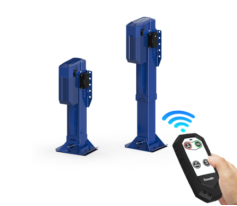
The semi-trailer leveling jacks can be fully deployed with a single command, completing the lifting cycle in about 80 seconds. Operators no longer struggle with heavy manual cranking, reducing fatigue and speeding up loading-dock preparation.

(2) 20-Meter Remote Range

The included wireless remote allows operators to adjust the jack from a safe and comfortable distance, improving visibility around the trailer and minimizing risk during alignment.

3. Excellent Engineering and Durability

(1) High Strength and Long Service Life

Heavy-duty steel construction guarantees the jack can withstand repeated high-load cycles. The internal drive structure is designed to maintain stability under continuous operating stress, making it suitable for professional fleet use.

(2) Environmental Protection and Corrosion Resistance

With an IP56 protection rating, the leveling jack can handle dust, rain, and harsh outdoor environments. The electrophoretic surface treatment adds strong resistance to rust and chemical corrosion, extending the service life even when used in coastal regions, wet climates, or industrial zones.

Other Applications of Rotontek Leveling Jack

Beyond semi-trailers, our leveling jacks are widely suited for various other sectors, including:

1. Agricultural Machinery

Farm equipment often operates on uneven and shifting terrain, creating a critical need for reliable stabilization. Our Rotontek leveling jacks deliver consistent support during maintenance, harvesting, and equipment attachment. Their robust construction and corrosion-resistant coating ensure dependable performance in muddy, dusty, or highly humid conditions.

2. Construction Equipment

Heavy-duty machinery such as portable platforms, mobile generators, and compact lifting equipment benefits from the jack’s high load tolerance and stable lifting speed.

It keeps firm ground contact, minimizing lateral sway and giving operators a safer working foundation when conducting on-site adjustments or positioning equipment on uneven ground.

3. Aircraft Docking Systems

Ground support operations call for equipment that remains perfectly stable while aircraft are being serviced. Our leveling jack brings the necessary precision and reliability to docking systems, maintenance stands, and loading platforms. The built-in anti-reversal mechanism and power-off brake add extra safety when working near aircraft, where stability cannot be compromised.

Conclusion

In summary, while trailer tipping is a physics-based risk, Rotontek electric leveling jacks showcase a reliable solution. By integrating intelligent safety systems with user-friendly operation and durable construction, it transforms a critical stabilization process into a source of safety and efficiency. For fleets focused on safety and productivity, this is the essential investment to redefine operational stability.

Ready to set a new standard for safety? Contact Rotontek to learn more.

Building the Future as Leading Electro Hydraulic Actuator Manufacturers

At Rotontek, we see ourselves not just as electro hydraulic actuator manufacturers but as architects of motion systems that enable safer, healthier, and more enjoyable lives. Our work aligns with a long-term corporate vision: to become a leading provider of smart health and leisure products and services in China within five years, to enter the global top 10 within a decade, and ultimately to grow into a world-leading group that spreads Chinese health culture for a century and beyond. This vision shapes how we design, build, and support our EHA actuator products and related systems.

A Product Mindset Grounded in Purpose

We build electro hydraulic actuator solutions because real-world applications demand the performance, reliability, and environmental resilience that EHAs provide. Our integrated EHA actuator modules—combining pump, motor, valve, and cylinder—deliver compact, high-load actuation with fewer leak points and simplified installation. As electro hydraulic actuator manufacturers, we emphasize modularity and serviceability so that our industrial and leisure customers can deploy robust motion systems in demanding environments, from fitness equipment and rehabilitation devices to leisure vehicles and offshore machinery.

Design for Health, Comfort, and Durability

Our approach to product engineering is deliberately cross-disciplinary. We incorporate ergonomics, safety, and lifecycle thinking into every EHA actuator specification. For smart health and leisure products, this means actuators that move smoothly and quietly, respond predictably to control inputs, and resist corrosion and ingress in wet or outdoor settings. As electro hydraulic actuator manufacturers, we validate performance through fatigue testing, ingress-protection trials, and real-world environmental simulations so that robotic rehabilitation arms, adjustable wellness loungers, and leisure-platform actuators perform reliably over long service lives.

Scaling Innovation with Strategic Vision

Our corporate roadmap guides R&D priorities and manufacturing investment. In the next five years we are doubling down on domestic leadership—partnering with smart health integrators, product designers, and medical device manufacturers to embed our EHA actuator modules into a new generation of smart chairs, adjustable therapy benches, and powered leisure platforms. Over ten years we plan to expand R&D and innovation institutions overseas, enabling us to become one of the top 10 global smart health and leisure groups. As electro hydraulic actuator manufacturers, this global perspective informs our engineering — ensuring our actuator platform is adaptable to regional standards, certification regimes, and diverse use cases.

Sustainability and Responsible Manufacturing

We accept the responsibility that comes with scale. Our manufacturing practices prioritize energy efficiency, waste reduction, and material selection that extend component lifetimes and facilitate repair. As electro hydraulic actuator manufacturers supporting the smart health ecosystem, we aim to minimize lifecycle environmental impact—from sourcing low-loss motors and durable seals to designing actuators for easier refurbishment and longer service intervals. This reduces total cost of ownership for customers and aligns with our broader goal to become an influential, century-lasting enterprise.

Customer Partnership and Service Excellence

Being electro hydraulic actuator manufacturers means more than delivering hardware; it requires technical partnership. We embed cross-functional teams—application engineers, field service, and product managers—to support customers from concept through production. Our documentation, control libraries, and integration kits shorten development cycles for OEMs, leisure-product brands, and healthcare equipment integrators. We also provide tailored testing and validation for safety-critical applications where regulatory compliance is essential.

Culture, Talent, and Global Ambition

Our Vision 100—becoming a globally influential group and a century-old great enterprise—drives how we invest in people. We cultivate multidisciplinary talent in mechanical, electrical, and control engineering and foster collaborations with academic and clinical partners so that our status as electro hydraulic actuator manufacturers is built on continual learning and practical innovation.

Closing

We at Rotontek are proud to be electro hydraulic actuator manufacturers committed to powering the next wave of smart health and leisure products. Guided by a clear five-, ten-, and twenty-year vision and an enduring aim to become Vision 100, we invite partners who share our ambition: let’s design actuators and systems that move people toward better health, richer leisure experiences, and a more sustainable future. Contact us to explore EHA actuator collaborations, custom modules, and integration support.

Precision in Motion: A Deep Dive into Rotontek Electric Motor Actuators

Precision movement is the silent hero in countless applications, from advanced medical equipment to everyday convenience devices. Achieving this reliably requires a component that translates rotational force into exact linear motion. This is where electric motor actuators come into play. At Rotontek, we have engineered a comprehensive range of electric linear actuators designed to deliver this precision with robust performance and exceptional value. Our focus is on providing solutions that serve as true pneumatic replacements, offering superior control and integration ease for engineers and manufacturers across diverse industries.

The Engineering Behind Rotontek Electric Linear Actuators

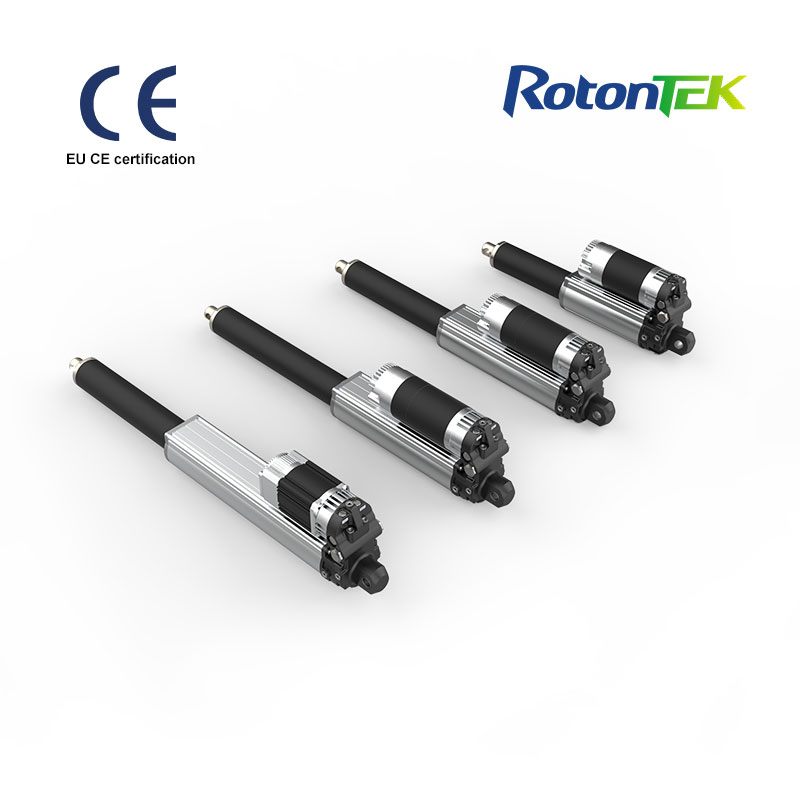
The core of our offering is the innovative rod-style electric linear actuator. This design is built for durability and consistent performance, capable of achieving true pneumatic replacement speeds. What makes our electric motor actuators stand out is their combination of power and economy. We provide an extensive range of universal options featuring strokes from 1″ (Inch) to 50″, and force capacities spanning 15 lbs to 2,200 lbs. This broad spectrum ensures that whether the need is for a compact micro-device or a powerful industrial system, there is a Rotontek electric cylinder suitable for the task. Driven by reliable 12v or 24v DC motors, these electric putters are an economical low-cost design choice that does not compromise on capability or integration potential.

Versatile Applications for Rotontek Electric Actuators

The utility of the Rotontek electric linear actuator is virtually limitless, seamlessly integrating into both specialized and common applications. In the industrial sphere, these electric motor actuators are pivotal in automation, operating lifting platforms and controlling processes in manufacturing lines with unwavering reliability. Beyond the factory floor, the versatility of our electric cylinder products shines. They are the driving force behind adjustable office desks, smooth-acting window openers, and secure door opener systems. The healthcare sector benefits from their precise movement in medical chairs and medical beds, ensuring patient comfort and safety. Furthermore, these components are essential in automotive applications, massage couches, and various household electrical appliances, performing push, pull, lift, and descend functions that define modern convenience and functionality.

Conclusion

The ability to control motion with precision and power is a fundamental requirement in today’s automated world. Rotontek electric motor actuators are engineered to meet this demand head-on, offering a versatile, reliable, and cost-effective solution for a vast array of integration needs. From complex industrial machinery to simple comfort devices, our electric linear actuators provide the motion that drives progress. We invite engineers, wholesalers, and manufacturers to explore how the Rotontek range of electric actuator solutions can bring precision and efficiency to their next project.

Rotontek Electro Hydraulic Actuator: Power and Precision Redefined in a Compact Design

Precision engineering is at the core of everything we create at Rotontek. Our latest innovation—the 0.5-2.5T Electric Hydraulic Actuator—represents a leap forward in high-force motion technology. Designed to merge hydraulic efficiency with electric precision, this product stands as one of our most advanced solutions yet. Built for power, durability, and adaptability, the electro hydraulic actuator redefines what industrial equipment can achieve in challenging environments.

Combining Hydraulic Strength with Electric Intelligence

The electro hydraulic actuator series is the result of years of R&D focused on achieving seamless integration between mechanical force and intelligent control. By combining the energy efficiency of an electric system with the raw power of a hydraulic drive, we’ve developed a product that delivers exceptional performance under load without compromising control or stability. Our 0.5-2.5T Electric Hydraulic Actuator operates smoothly and quietly, even when subjected to continuous heavy-duty use.

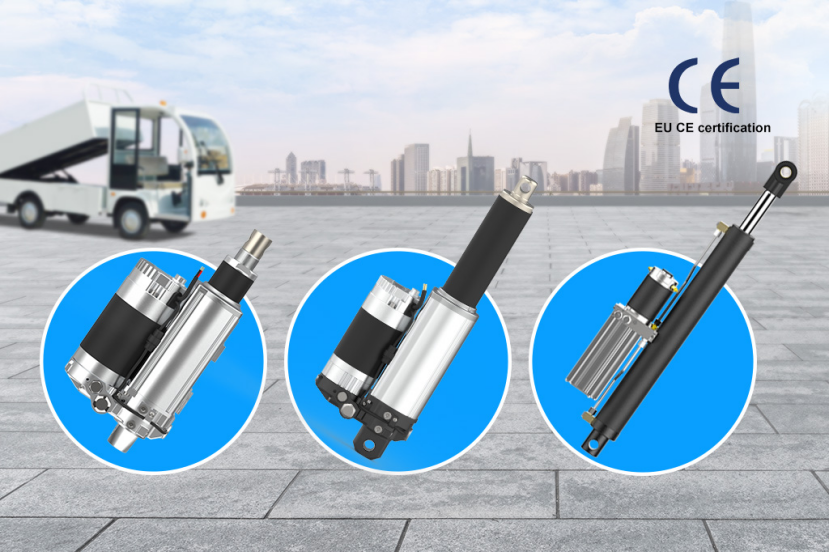
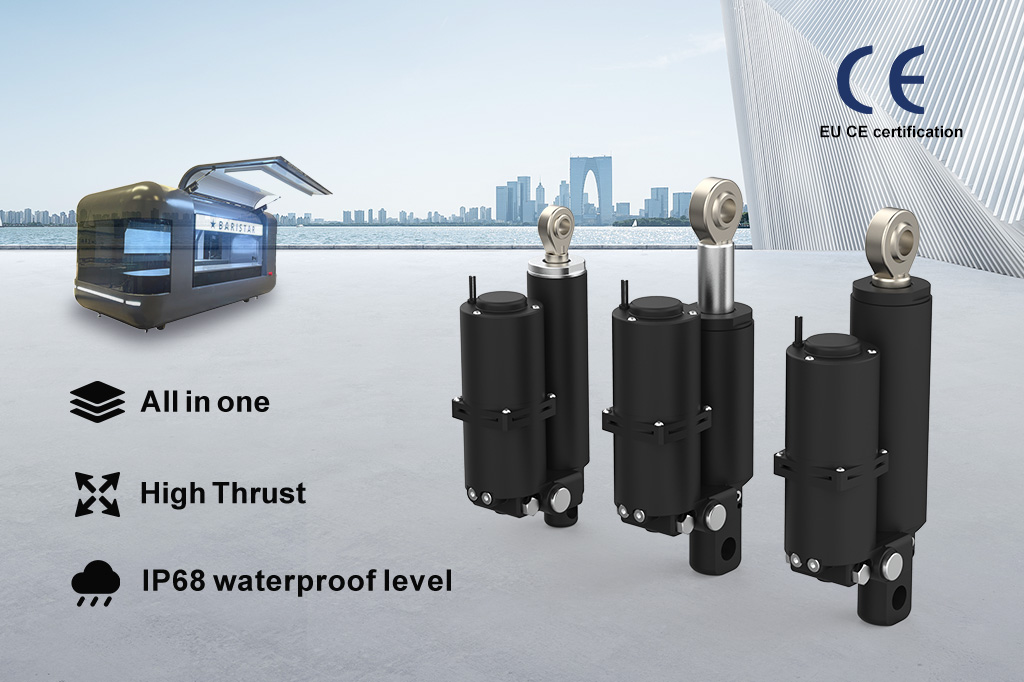
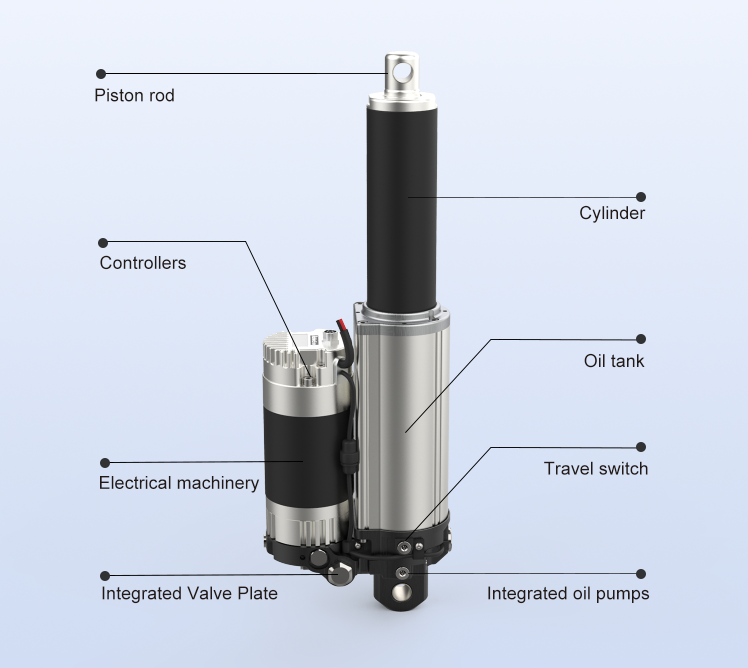
This high-force linear actuator is not only powerful but also incredibly resilient. Designed with IP68 waterproof protection, it performs reliably in underwater or harsh outdoor conditions—making it ideal for marine systems, subsea equipment, and industrial automation environments. As an all-in-one electro hydraulic actuator, it integrates the hydraulic power unit, control system, and actuator body in a compact form factor, simplifying installation and minimizing maintenance requirements.

What truly distinguishes our electro hydraulic actuator technology is its efficiency. It achieves fast actuation speeds while maintaining stable energy consumption, ensuring consistent performance across varying pressure levels. Engineers and system integrators can rely on Rotontek’s design to deliver superior motion precision with reduced energy waste—a key advantage in modern electric and hydraulic applications.

Built for Demanding Applications and Extreme Conditions

At Rotontek, we understand that industries operating in harsh or dynamic environments need solutions that can handle extreme conditions. Our electro hydraulic actuator is engineered to perform where others fail. The IP68-rated waterproof structure allows for complete submersion and exposure to contaminants without compromising internal components. This makes it an exceptional choice for applications such as subsea control systems, aircraft wing door actuation, and heavy industrial machinery.

The 0.5-2.5T Electric Hydraulic Actuator also features robust sealing and corrosion-resistant materials, ensuring reliability and long service life. Every unit undergoes rigorous performance testing to meet our high standards for precision and durability. Whether deployed in factory automation lines, electric utility vehicles, or hydraulic power systems, the electro hydraulic actuator guarantees steady, responsive, and safe operation.

We design our actuators not just for performance but also for integration. The modular configuration of our electro hydraulic actuator allows for seamless incorporation into existing hydraulic power unit frameworks, simplifying system upgrades and reducing overall setup complexity. It’s an adaptable solution for engineers seeking compact, high-torque motion in both industrial and mobility sectors.

Powering the Future of Motion with Rotontek Reliability

The introduction of the 0.5-2.5T Electric Hydraulic Actuator marks another milestone in our commitment to precision motion engineering. At Rotontek, we believe that innovation means creating technology that empowers industries to perform with greater strength, intelligence, and sustainability.

Through our electro hydraulic actuator systems, we continue to deliver motion solutions that stand up to the most demanding conditions while offering smooth, efficient performance. With waterproof resilience, integrated design, and reliable power delivery, Rotontek remains your trusted partner for advanced motion control—driving excellence, one actuator at a time.