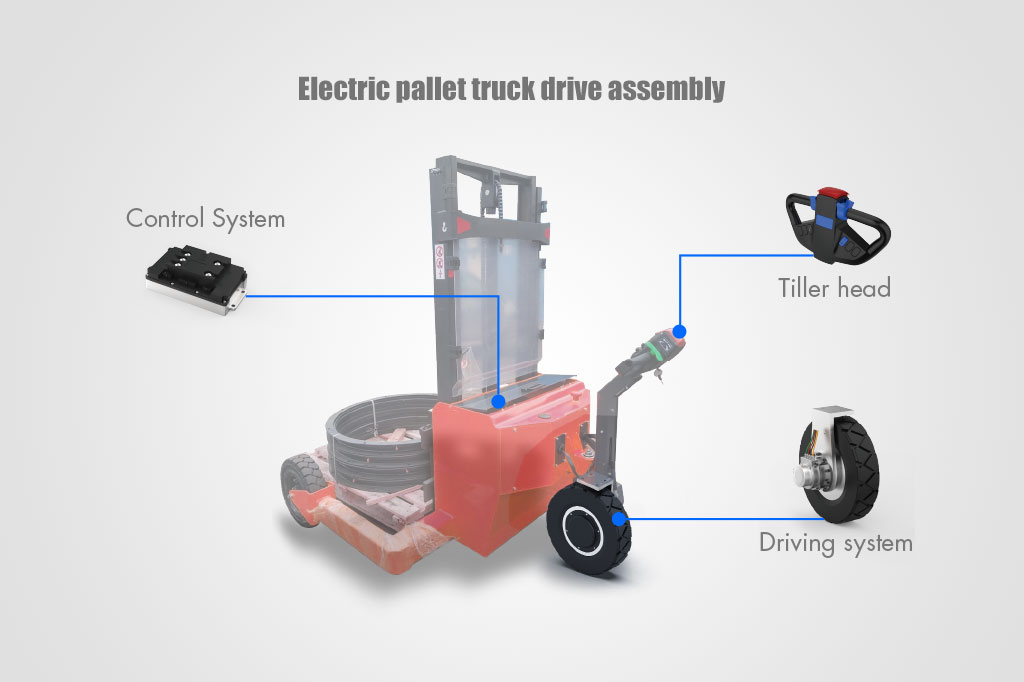
Electric pallet truck drive assemblies are revolutionizing material handling solutions across various industries. These advanced systems integrate cutting-edge technology to enhance efficiency and performance in battery-powered vehicles. This article will highlight the essential features and advantages of these assemblies, focusing on their applications and benefits.
Key Features of Electric Pallet Truck Drive Assemblies
Designed with a high-efficiency permanent magnet brushless motor systems, electric pallet truck drive assemblies offer remarkable torque output and stable performance. The combination of a low-noise reducer and a compact drive controller allows for seamless operation, minimizing disturbances in the workplace.
The compact structure of these assemblies makes installation straightforward, allowing businesses to integrate them quickly into their existing systems. With a robust load capacity, these units excel in challenging conditions, such as heavy-load starts and full-load incline climbs. Furthermore, they facilitate high-speed travel on flat surfaces, ensuring that operations run smoothly and efficiently.
Versatility Across Applications
Electric pallet truck drive assemblies are ideal for a range of battery-powered vehicles, including electric forklifts, Automated Guided Vehicles (AGVs), pallet movers, and electric tractors. Their versatility enables companies to tackle demanding logistical operations with ease.
The assemblies are particularly beneficial for warehouses and distribution centers, where efficient material handling is critical. With their ability to handle heavy loads while maintaining high operational speed, electric pallet truck drive assemblies provide companies with a competitive edge in managing their inventory.
The advanced brushless motor systems can be configured with various controller options, such as a 48V brushless controller or a high-power electric forklift controller. This adaptability allows businesses to choose the right setup that best meets their application needs, further enhancing the functionality of electric pallet trucks.
Why Rotontek Stands Out
At Rotontek, we understand the importance of reliable and efficient electric solutions for modern transport systems. Our electric pallet truck drive assemblies are engineered to meet the highest standards of performance and durability. As a trusted electric motor manufacturer in China, we deliver innovative electric motor solutions tailored for next-generation energy-efficient vehicles.
By leveraging our advanced brushless motor system, we provide our customers with exceptional products that enhance operational efficiency and reliability. Our commitment to excellence ensures that every assembly is designed to improve performance metrics, making it an invaluable asset for businesses looking to optimize their material handling capabilities.
We invite you to explore our range of solutions and see how Rotontek can support your needs for electric pallet truck drive assemblies, empowering your operations for maximum efficiency and productivity.
Choosing the right wheels for Automated Guided Vehicles (AGVs) is crucial for optimizing performance and handling. Upgrading to new AGV drive wheels can drastically improve vehicle maneuverability and overall efficiency in various applications. In this article, we’ll explore why investing in high-quality AGV wheels is essential for businesses looking to enhance their operations.
Enhanced Stability and Load Capacity
One of the primary advantages of using new AGV wheels is their improved stability and load capacity. Modern AGV drive wheels are designed to handle heavy loads and provide excellent traction on various surfaces. This capability is especially important for applications involving electric pallet trucks and other battery-powered vehicles. By integrating a joystick motor controller for precise handling, operators can manage complex maneuvers with ease, reducing the risk of accidents and improving overall safety. Upgraded wheels promote smoother transitions and better control during transport, making them an indispensable asset in high-demand environments.
Improved Performance on Inclines and Uneven Surfaces
Navigating inclines and uneven surfaces can pose significant challenges for AGVs, but new AGV drive wheels can make these tasks manageable. With features designed for heavy-load starts and full-load incline climbing, the latest wheel technologies ensure that vehicles maintain optimal performance regardless of terrain. The integration of robust brushless motors not only enhances acceleration but also provides reliable torque output, ensuring that AGVs operate efficiently even in demanding conditions. As a result, your operations can rely on consistent and efficient performance, even when faced with challenging logistical scenarios.
Advanced Technology for Energy Efficiency
The advancement of AGV wheel technology also parallels developments in electric drive systems, particularly with the adoption of joystick motor controllers. These sophisticated controls allow for smoother acceleration and deceleration while maximizing energy efficiency. When paired with modern AGV drive wheels, a joystick motor controller can significantly improve the responsiveness of your vehicles. This synergy between wheels and control systems promotes energy-efficient operation, reducing overall energy consumption and operational costs.
Partnering with Rotontek for Optimal Solutions
At Rotontek, we pride ourselves on offering innovative technical solutions tailored to the needs of the industry. Our electric pallet truck drive assemblies feature a high-efficiency permanent magnet brushless motor, low-noise reducer, and compact drive controller, providing durable electric drive wheel assemblies suitable for various applications, including AGVs. Our systems are engineered for easy installation, strong load capacity, and stable performance under demanding conditions.
By choosing Rotontek, you’re not just selecting new AGV wheels; you’re investing in a comprehensive solution that enhances your operational efficiency. As a trusted electric motor manufacturer in China, we are committed to delivering reliable and cutting-edge solutions for energy-efficient and intelligent transport systems.
In summary, upgrading to new AGV wheels offers substantial benefits, including enhanced stability, improved performance on varied terrains, and advanced technology for better energy efficiency. With Rotontek’s commitment to innovation and quality, your operations can achieve remarkable improvements in handling and performance. Let us partner with you to drive your business forward with superior AGV solutions.
Modern industrial environments demand a level of agility and power that traditional propulsion systems often struggle to provide. As warehouses and construction sites transition toward fully electric fleets, the focus has shifted toward maximizing space without sacrificing the strength needed for heavy-duty tasks. We have seen how a well-engineered electric drive wheel can transform a bulky chassis into a sleek, highly maneuverable machine. At Rotontek, we focus on creating these compact monoblock systems that combine the motor, reducer, and wheel into a single unit. This approach simplifies the installation process for vehicle manufacturers and ensures that every component is tuned to work in harmony, providing a reliable foundation for the next generation of mobile platforms.
Engineering Excellence in Heavy-Load Performance
Achieving high torque output while maintaining a compact structure is one of the most significant hurdles in mobile robotics and material handling. We address this by integrating high-efficiency permanent magnet brushless motors into our wheel drive motors, ensuring stable performance even during the most demanding duty cycles. Whether a vehicle is performing a heavy-load start or attempting a full-load incline climb, the synchronization between the drive controller and the motor remains seamless. At Rotontek, we prioritize the use of low-noise reducers to ensure that our power solutions are as quiet as they are capable. This focus on “craftsman spirit” allows us to deliver components that manage energy effectively, extending the battery life of the vehicles they power.
Versatility Across Industrial and Cleaning Sectors
The application of a specialized electric drive wheel goes far beyond simple transport; it is the heart of automation in diverse fields like agriculture and material handling. From AGV transfer vehicles to electric tractors and pallet movers, our systems are designed to handle high-speed travel on level surfaces while maintaining precision control. We offer scalable components, including 48V brushless controllers and specialized joysticks, to ensure that our wheel drive motors meet the specific operational needs of 40+ countries. By serving as a dedicated electric motor China manufacturer since 2008, we have refined our designs to be durable enough for harsh, high-intensity environments where downtime is not an option.
Reliability Through Integrated Design
Beyond the hardware itself, the true value of our motion solutions lies in the stability they bring to a mobile platform’s architecture. By utilizing a monoblock design, we reduce the number of potential failure points, such as external couplings or complex wiring harnesses. This makes the electric drive wheel an ideal choice for battery-powered vehicles that require high-speed travel and frequent stops. We take pride in our R&D centers in Guangzhou and Guilin, where our team of over 40 engineers—including veterans from global tech firms—tests every unit for load capacity and thermal resilience. At Rotontek, we are committed to providing eco-friendly solutions that help our partners break through the routine limitations of traditional drive systems.
Conclusion
The shift toward smarter, more efficient mobile machinery is well underway, and the components we use today will define the capabilities of tomorrow’s industrial landscape. By focusing on the integration of the wheel drive motors with advanced control systems, we provide a path for companies to upgrade their fleets with confidence. We remain dedicated to our vision of being an influential provider of smart motion products, ensuring that every electric drive wheel we produce contributes to a more productive and sustainable world. Our focus on innovation and customer needs ensures that we stay at the forefront of the electric motor industry for another century.
In the drive for Industry 4.0 and intelligent warehousing, automated vehicles have become the standard for material handling. While the broader category of Automated Guided Vehicles (AGV) is widely recognized, a more specific and often cost-effective solution is the Automated Guided Cart (AGC). For manufacturers, OEMs, and logistics professionals, knowing the technical difference is crucial to selecting the right drive system for their automation goals.
At Rotontek, we supply the high-performance integrated motion solutions—from drive wheels to controllers—that power both these vehicle types. The difference between an AGV and an AGC isn’t about the motor technology, but rather the complexity of the vehicle structure, the method of guidance, and the payload capacity it is designed to manage. Simply put, the AGC is best understood as a subset of the AGV family, tailored for lighter, simpler, and more repetitive tasks.
AGV vs. AGC: Defining the Role and Scale
While the terms are often used interchangeably, industry experts generally use the distinction to categorize material handling robots based on size, payload, and navigational complexity.
Automated Guided Vehicle (AGV)
An AGV is the traditional, robust standard. These are vehicles built for significant tasks, often replacing electric forklifts, tuggers, or unit load handlers.
Size and Payload: AGVs are generally larger, heavier, and built for high-capacity transport, often carrying payloads from one ton up to many tons. They frequently lift or carry entire pallets or large unit loads.
Structure: They often feature complex structures, such as forks (for forklift AGVs), conveyors (for unit load AGVs), or high-power towing mechanisms.
Navigation: AGVs typically utilize more sophisticated or infrastructure-intensive guidance, including laser triangulation with reflectors, inductive wire guidance embedded in the floor, or high-end natural navigation (which technically categorizes them as Autonomous Mobile Robots or AMRs, though the lineage is the same).
Drive System Requirement: Due to their size and load, AGVs require heavy-duty, high-power drive systems capable of handling large starting torque and sustained high loads, often powered by a high-wattage brushless drive motor controller series.
Automated Guided Cart (AGC)
The AGC, on the other hand, is the streamlined, low-cost automation solution.
Size and Payload: AGCs are smaller, lower-profile, and lighter. They are designed to carry lighter loads, often up to a ton, or more commonly, they act as “under-ride” units, engaging and towing a separate cart or shelf whose wheels bear the main weight of the payload.
Structure: They are typically simple, low-height platforms with a pin-hook or lifting mechanism to engage a cart.
Navigation: AGCs often rely on the simplest form of automated guidance, such as following a painted line or magnetic tape adhered to the floor. This line-following technique is highly reliable, cost-effective, and easy to reroute, making them ideal for facilities needing quick deployment.
Drive System Requirement: AGCs prioritize compactness and cost-efficiency. They require reliable, low-power integrated solutions, making the AGV drive wheel an essential component for seamless integration.
The Critical Role of the AGV Drive Wheel and Controller
Regardless of whether a vehicle is a heavy-duty AGV or a compact AGC, its performance—precision, speed, and reliability—is defined by its integrated motion system. This is where Rotontek provides a decisive advantage, offering series of integrated drive solutions that power the full spectrum of automation requirements.
The Integrated AGV Drive Wheel Series
The core of an AGC or a light-to-mid-capacity AGV is the integrated drive unit. Our AGV drive wheel series combines a high-efficiency motor, a precise reduction gearbox, and the wheel/tire into a single, compact monoblock.
For example, our 1KW Brushless Electric Driving Wheel (DL1000-1-29) is ideal for various logistics transfer trucks and stackers:
Motor Type: Brushless Motor
Power Rating: 1 KW
Maximum Towing Weight: 4000 KG (on a cart)
Maximum Load Capacity (Single Wheel): 1000 KG
Protection Rating: IP66
This unit’s compact design and high IP rating make it perfect for the demanding, repetitive cycles required of both AGV and AGC applications in harsh warehouse environments.
Mastering Motion with the Brushless Drive Motor Controller
The brain of any autonomous vehicle is the motor controller. The efficiency and reliability of a brushless drive motor controller directly impact battery life, speed regulation, and positioning accuracy.
Rotontek’s ID200 Series Controller (Example):
This series, designed for 2 KW applications, offers:
Advanced Motor Control Algorithm: Utilizing DSP chips to provide precise control and reduced noise, crucial for accurate stopping and starting.
Anti-Slip Function: Engineered for steady performance when climbing slight inclines or overcoming small obstacles—a necessity in any warehouse.
Protection: Integrated features against overpressure, overcurrent, and overheating, ensuring the longevity of the entire drivetrain.
The controller allows OEMs to finely tune the vehicle’s parameters for different road conditions and specific operational requirements, whether it’s the high-speed transit of a larger AGV or the precise, low-speed indexing of an AGC on an assembly line.
Choosing the Right System for Your Business
The decision between an AGV and an AGC comes down to three operational factors:
Payload and Tonnage: If you are moving full pallets, towing multiple heavy carts, or require lifting capability, the heavier-duty AGV platform is the correct choice, requiring high-power Rotontek transaxles and high-wattage brushless drive motor controller systems.
Route and Flexibility: If the task is simple, fixed, and highly repetitive (e.g., assembly line part delivery), the AGC guided by magnetic tape is usually the most cost-effective and fastest to deploy.
Cost and Scalability: AGCs offer a lower entry cost and are easier to scale up, as the supporting infrastructure (magnetic tape) is simple to install and modify compared to the more complex infrastructure needed for some traditional AGV guidance methods.
Conclusion
The key takeaway for any partner is that both AGVs and AGCs are forms of Automated Guided Vehicles, and both rely on highly integrated, reliable drive solutions. At Rotontek, we focus on engineering the core components—the robust AGV drive wheel assemblies and the intelligent brushless drive motor controller series—to ensure your choice of automated vehicle, regardless of its classification, achieves maximum uptime and efficiency.
Extreme cold-chain environments, ranging from -25°C to 4°C with high humidity, pose severe operational hurdles. Traditional manual handling is not only inefficient under such conditions but also exposes workers to significant health and safety risks, including frostbite and slips caused by ice or condensation.
Consequently, the criteria for selecting handling equipment have evolved: it is no longer just about ‘labor-saving’ features. A dedicated power drive kit capable of reliable operation in harsh cold has now become a mission-critical necessity.
How Rotontek Power Drive Kit Addresses These Challenges
Cold chain operations range from lightweight pharmaceutical picking to heavy-duty industrial pallet movement.
Our electric trolley power drive kit is not merely a standard drive with added insulation; it is a comprehensive technical response to the physics of intense cold and high humidity. With load capacities ranging from 100kg to 10 tons, we ensure that every power-assist system is precisely matched to its specific application.
Challenges of Cold Chain Logistics for Power Drive Kit
1. Thermal Impact
Battery Performance Degradation: Low temperatures inhibit electrochemical activity, drastically reducing operational runtime and causing voltage instability, which directly undermines equipment reliability.
Increased Mechanical Resistance:The viscosity of lubricants rises sharply in the cold, forcing motors to overcome significantly higher internal friction during startup. This not only increases energy consumption but also accelerates premature wear of the motor assembly.
Electronic Component Failure:Standard electronic components, such as capacitors and semiconductors, have limited operational temperature ranges. Prolonged exposure to sub-zero cold can induce parameter drift and lead to outright functional failure, risking a complete system shutdown.
2. Condensation
Moisture in warm air rapidly condenses into water droplets upon contact with cold equipment surfaces. These seemingly tiny droplets can cause serious damage to the drive system.
The risk of short circuits is the most direct threat. Condensed water ingressing into electrical connections or circuit boards can lead to equipment failure or even cause safety incidents.
A consistently humid environment accelerates the oxidation and corrosion of metal components, particularly at contact points between different metals. This corrosion can weaken structural integrity and shorten the lifespan of the power assist systems.
3. Slippage
Cold chain warehouse floors often become exceptionally slippery due to frost or water accumulation during defrosting cycles. Managing heavy loads under these conditions poses a severe challenge to stability control.
Conventional electric trolley power drive kits frequently fail to provide sufficient and controllable traction on such surfaces, which can easily trigger wheel spin, vehicle deviation, or even the overturning of cargo.
4. Noise
Cold chain warehouses are typically enclosed or semi-enclosed spaces, an environmental characteristic that makes noise issues particularly prominent. Prolonged exposure to such an environment exacerbates operator fatigue, diminishes attention and reaction capability, and indirectly heightens accident risks.
In addition, excessive equipment noise may drown out verbal communication and safety warning signals, impairing operational coordination and emergency response efficiency.
How Rotontek Power Drive Kit Addresses These Challenges
Cold chain operations range from lightweight pharmaceutical picking to heavy-duty industrial pallet movement.
Our electric trolley power drive kit is not merely a standard drive with added insulation; it is a comprehensive technical response to the physics of intense cold and high humidity. With load capacities ranging from 100kg to 10 tons, we ensure that every power-assist system is precisely matched to its specific application.
1. Low-Temperature Optimized Brushless Motors
Specialized Materials & Processes:The motor incorporates low-temperature-resistant permanent magnets and specialized insulation, effectively averting demagnetization and insulation embrittlement under rigorous cold environments.
Stable Torque Output: Paired with dedicated low-temperature lubricants, our power drive kit overcomes increased internal friction to deliver constant, reliable torque even under heavy-load conditions.
2. Comprehensive Moisture and Corrosion Protection
Resilient Materials:Critical structural components are treated with industrial-grade anti-corrosion coatings or manufactured from high-grade stainless steel to eliminate rust at the source.
Hermetic Sealing: All wiring interfaces and electrical connectors utilize high-standard waterproof seals, shielding against moisture ingress (condensation) that often leads to electrical failure.
Industrial Protection Rating:The entire power drive kit meets IP54 or higher standards, safeguarding internal sensitive circuitry against melting frost or high-humidity environments.
3. Sophisticated Control Algorithms
Soft-Start Technology:The controller features a “Soft-Start” function that ramps up power output linearly. This mitigates excessive initial torque from overwhelming the grip of the tires, effectively avoiding wheel spin on icy surfaces.
Anti-Slip Logic: By integrating a proprietary anti-slip algorithm, the system monitors motor feedback in real-time. If traction loss is detected, it instantly adjusts torque output to maintain smooth, safe acceleration and deceleration, preventing cargo from overturning on treacherous floors.
4. Whisper-Quiet Operation
Recognizing the acoustic challenges of enclosed, reflective cold storage spaces, Rotontek has optimized the gear geometry and electromagnetic switching frequencies of the drive system.
By minimizing high-frequency vibrations and mechanical friction, the kit operates at substantially suppressed decibel levels, alleviating operator fatigue and improving overall workplace communication.
Daily Maintenance Points for Cold‑Chain Environments
Proper maintenance is vital to preserve the performance and longevity of your Rotontek power drive kit in harsh cold-chain conditions.
1. De-humidification Procedure
When moving the equipment from a cold warehouse to a warmer area, always place the entire power assist system in a dry, ventilated spot and allow for acclimatization for at least 30 minutes. Assure all surface condensation has evaporated completely before charging or inspection.
2. Key Points for Regular Inspection
Implement a dedicated inspection schedule for the power drive kit, focusing on: tyre wear (to maintain traction), the seal integrity of all cable interfaces (to block moisture), signs of corrosion on structural parts (especially welds and joints), and the lubrication level of moving components.
3. Battery Maintenance Guidelines
Battery care for the power drive kit requires special attention:
Charging Temperature: Avoid charging in extreme cold. The recommended ambient temperature is 0 °C or higher.
Charge Cycle:Follow the “shallow charge–shallow discharge” principle, maintaining charge levels between 20% and 80% to optimize battery health.
Long-Term Storage: If the equipment will be idle, remove the battery and store it separately in a dry, temperature‑controlled environment.
Conclusion
The extreme nature of cold-chain logistics environments places exceptionally rigorous demands on equipment. Our Rotontek electric trolley power drive kit offers a robust answer to the challenges of the freeze. By integrating specialized engineering with intelligent control, it truly achieves reliable, efficient, and safe operation under the most extreme conditions.
The rise of electric trolley power-assist systems has fundamentally transformed the use of traditional manual carts. These systems, also known as drive kits, integrate advanced motor technology to achieve traveling speeds and endurance far beyond manual handling. In the same operational setting, they significantly reduce transportation time, enhance efficiency, and improve safety.
However, the performance of different brands and models of these power-assist systems can vary greatly. To obtain the optimal operation for a specific application, it is crucial to understand its core performance metrics.
We will delve into these core technical indicators, starting with load capacity, and explore how each one impacts the overall performance of the system.
Load Capacity
1. The Impact of Load Capacity
Load capacity directly determines the applicable scope and operational efficiency of electric trolley power-assist systems, influencing the system’s motor power, battery life, and overall structural design.
When the trolley is required to carry heavier loads, the motor must generate greater torque to overcome static and dynamic friction, enabling it to start, accelerate, and maintain stable travel.
Prolonged use under heavy loads can cause the battery’s charge-discharge cycles to reach their limit prematurely, necessitating frequent battery replacements and increasing operational costs.
In terms of overall structural design, the load capacity setting determines the selection and strength design of critical components, including the trolley frame, wheels, and transmission mechanism.
2. Load Capacity in Different Application Scenarios
Practical requirements for load capacity vary greatly across different industries, and understanding these differences is essential for selecting the right power-assist system.
In industrial environments, facilities often depend on high-capacity trolleys designed to transport heavy machinery, bulk materials, or large equipment across long distances.
Agricultural operations usually work within medium capacity ranges, but the demand for stability and consistent performance on uneven or soft ground is equally significant.
In contrast, medical settings rarely involve heavy loads, yet they require electric dollies’ power-assist systems that deliver smooth, precise movement to protect delicate instruments and ensure safe handling.
3. Consequences of Exceeding Load Capacity
Exceeding the rated load capacity places excessive strain on every part of the power-assist system, leading to serious consequences.
Motors forced to operate beyond their design limits are prone to overheating and premature failure, while batteries discharge at a faster rate, reducing overall endurance and increasing downtime.
Structural components, from frames to support joints, may also weaken under the extra stress, raising the risk of unexpected breakdowns.
In addition to mechanical issues, handling becomes more difficult, with longer stopping distances, reduced maneuverability, and a greater chance of accidents.
Adhering to the manufacturer’s specified limits is not only a matter of maintaining equipment reliability but also a critical step in ensuring operator safety and long-term performance.
Speed
1. The Importance of Speed Control
The speed control effect is directly related to work efficiency and operation safety of an electric trolley power driving system. A trolley that operates at very low speeds causes delays in workflows and reduces overall productivity, while excessive speed in busy or restricted environments increases the likelihood of collisions or accidents. The ability to regulate speed appropriately ensures that goods are moved quickly where efficiency is needed, yet handled cautiously in spaces where safety and stability are important.
2. Technical Considerations for Achieving Variable Speed
To achieve variable speed functionality in electric drive kits, it’s important to carefully consider both the controller technology and the motor type.
A high-quality controller should provide precise current control, voltage regulation, and speed feedback. Brushless DC motors are highly regarded for their efficiency, stable torque, and long service life. Combined with a modern electronic controller, they offer smooth acceleration, responsive braking, and precise speed control under various load conditions. This integration improves operator control and reduces component strain, allowing the trolley to adapt effectively to various working environments.
3. Speed Requirements in Diverse Scenarios
The speed requirements for electric power-assist systems vary significantly across different scenarios.
In warehouses, a speed of 8-15 km/h is efficient for transporting lightweight, non-fragile items like cardboard-boxed household goods in spacious areas with few people. However, in narrow aisles with dense shelving or fragile items like glassware, lower speeds are needed to avoid collisions and damage.
In industrial workshops, higher speeds can be used when the layout is sparse, the floor is even, and heavy components are being moved. Conversely, if there are many machines, pipelines, or slippery floors, lower speeds are essential to prevent collisions and loss of control.
Gradient Capability
1. The Role of Motor Torque and Gear Ratios
Gradient capability reflects a power driving system’s ability to operate on slopes and uneven ground, and it is largely defined by motor torque and gear ratios. Torque provides the force needed to move loads uphill, while gear ratios control how efficiently that force is delivered. A system designed with sufficient torque and well-matched gearing can climb inclines steadily without placing excessive strain on the motor or draining the battery too quickly.
2. Gradient Capability in Different Terrains
Matching gradient capability to the terrain is essential for consistent performance and long-term durability.
On flat indoor floors, gradient capability plays a minimal role, as movement requires little force.
Agricultural fields demand a stronger capability to manage mild slopes and irregular surfaces while keeping loads stable.
Construction sites present the greatest challenge, where steep inclines and heavy materials require robust torque and durable gearing to ensure safe and reliable operation.
Range and Endurance
1. The Significance of Range and Endurance
Range and endurance describe how long an electric power-assist system can operate before the battery needs recharging. They have a direct effect on efficiency because a system with good endurance can operate through a full shift without interruption. If the range is too limited, frequent charging breaks slow down tasks and reduce overall productivity.
2. Factors Affecting Range and Endurance
The battery capacity sets the overall operating limit, with larger batteries offering longer use.
The load weight has a major impact, as heavier loads require more energy and shorten the runtime.
The operating speed also plays a role, since higher speeds consume power more quickly than controlled and moderate movement.
The terrain condition is another variable. Smooth indoor floors minimize energy use, while slopes or rough surfaces demand more power and reduce overall endurance.
When these factors are properly balanced, the trolley power drive system delivers consistent operation without unnecessary downtime.
Noise Levels
Noise level is a key factor in evaluating the quality of an electric trolley power-assist system. A low-noise system creates a more comfortable working environment by reducing stress and fatigue for operators and those nearby. In places such as hospitals, offices, or hotels, quiet operation is especially important to avoid disturbance and maintain a calm atmosphere.
Controlling noise is also a matter of compliance. Many industries are subject to workplace regulations that set acceptable noise limits to protect employee health and safety. Equipment that exceeds these thresholds can result in penalties or operational restrictions.
Electric Trolley Power-assist System from Rotontek
Built with advanced drive technology, our Rotontek Low Noise Power Trolley Kit combines strong performance with features that meet the demands of diverse workplaces. Here is what this electric power-assist system brings:
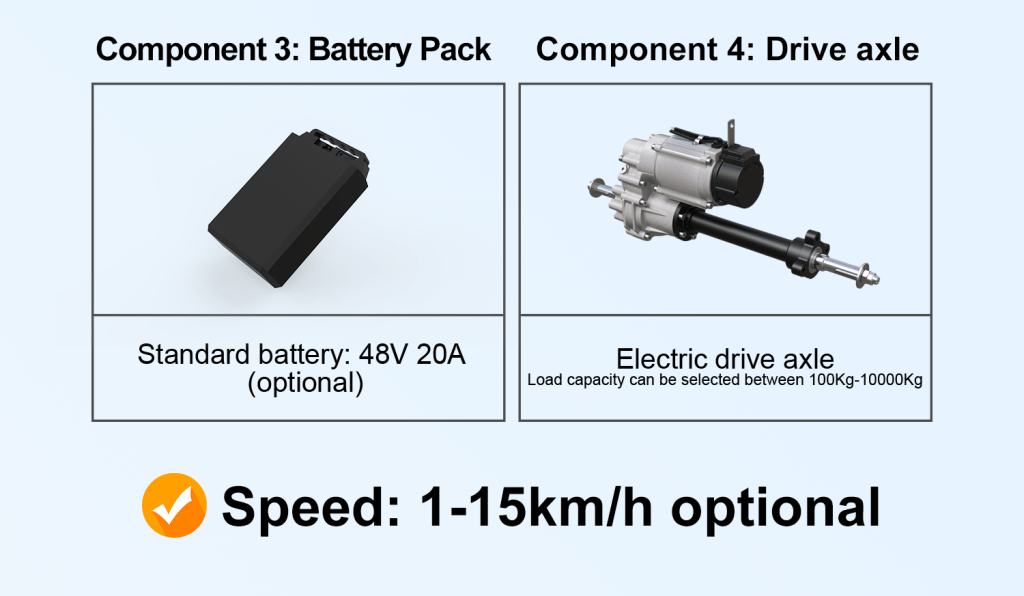
Load Capacity: Our electric drive kit presents remarkable flexibility in load capacity, with options ranging from 100 kilograms to 10,000 kilograms. This permits businesses to opt for the configuration that matches their requirements, whether for light-duty tasks, heavy industrial applications, or equipment such as an electric scissor lift trolley.
Speed: The system provides customizable speed options between 1 and 15 km/h. This wide range allows for safe and efficient use across different environments.
Energy-saving: Its intelligent control systems and efficient motors provide sustained power output while keeping energy consumption to a minimum. This reduces operational costs and helps extend battery life, making the system both economical and environmentally responsible.
Quiet: This power drive system uses noise-reduction engineering to keep sound levels low, creating a more comfortable environment for operators and ensuring it can be used in settings where noise control is critical.
Conclusion
Selecting the optimal electric trolley power-assist system involves more than just speed or power. A truly effective system is defined by its ability to balance a range of core metrics, including load capacity, gradient capability, range, and noise levels.
Our Rotontek Low Noise Power Trolley Kit is a perfect example of a system that embodies these high standards. With its flexible load capacity from 100 kilograms to 10,000 kilograms and customizable speed options from 1 to 15 km/h, the kit is designed for strong performance and versatility.
In today’s fast-paced industrial environment, material handling has become one of the most critical and demanding tasks across various industries. From manufacturing floors to warehouse operations, the efficient movement of goods directly impacts productivity, safety, and operational costs. Manually handling heavy loads is not only inefficient and labor-intensive but also poses a risk of injury, potentially leading to increased downtime for businesses.
Against this backdrop, an electric trolley power drive kit transforms traditional manual carts into efficient, automated handling tools by integrating advanced motor technology, intelligent control systems, and reliable power sources.
Advantages of the Electric Trolley Power Drive Kit
1. Low Noise
Unlike some traditional mechanical drive systems that generate loud and harsh noises, a modern electric trolley power drive kit is engineered with advanced motor technology and noise reduction designs. This is particularly beneficial for noise-sensitive environments like hospitals, office buildings, and senior living facilities.
2. Improved Efficiency
Manual transportation of heavy loads is limited by the physical capabilities of workers. The drive system enables electric trolleys to move heavy items at a steady and consistent speed, which shortens cycle times, increases throughput, and enables handling larger volumes of work within the same timeframe..
3. Reduced Physical Strain & Injury Risk
Electric trolley power drive kits remove the physical demands of manually moving heavy loads, effectively preventing common occupational injuries like back strain and repetitive stress disorders.
4. High Compatibility
These power assist systems are designed with universal mounting systems that can be easily integrated with various trolley types, platform trucks, and material handling equipment. The modular structure ensures compatibility across different manufacturers and cart specifications.
5. User-Friendly Operation
Most electric trolley power drive kits come with easy-to-use control panels or handles that allow operators to start, stop, accelerate, and decelerate the trolley with minimal effort. The control systems are ergonomic, so that operators can handle the trolley comfortably even during extended periods of use.
6. Energy Efficient & Cost-Effective
A power trolley kit typically utilizes advanced battery technology and motor systems to provide sustained power with minimal energy consumption. Additionally, its durable construction and reliable performance decrease maintenance needs and downtime, resulting in significant long-term cost savings.
Application of the Electric Trolley Power Drive Kit
1. Manufacturing Industry
In manufacturing plants, the movement of raw materials, components, and finished products is a constant and essential activity.
Electric trolleys and platform trucks equipped with power assist systems can be widely deployed to transport these items across production areas, seamlessly moving materials from warehouses to assembly lines. Scissor lift trolleys with integrated drive kits deliver both horizontal transport and vertical positioning, ideal for complex assembly operations and multi-level storage.
2. Logistics & Warehousing
In the logistics and warehousing sector, where goods are continuously received, stored, and shipped, the electric trolley power drive kit plays a pivotal role in transporting heavy pallets, cartons, and containers. It helps accelerate the loading and unloading processes, lowers the time taken to process orders, and enhances inventory management and customer satisfaction.
3. Healthcare & Elderly Care
In hospitals and care facilities, the electric trolley power drive kit can make a significant impact when carrying medical equipment, supplies, and patient care items. Meanwhile, its quiet operation also creates a peaceful and conducive recovery environment for patients
4. Airports & Transport Terminals
From moving luggage from check-in counters to aircraft holds to transporting cargo between different areas of the terminal, the power kit ensures that operations run smoothly, minimizing delays and improving the overall passenger experience.
5. Food Processing & Cold Chain Logistics
In cold storage and food processing environments, power drive kits demonstrate excellent performance in low-temperature conditions, enabling the timely and safe delivery of perishable food items, thus preserving their quality and freshness.
Common Faults of the Electric Trolley Power Drive Kit
1. Device Won’t Start
When the power drive kit fails to power on, first verify the battery’s charge level and ensure all battery terminals are securely connected and free from corrosion. Then, test the power switch to confirm it’s functioning properly and confirm all safety interlocks are engaged and not hindering startup. Lastly, evaluate the control circuit by assessing fuses for continuity and examining wiring for any loose or damaged terminals.
2. Insufficient Driving Force
A depleted battery is often the cause. Another factor could be that the load exceeds the power trolley kit’s rated capacity. Additionally, look for any obstructions or debris caught in the wheels or drive mechanism that could be creating friction and limiting propulsion.
3. Unresponsive or Erratic Control
If the control behaves unpredictably, inspect the control handle or panel for visible damage or loose wiring. Clean the interface thoroughly to eliminate any accumulated dust or contaminants that might interfere with signal transmission.
4. Unusual Noise During Operation
Strange sounds while running may point to issues with the motor, transmission gears, or other moving components. Shut down the system immediately and look over the internal parts for any loosened or broken pieces. Ensure gears are adequately lubricated, as insufficient lubrication can lead to excess friction and noise. If abnormal sounds persist, it could indicate a deeper mechanical fault that warrants professional servicing.
5. Short Battery Life
Begin by confirming that the battery is charging properly. Make sure the charger is operational and the charging duration meets recommended standards. If the battery is significantly aged or degraded, consider replacing it. Also, prolonged usage at high speeds or under heavy loads can accelerate battery depletion, so minimize such demands whenever possible.
Electric Trolley Power Drive Kit from Rotontek
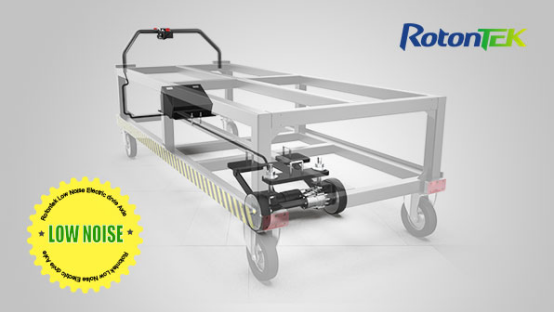
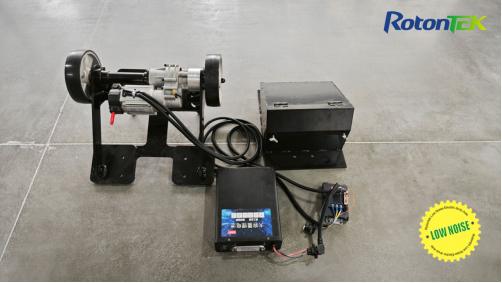
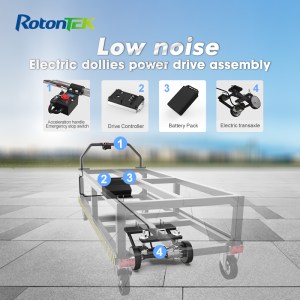
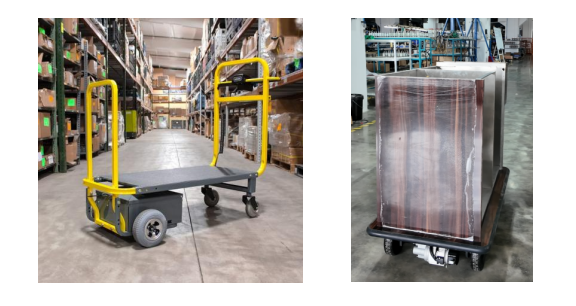
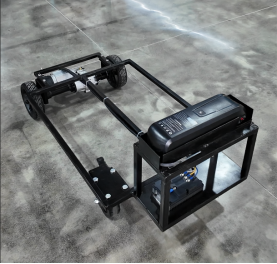
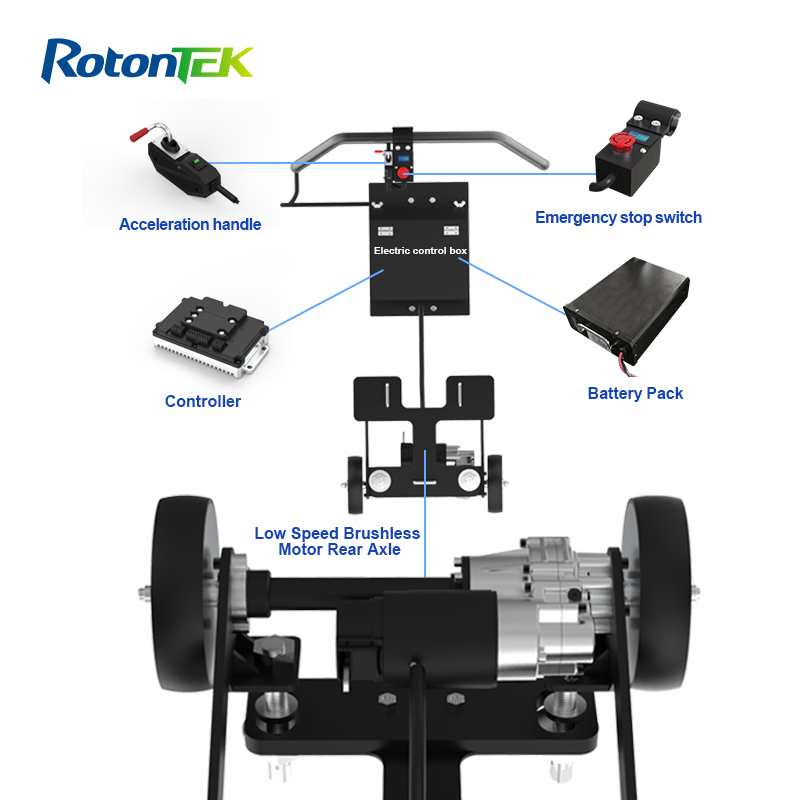
Our newly launched Low noise power trolley kit consists of a handle accelerator, emergency stop switch, electric control box, battery, controller, and brushless motor-driven rear axle, which aims to transform an ordinary manual cart into a high-performance power tool without complex modifications.
With motor power options ranging from 150W to 5000W, the electric trolley power drive kit supports load capacities from 100 kg to 10,000 kg, while speed is continuously adjustable between 1–15 km/h. Operators can effortlessly handle both light and heavy loads, ensuring safe and efficient material transport.
In addition, its energy-saving design sustains power output at minimal consumption, while a modular architecture allows for quick installation. Advanced noise-reduction technology keeps the operation quiet in any environment.
Conclusion
As industries continue to prioritize automation and ergonomic solutions, electric trolley power drive kits will play an increasingly vital role in streamlining logistics, improving workplace safety, and driving operational excellence.
Contact Rotontek today to discover how our electric trolley power drive kits can optimize your workflow, helping you to move toward smarter, faster, and more sustainable material handling.
The Authoritative Global Logistics Technology Event
As the highest-specification event in global industrial technology, HANNOVER MESSE 2025 gathers cutting-edge enterprises and innovations from over 90 countries. RotonTEK’s participation marks its core technology’s first entry into the European market – the company’s self-developed silent power transmission system has obtained ISO 14001 Environmental Management System certification and achieved scaled applications in multiple smart manufacturing parks in China.
For industrial equipment purchasers and technical decision-makers, this is not only an opportunity to access highly adaptable solutions at zero distance but also a critical window to observe Asian enterprises’ technological breakthroughs in precision drive fields.
Technical Highlights
Electric Drive Axle Technology Breakthrough
High efficiency, low noise operation power transmission units are achieved through forged alloy steel gears and precision grinding processes (6-grade accuracy GB/T 10095 standard). The deep integration self-developed DC motor and intelligent controller industrial-grade soundproofing standard to achieve silent without additional sound insulation measures.
Electro Hydraulic Actuator Innovation Advantages
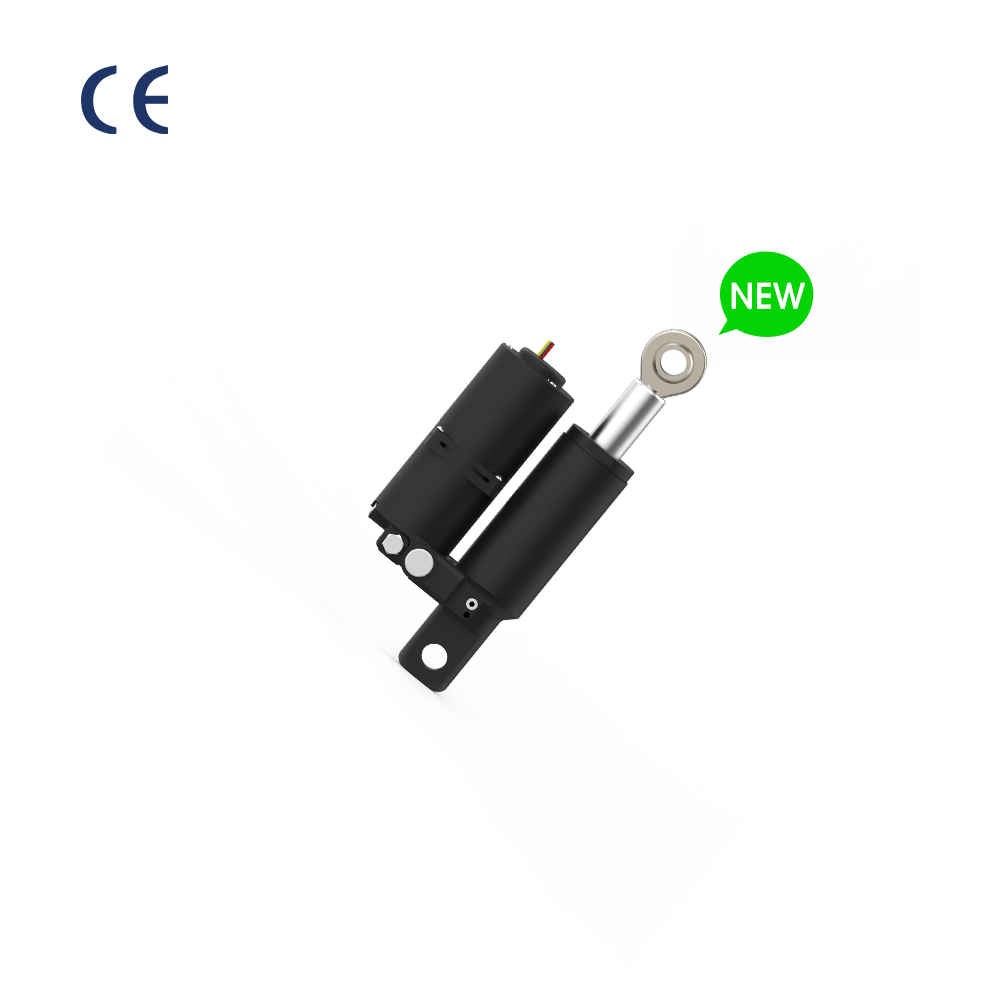
It is the revolutionary integrated design in which the oil tube facility has been eliminated, providing more than 90 percent less space for installment and completely solving the problem of oozing from the hydraulic system. IP 68 waterproof. Give stable function in an underwater environment of up to 50 m. Mini high-pressure plunger pump design (60 percent smaller in volume than similar products) incorporates thrust output from 5 kN to 200 kN and meets low precision actuation requirements under extreme scenarios such as vacuum coating equipment and deep-sea exploration machinery.
RGV Rail Guidance System
This RGV rail guidance system incorporates advanced navigation technology into the system, allowing millimeter-level positioning accuracy within a complex warehousing environment. Multi-layer safety mechanisms support the rapid deployment of non-standard rails, and it is proven in handling very high-reliability material handling in sensitive environments such as semiconductor cleanrooms.
Exhibition Practical Guide
Exhibition Dates: March 31 - April 5, 2025 (Daily 09:00-18:00)
Booth Address: Hall 4 H04-67, Hannover Exhibition Center, Germany
Transport Guide: Take Metro Line 6 from Hannover Hauptbahnhof to Messegelände Station, then 5-minute walk to Hall 4 East Entrance.
Core Exhibits: Live demonstrations of electric drive axles, electric hydraulic pushers, and RGV rail guidance systems.
The technical dialogue services without a barrier line are provided by a team of senior engineers and consultants from the industry. For production line upgrade analysis or special situation adaptation queries, the booth is equipped with multi-language instant translation devices that assure barrier-free cross-border technical communication.
Customization at the site
Visitors can Formulate a preliminary adaptation idea in less than 20 minutes given basic requirements. For example, from 3D spatial optimization previews up to performance simulation reports, rapidly verify technical feasibility and then take away customized proposals to lay foundations for deeper collaboration.
About Rotontek
ISO quality management certifications are available to Rotontek Power Hydraulic Technology Co. Ltd., in addition to modern equipment such as coordinate measuring machines and gear testers, help ensuring precision in products. The company is fully equipped with over 20 imported CNC machining centers (USA/Germany) and intelligent production lines, welding robots and CNC manipulators, through which it achieves full-process precision control over design to mass production.
From 12 countries like the USA, Germany, and Russia, we accomplished in exporting hydraulic solutions to them and used by world-class industries such as BYD New Energy Projects, XCMG Construction Machinery, and Han’s Laser Smart Equipment. We have put in place global technical service networks covering Europe, America, and Asia-Pacific in response to the localized requirements, thus establishing the ability to win international trust.
From medical equipment hydraulic controls to extreme cold environmental snowplow power units, from smart warehouse handling to the heaviest construction equipment drives-all the while, these solutions cut more and deeper into 30-plus specialized industries. Achieving a five-year continuous zero-failure rate in BYD’s new energy production lines and CRRC rail transit projects ascertains the maturity and commonality of “compact size, high-power” technology approaches.
When choosing an electric handcart kit, the focus is on noise reduction, energy performance, torque size, and it should be easy to install, modularity-assured that can be assembled within 1 hour. One also needs to check the technical specifications and after-sales support.
Wide Applications
Noise reduction capability is of prime importance while selecting a suitable electric handcart kit. It should be an excellent noise reduction design to keep the noise level under 50 decibels effectively, which is comparable to a normal conversation. This happens to be particularly important when there is a need to operate in quiet environments. For sure, there is a great fluctuation in noise levels concerning different products. Low-noise machinery will also run up to 70 decibels and could, after a period of time, create auditory fatigue and disturb the ambient atmosphere. On the contrary, Rotontek, with the use of direct current, brushless motor technology and high-precision gear damping, attains a lesser sound level in its operational procedures.
Measure noise, if possible, against no load-full load operation conditions – noise of motor. The rise in noise level should not exceed 20% for a high-quality handcart kit under full load. Generally, this indicates the level of craftsmanship in matching the motor and the load. Some of the brands labeled “low noise” fail the actual test and might need additional noise reduction components, increasing the cost and reducing the efficiency. In choosing, technical parameters and customer reviews, especially supporting low-noise operation testing and warranty policies, should be considered first.
Energy Performance
Energy efficiency directly determines the long-term cost and efficiency of use. The intelligent control systems of most top market electric handcart kits reduce energy consumption to 70%-80% of the industry average, thereby guaranteeing efficient output with minimum resource wastage. Some high-quality products boast a motor power output of about 1.5kW and can support 10 hours of operation, but only consume 3-4kWh of electricity per day. Industry-leading energy-saving technologies include built-in low-energy design, optimization of motor start currents, and operational load ratios for significantly reduced energy consumption. Some electric handcarts have a dual-speed mode: the power output increases when there is a heavy load and automatically switches to low power mode when empty or lightly loaded. This design not only prolongs the life of the equipment but also effectively reduces electricity costs.
The precision of the gear transmission system and lubrication performance of the bearings can directly affect energy performance. Some of the handcarts using DC brushless motors have a maximum energy conversion efficiency of up to 95%, way beyond the traditional design, thus greatly enhancing the user experience directly. Choosing energy-efficient handcarts is not only a cost-related issue but also closely related to environmental responsibility. In recent years, many countries and regions have set more stringent requirements for energy consumption levels. Some enterprises avoid high energy consumption fines and improve their corporate image by adopting energy-efficient equipment.
Torque Size
Torque is the main indicator for the evaluation of the power performance of an electric handcart, and it directly reflects the load capacity and working efficiency. The torque of handcart can be from 10Nm to 200Nm in general, but it depends on the load required. Take for example light loads; for a carriage of approximately 100kg, some 20Nm of torque may be quite enough, while transporting heavy trucks of 10 tons necessitates at least 150 Nm or more output. The torque size of an electric handcart kit not only decides the acceleration but also whether it will handle complex road conditions or not. A slope with a 15-degree incline can’t even get a handcart started or may slip if the torque is insufficient. Superior handcart kits optimize gear ratios and motor designs to provide stable torque output even under high loads.
The torque could be calculated by the formula: Torque = Force × Radius. Moving a 500kg load of equipment, for example, with a radius of 0.2 meters requires at least 100Nm torque for easy propulsion. It is recommended that consumers choose products with clear technical parameters and test data to avoid low torque affecting normal use. Some products also have dynamic torque adjustment functions, using intelligent sensors to monitor the load in real time and automatically adjust the output of the motor. When the load increases, the system instantly increases torque output to ensure work efficiency.
Easy Installation
In choosing an electric handcart kit, the ease of installation directly influences the speed of getting started and the convenience of later maintenance. A well-designed hand cart kit usually supports modular installation, enabling users to finish basic assembly within 1 hour and reducing much complexity. Such ease in installation is extremely essential for most small and medium-sized enterprises or individual users. The greatest majority of the electric handcart kits on the market adopt a “plug-and-play” design, component interface adopting industry standards such as IP67 waterproof connectors that guarantee easy connection and safe usage even in damp conditions.
User reviews indicate that common issues during installation include poor instructions, incompatibility of the interface, and incomplete functionality tests after installation. Some users have encountered short circuits caused by incorrect power interface connections during installation of certain products, which ultimately damaged the motor and incurred additional repair costs. When choosing a handcart kit, it is important to consider whether clear instruction documents, video guides, and technical support are provided. To evaluate the simplicity of installation, one looks at the number of independent components, the number and complexity of steps, and any requirement for specialized knowledge. A truly efficient installation handcart kit would include not more than 10 independent parts, a maximum of 5 installation steps, and support straightforward completion by novices.
Power trolley kits significantly enhance efficiency through boosted power outputreduced manual handling time, and wide adaptability. For instance, they can handle loads ranging from 100kg to 10 tons at a speed of 25 meters per minute, supporting fast installation and low-noise operation to streamline logistics and production processes.
Quick Installation
Compared to traditional power trolley setups, which take more than three hours for installation, a high-quality power trolley kit features a modular design with an installation time of below an hour, thus cutting deployment time by not less than 50%. Its compact and optimized components allow for fast assembling within tight spaces without needing specific tools. This means that users can compress setup time from one day to just a few hours, vastly speeding up the time it takes to kick off the project.
Maintenance and assembly often present major challenges to high productivity in the installation of industrial equipment. A large logistics warehouse actually reported that the deployment using Rotontek power trolley kit was done by a team of three instead of a full contingent of 10 personnel. Similarly, the lightweight drive unit design allows users to connect directly with existing track systems and save on installation costs by approximately 20% without necessitating changes.
Meticulous attention to design detail causes fast installation like the common electrical wiring system of plug and play. This avoids misconnections and hold-ups due to complicated wiring. It also requires no extensive technical training, as just a guide for normal operations will suffice to carry out assembly and debugging of the unit entirely.
Multi-scenario adaptability is where these products support choose-your-load capacity from 100 kg to 10 tons, thus enabling fast changes to different application scenarios without requiring the chassis structure to be reconfigured. It also makes possible seamless task transitions and highly efficient workflows for organizations requiring frequent task switches.
Power Enhancement
The advanced power trolley kit provides an exceptionally powerful and stable power output with centralized drive system power ranging from 120W to 5000W and is engineered for full application scenarios from light to heavy loads. It effectively covers the transport requirements, ensuring a stable working speed of up to 25 meters per minute for weights between 100kg and 10 tons, with high torque.
It’s in the venue combination of motor performance and sophisticated control systems that it is possible to produce effective power output. These kits have advanced high-precision DC motors and variable frequency drive technology to exceed 200 percent instantaneous overload capacity, which means that the usual complaints of not having enough power while starting under load have been eliminated. Logistics companies declare that using power trolley kits reduced their average time per transport job by more than 35 percent, increasing work output per shift by almost a third.
In practice, many massive-scale manufacturing organizations transport thousands of tons of components or raw materials at a time. An automotive parts supplier saw internal parts transport efficiency go up 40% once it put power trolley kits into service. This performance owes to the complete coordination of the motor and transmission system that results in zero power loss as well as a noise level that can be as low as 50 decibels. Thus the user has a quiet as well as efficient operating experience.
Now, on top of its powerful delivery, there is a multi-mode speed adjustment into which various operating requirements have been built. For instance, in cases where very precise positioning is required, it can be slowed down to 2 meters per minute of operation. On the other hand, for long-distance transport, it can quickly raise itself to higher speed to give an overall faster rhythm of work. This broadens the operational options available to the user.
Energy Saving and Environmental Friendliness
The energy efficiency of power trolley kits is more than just power consumption efficiency; it defines energy savings over time. This drive system harnesses the potential of DC motor technology in doing an energy conversion efficiency of more than 95%, which saves between 30% and 50% of energy with respect to standard equipment. Over 1,000 hours of operation annually, businesses are able to save hundreds of kilowatt-hours on electricity bills and reduce grid stress.
Current tests proved that for a complete load of 10 tons, the use of this kit consumes as little as 0.8 kWh per kilometer, long being within benchmarks for the industry. It reduces operational costs for many sectors. One big logistics firm reported electricity savings reaching 20% on its bills for energy using these types of energy-efficient equipment. Such savings implied an overall reduction of more than $50,000 in energy costs annually.
Not just the energy savings but also the eco-friendliness of the device. Its quiet operation (operating noise is below 50 decibels) prevents disruption to the surrounding environment, which makes it applicable for workshops or nearby residential areas. Users often report that the quiet operation enhances employee comfort and reduces complaints and penalties.
The electric power trolley kit is free from exhaust emissions, unlike conventional fuel-operated units. Replacement of just one fuel-operated machine reduces at least 2.6 tons of CO2 emissions in a year. This is the International Energy Agency’s (IEA) standard that this equivalent pertains to about 120 trees worth of CO2 capture, a significant contribution towards global carbon neutrality.
Convenient Maintenance
According to a long-term operational cost analysis, maintenance efficiency is one of the key adverse factors. The top-of-the-line power trolley kit has been designed with easy maintenance in mind. End-user feedback shows a reduction in routine checks and maintenance times of approximately 40%, thanks to such well-modularized construction, which makes troubleshooting and part replacement more efficient. For instance, the drive and control modules have independent quick-release designs. Their replacements can be made in under 5 minutes against a standard equipment replacement time of more than 30 minutes.
High maintenance costs in traditional machines mainly come from wearing parts being replaced often and complicated repair procedures. On the other hand, these kits need much less frequent replacement because they are made of robust materials and precision-manufactured processes. As per data, the average life of these key parts is more than three years, which is around 25%-30% longer than the average in the industry. An automobile manufacturer saved around 15% per annum on maintenance costs, which is equivalent to thousands of dollars saved directly, by adopting this equipment.
An intelligent diagnostic capability is a notable feature. Its built-in real-time fault detection system uses LED indicators and digital displays to provide equipment status information, enabling users to establish faults quickly. For example, it sends out an alert in under 2 seconds and automatically cuts off the power supply when the motor heats above a certain temperature or there is a short circuit. It not only avoids expensive repairs but also saves valuable production time. A large logistics company was reported to have a drop in annual downtime of 60 hours as a result of implementing the device directly to improve operating efficiency.
This set of kits reduces the magnifying glass that lubrication maintenance appears under the biggest issue that traditional transport equipment faces. The core bearings and drive system feature self-lubricating technology, such that these components require lubrication only once every 1,000 hours of operation. This further reduces maintenance load and cost. This feature is very useful for tasks whose duration is very long, as in the case of the transportation of materials continuously on production lines. It guarantees to have constant performance despite heavy workloads.
Wide Applications
The versatility of the power trolley kit is one of the main tools to enhance efficiency across various industries. From 100kg to 10 tons, the adjustable payload rises from lightweight items to heavy-duty transport options. All these factors help in logistics, manufacturing, construction, etc. For example, one of the largest warehouse logistics companies used the kit to handle cargo from 150kg small parts to 8-ton heavy equipment, cost-effectively reducing the procurement of diverse equipment.
Compact design and compatibility open up even more applications. It suits diverse track systems without extra modifications and operates very stably on tracks as narrow as 1 meter wide. This is particularly helpful when accessing high-density storage centers. A cold-chain logistics company reported being able to pack up to 25% more refrigerated room transport space because this system did not require any extra floor space.
While applications are apparent in factories, they also include construction. Here, a kit will take 5 tons of concrete modules through the construction site, thereby reducing manual labor. In hospitals or research institutions, this kit acts like an automated material transport system that handles equipment and samples – exceptionally in clean and quiet environments (noise levels below 50 decibels). Following the implementation of this system, an important hospital reported at least 20 hours of transport time per week saved manually in the health sector.
This equipment has various speed adjustment modes, enabling it to meet different operational needs. When transporting long-distance cargo, it attains a maximum of 25 meters per minute, whereas when accuracy is involved – such as original positioning exercises – it slows to 2 meters per minute. This changeable speed feature allows for more flexibility in production lines. For instance, an electronics manufacturing company found that utilizing this equipment cut transport precision errors by 15%, reducing material losses and saving time.