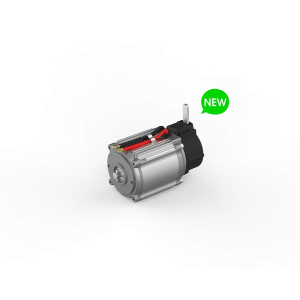
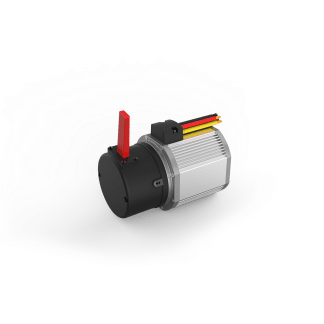
What Are the Benefits of Using Motor Wheels in AGV

The application of motor wheels into AGVs increases the level of power transmission efficiency, reduces frictional wear, and decreases the time spent on maintenance. Their compact structure allows for operations along narrow pathways, and flexible steering combined with high accuracy control enable smooth material handling, thereby optimizing workflow efficacy.

Efficient Power Transmission

Power transmission efficiency during the application of motor wheels with AGV systems has been hugely improved. In contrast to the conventional AGV transmission systems, which include a motor, gearbox, drive belt, couplings, and other components, the driving motor is integrated into the wheels of the motor wheels, thus forming an effective direct drive structure. It minimizes intermediate components and friction loss in power transmission, and therefore, the efficiency of transmission by motor wheels is increased to 90%-95%, while traditional mechanical transmission is approximately at 80%-85% efficiency. This is 5%-10% when it comes to improving efficiency, optimizing battery life, and saving energy costs by a high margin, thereby increasing the economic viability and operational efficiency of AGVs.

The direct drive characteristic of motor wheels can also enable them to respond promptly to power demands. Operating under heavy loads, an AGV with motor wheels is able to directly regulate motor torque by properly modulating the electric current; hence, flexible power adjustment is realized. Especially, under the complicated conditions of loading, the dynamic response advantage enables motor wheels to handle the variation in loads effectively to reduce impacts from fluctuations of load. Additionally, since the traditional transmission methods have longer chains of transmission, there would be some losses in torque during dynamic conditions, like that during start-stop operations, which resulted in waste of energy. Because of their tight integration, the motor and wheel contribute to superior instantaneous acceleration and braking performance, important in maintaining the operational stability and linear control of power output essential for AGVs.
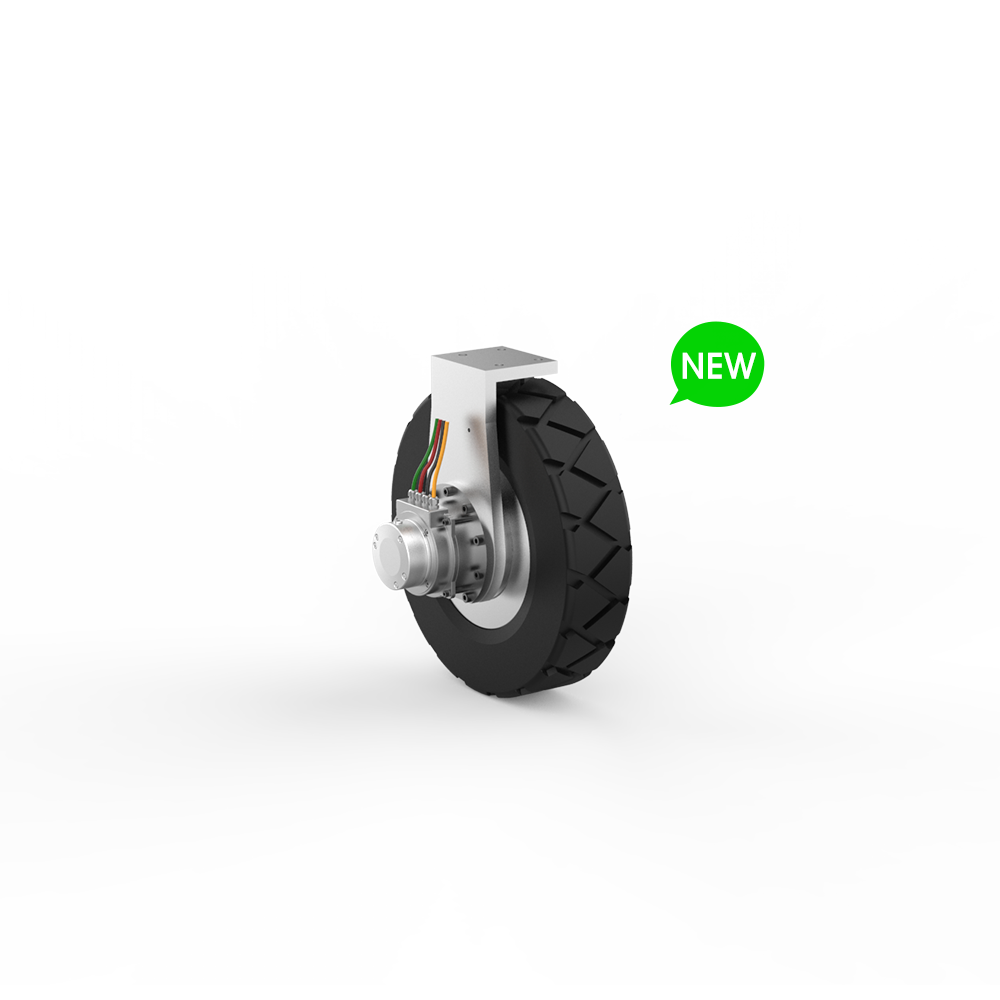
1KW Brushless Electric Driving Wheel DL1000-1-29

More Compact Design

The integration of the motor and wheel in the design of the motor wheel makes the overall layout of the AGV system more compact. In the case of a traditional transmission system, the need is usually to locate the motor inside the vehicle body and connect it with the drive wheel via drive shafts, gearboxes, or belts that demand considerable installation space. Motor wheels integrate the motor directly inside the wheel to save space, making the structure of the AGV more compact and flexible. Statistics show that AGVs using motor wheels experience a 15%-20% reduction in structural height compared to other transmission designs. Therefore, motor wheel-driven AGVs are allowed to work effectively even in enclosed spaces.

The compactness of the design in the motor wheel contributes much when it comes to narrow space and hallways. AGVs are applied to automated warehouses and workshops in factories where there are narrow aisles and very limited operating space. Traditional structures of AGVs have bigger height and volume because they need space for many transmission components, which makes them unable to turn and bypass obstacles easily. By compacting the design of motor wheels, the overall size of the vehicle can be reduced effectively, and the maneuverability and accessibility in narrow spaces for an AGV can be increased, thus making it applicable for efficient operation within a complicated environment.

The simplified design of motor wheels helps to reduce the overall weight of AGVs. Field test data show that motor wheels positively affect the endurance and energy efficiency of AGVs, at around a 10-15% reduction in total weight. More concretely, reduced weight contributes to lowering dynamic power consumption when AGVs have to start, stop, and manipulate heavy loads quite frequently, further extending battery life. This design enables the motor wheel AGVs to work effectively with reduced consumption of energy, hence meeting current industrial demands for efficiency and energy-saving solutions.

High-Precision Control

The high-precision control capability of the motor wheels makes them boast unparalleled advantages in the field of AGV applications, especially in those scenarios that require highly precise positioning and complicated path planning. Motor wheels integrate high-precision servo motors to realize precise speed and position control under dynamic conditions. Most motor wheels’ servo systems would involve feedback sensors and closed-loop control circuits to monitor, in real time, motor speed, torque, and position information, correcting at every turn the drive current to maintain precise control. Equipped with this level of precision control, motor wheels enable the AGV system to accomplish a positioning error in the range of ±0.1 millimeters, while for traditional mechanical transmission systems, the usual error margin is ±0.5 millimeters or more.
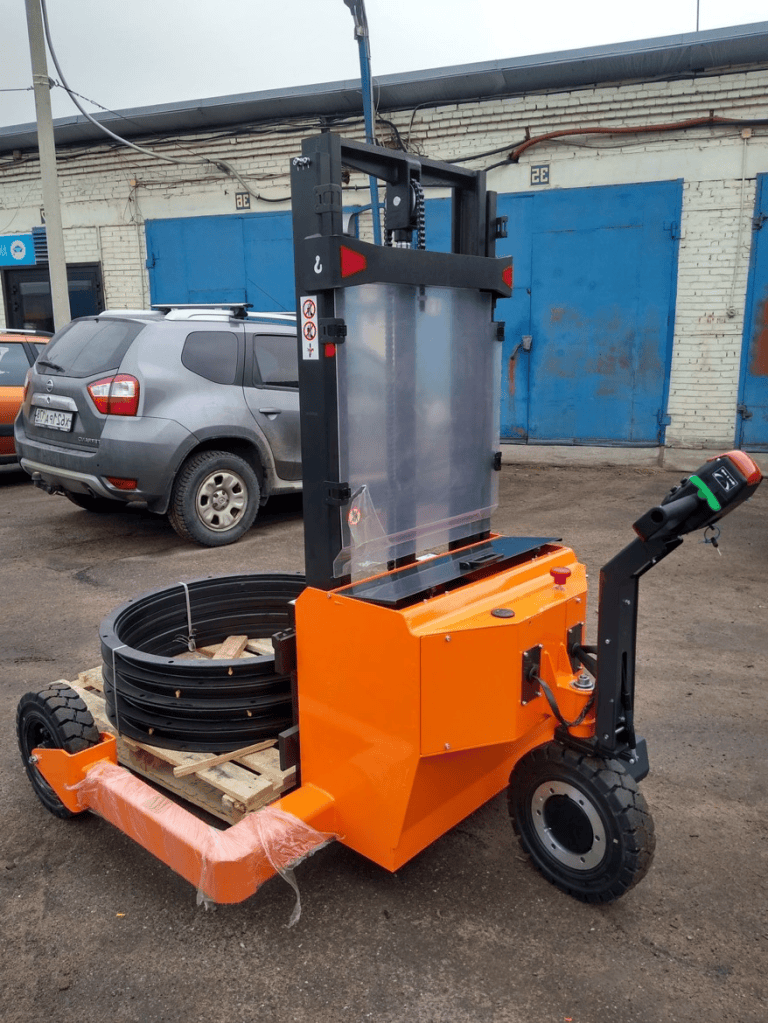
High precision control is not only related to the accuracy in positioning. It is equally essential for its speed and acceleration. The AGVs need to accelerate from rest, make sharp turns, avoid obstructions, decelerate, and stop smoothly within warehouses and factories. Traditional mechanical drive systems would always show some lag in response during such actions. On the contrary, with real-time accuracy, the motor wheels can respond quickly to commands. The motor wheels can precisely control the inner and outer wheel speed ratio in 90-degree corners or narrow paths, thus accomplishing smooth turnings that not only ensure safety for the load but also raise the level of operational stability and efficiency for AGVs. According to data, motor wheels can complete speed or direction adjustments within 0.1 seconds, which is hard for the previous system to achieve.

Another very important positive side of such high-precision control of motor wheels is dynamic adjustment. Under the high load conditions of operation, the motor wheels can operate in real-time adjustments of motor torque through the feedback function of the servo system so that it keeps the power output stably. For tasks that need high-precision load handling, like transportation of precision parts, stable control ability by motor wheels will make it possible for AGVs to finish a task with high precision and stability in complex path planning and dynamic environment, therefore greatly improving the success rate of tasks and operational safety.

Reduced Maintenance Costs

Therefore, the motor wheel structure significantly reduces maintenance costs for an AGV. In traditional mechanical transmission, gears, belts, couplings, and many other parts need to be replaced or serviced continuously due to friction, aging, and wear. Statistics can be shown that traditional transmission systems have an annual maintenance cost of about 3000 yuan, while for the AGVs made with motor wheels, this amount can be reduced to about 1500 yuan, saving almost half of the costs.

Motor wheels are designed with fewer wear-prone parts, further reducing the failure rate. Besides, the sealed design of motor wheels can protect internal structures from dust, moisture, and other external factors. Therefore, motor wheel AGVs are especially suitable for industrial environments with high dust or humidity. The sealed structure of motor wheels in dusty foundries can prevent dust from entering the motor and thus protect the driving system. Typical protection for motor wheels is at IP54 or above, which contributes to stability and robustness within the system, thereby elongating the life of your equipment.

The service life of motor wheels is longer. Usually, the motor wheels serve for 3 to 5 years on average, but other transmission systems need major component replacements or maintenance every 2 to 3 years. Because of the longer service life, replacement frequency will be reduced. This design makes AGVs more suitable for industrial applications that require long-term, uninterruptable processing. In this way, operational losses caused by equipment failure or maintenance downtime can be effectively reduced, while the value and operational benefits in the whole lifecycle of an AGV can be increased.

Enhanced Endurance

Efficiency benefits of motor wheels greatly increase the endurance of AGVs. In practice, AGVs usually use lithium batteries, and the capacity of batteries is directly related to the endurance of equipment. Because of this, the motor wheel structure decreases the friction and mechanical losses compared to the traditional transmission system, and it loses less energy when power is transmitted, using the energy from the battery more effectively. In the application data, it can be seen that AGVs using motor wheels enjoy 20% to 30% more endurance compared to those using traditional transmission systems, which in essence means that motor wheels can reduce the frequency of charging and greatly improve the efficiency of work.

Another aspect of the high-efficiency advantage of motor wheels is temperature control. Due to the difficulty in heat dissipation, traditional transmission systems are prone to overheating under high-load working conditions for a long period, which may lead to damage to the battery and affect the stability of the AGV. The reduction in friction and mechanical losses within the chain of transmission, the fundamental idea of the design of a motor wheel basically reduces temperature issues with respect to the rise in temperatures, pushing motor wheel systems to fall within reasonable temperature ranges that exclude device failure or reduction in performance based on high temperatures. Therefore, especially in continuous application scenarios, the AGVs run well with motor wheels where thermal stability is considered excellent since the risk of overheating downtimes is reduced and brings about an extension of time as far as uptimes by AGVs are concerned.

In modern warehousing and logistics centers, it is the motor wheels that drive the AGVs and minimize the downtime caused by recharging. In this regard, this design is quite valuable in high-efficiency production environments, especially in those 24/7 operating factories, because the endurance of the motor wheel-designed AGVs is much higher, thus leading to significantly increased operational efficiency.

Flexible Steering Capabilities
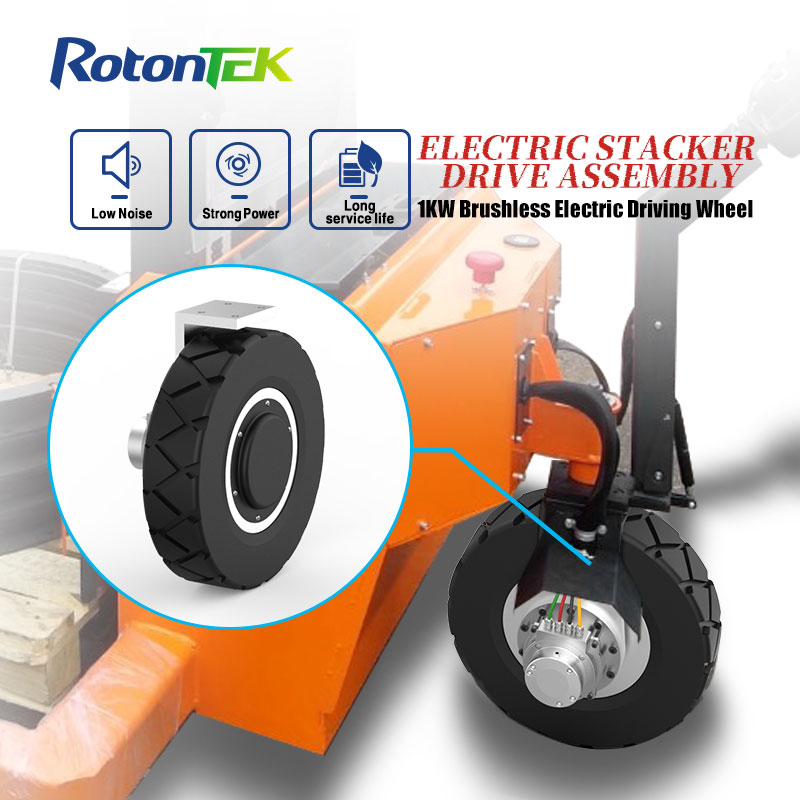
1KW Brushless Electric Driving Wheel DL1000-1-29

Motor wheels have superior steering flexibility compared to traditional drive methods. Most traditional drive methods rely on the steering axles or differential gears for steering, often requiring large-radius turning. However, motor wheels can independently control the speed of the left and right wheels, therefore allowing “zero-radius turning” (Zero Radius Turning), or 360-degree rotation in place. It is a very effective design for operations in narrow and crowded spaces, providing much power for AGV path planning and maneuverability.

With more turns in complex environments, wheel speed differentials made by the motor wheels can achieve very precise steering and agile movement. Research has shown that the minimum turning radius of the motor wheels is only 1-2 times of the wheel radius, while traditional drive methods require a minimum turning radius typically 3-5 times of the length of the vehicle. Meanwhile, the small-radius steering design minimizes not only the AGV turning time but also collision risks in narrow aisles, something extremely useful in complex terrains or space-constrained environments, such as densely shelved warehouses or narrow workshop aisles.

Motor wheels also ensure great stability during turns: their precision speed control system completely prevents any load wobbling or tilting. Traditional drive methods can only provide coarser speed control, which can easily result in load instability or even tumbling during high-speed turns. While motor wheels ensure fine speed adjustment during the turning process for assurance of cargo safety and integrity. More importantly, because of the high demand for automated warehousing, the motor-wheel-driven AGV will be very flexible and maintain stability on a high-speed trajectory in order to ensure effective and safe transportation of cargoes.

In Which Industries Are Controllers Most Widely Used

Controllers are widely used in industries such as manufacturing, logistics handling, and medical equipment. Statistics show that the global automation market has an annual growth rate of 8%. Using controllers in logistics automation equipment can increase efficiency by 30%, significantly reducing labor costs and operational errors.

Medical Mobility Devices

Companies specializing in this kind of technology, such as Rotontek, invest considerable effort in increasing response speed and precision to secure the best driving experience for users. In the design of an electric wheelchair, its motor controller should have high power density with low power consumption to meet user demands for continuous outdoor use. The power of motor controllers falls between 200W and 500W, but some high-end product power supports higher power outputs to handle even more complex terrain or heavier loads.

The battery life directly influences the reliability and safety of devices for electric wheelchair users. Most electric wheelchairs on the market use 24V or 36V lithium batteries and operate up to 8 to 12 hours of runtime. The motor controllers optimize current consumption, dynamically adjusting power output, which seriously extends the battery life and maximizes travel distance. For users in an emergency to stop or make a sharp turn, response times by the controller mean everything in terms of operational safety and precision. The Industry-leading response time of leading motor controllers can be as low as 5 milliseconds. That way, it will be easy for users to maneuver in tight spaces to avoid collisions and other accidents.

The controllers also provide several modes of operation, such as low-speed mode, high-speed mode, and energy-saving mode. The controller regulates output power and speed upon user selection to suit different scenarios. Motor controllers provide higher torque output on steep slopes, allowing the wheelchair to climb gradients above 15 degrees safely, especially for users who often spend time outdoors. High-quality motor controllers boast an average lifespan of over 10 years, are extremely durable, have great weather resistance, and operate reliably in a wide temperature range from -20°C to 50°C.

Cleaning Equipment

Modern electric cleaning vehicles require a higher power output, usually within the range of 500W to 1500W, depending on the cleaning power needed. These vehicles are normally used in large centers like shopping malls, airports, and industrial parks. The motor controllers should be efficient enough to allow at least 8 hours of continuous operation to meet cleaning cycles. More noticeably, Rotontek came up with controllers that were more efficient and capable of intelligently partitioning power to reduce power waste by increasing the battery life by as much as 20% and greatly reducing daily operational costs.

Electric cleaning vehicles have to negotiate several smooth surfaces. With correct torque control, these can drive up ramps or over obstacles without stalling. A standard electric cleaning vehicle controller usually handles slopes of about 15 degrees, hence smoothing its application on diverse grounds such as urban roads to parking ramps. Most cleaning vehicles have speeds that range from 3 to 8 km/h, where controllers adjust the speed automatically to different tasks in cleaning for efficiency. For example, in narrow corridors or crowded areas, motor controllers provide slower speeds with which their safety and accuracy can be improved; in open areas, they speed up to increase efficiency.

Since the environment in which cleaning vehicles are used provides for long exposure to dust and moisture, motor controllers should be highly protected. Most of the mainstream cleaning vehicle controllers can achieve IP65 or more water and dust resistance, thus guaranteeing reliability in bad working conditions. For daily outdoor use or in a humid environment, this feature is essential. In general, electric cleaning vehicles work uninterruptedly for 3 to 5 years, while annual operating hours are well over 2,000. High-quality motor controllers ensure reliable work under heavy workloads; on the other hand, low-quality controllers lead to frequent downtime and maintenance.

AGV & AMR

The most common applications of the AGV and AMR in warehousing and manufacturing are represented by processes like automatic transport and material handling. As a rule, their motor controllers come with power outputs within the range of 300W to 1000W to guarantee reliable and uninterruptible operation at full load. In automated warehouses, travel speeds of 0.5 to 1.5 meters per second are quite enough to ensure efficient goods transport by AGVs. Motor controllers automatically adjust speed according to load to further facilitate transport effectively.

Controllers are used by the AMRs for real-time route adjustment, avoidance of obstacles, and replanning of paths. The employment of high-efficiency motor controllers can limit an AMR path deviation within 1 centimeter, and agile movement in tight spaces is enabled. It enables the work of the AMRs to adapt to complicated scenarios, such as sorting and transporting commodities in an e-commerce logistics warehouse. For example, a warehouse with 500 AGVs operating on an average of 2,000 hours a year will save several hundreds of thousands of dollars in electricity annually due to the energy efficiency provided by motor controllers like Rotontek.

Motor controllers must ensure that stable speed is provided in AGVs carrying a load of 500 kg or more and support quick start-stop operation. If this is greater than 1 second, it may impact the overall efficiency of a warehouse system. However, with good-quality controllers, the start response times could be reduced to below 0.5 seconds for speed and efficiency in operation. Motor controllers also usually achieve protection standards higher than or equal to IP65 to guarantee stable performances against changes in temperature and humidity. The controllers also monitor the battery level and health, while optimizing power consumption for extended runtime. With advanced controllers, AGVs can continue to work without stopping for 8 to 10 hours with just a single charge.

Logistics Handling Equipment

The torque output of an electric forklift should be large enough to guarantee smooth starts and operation under heavy loads. Most of the electric forklifts available on the market can have a load capacity ranging from 1.5 to 5 tons, needing controllers with power support ranging from 1000W to 3000W to support such heavy cargo. Under full load conditions, the controller keeps the vehicle’s driving speed constant, usually between 6 and 10 km/h, thereby assuring operation efficiency along with safety.

Most electric forklifts have less than 1.6 meters of turning radius. Their high-precision controller provides less than ±1-centimeter movement control error; positioning in crowded spaces is accurately controlled to avoid collision. Companies like Rotontek provide motor controllers for electric forklifts that raise the standard not only for the overall operational experience but also reduce the frequency of maintenance. With high-quality motor controllers installed, electric forklifts have an average annual failure rate of less than 3%, compared with more than 10% for traditional internal combustion forklifts.

The motor controller is integrated into the electric forklift, together with the battery management system, which allows for real-time monitoring and maximizes the capacity, health, and discharge rate of the batteries. Electric forklifts fitted with efficient controllers can also operate for about 6 to 8 hours on a single charge, therefore satisfying the requirements of routine handling of logistics. It also sends out warnings in case power reaches low levels to prevent the sudden shutdown of the operating machine, hence ensuring workflow continuity. Typically, the life cycle of a forklift controller is 8 to 10 years, and it can be maintained 30% more cheaply than its traditional internal combustion counterpart. Since the investment is higher upfront, the savings from reduced maintenance and energy costs during operation are considered considerable by businesses.

What Are the Advantages of a BLDC Motor

Compared with the traditional brushed motors, BLDC motors have many merits. First, they use electronic commutation technology to avoid the wear of carbon brushes and commutators, reducing energy loss and improving work efficiency. Second, BLDC motors require only a little maintenance, have a longer service life, and reduce maintenance cost. With compact structure and light weight, BLDC motors have wide applications for locations where space is limited. Moreover, BLDC motors operate with very minimal levels of noise and vibration; hence, they are highly suitable for appliances that require low noise and high levels of precision in control, such as power tools, electrical vehicles, and high-precision machinery.

Higher Efficiency

BLDC motors are a great deal more efficient compared to conventional brushed motors. Also, traditional brushed motors have efficiencies that depend on wear in the carbon brushes and the commutator. Energy is wasted in power transmission, with a portion of the energy converted to heat that might cause overheating of a motor and reduce overall efficiency. Contrary to that, BLDC employs electronic commutation without carbon brushes and commutators to reduce the internal mechanical friction that smoothes the energy transfer and, hence, facilitates efficient conversion of electrical energy to mechanical energy.

Since BLDC motors operate on purely electronic commutation, an exact ECU is required to switch the direction of current in the windings, without fluctuations in current and energy losses from brush contact. This kind of electronic commutation will not only enable more energy efficiency but also allow more precision in motor control. Various studies relate that, generally, the efficiency achieved by BLDC motors has been more than 90%, whereas in brushed motors, the efficiency remains in the range of 70%-80%. The BLDC motors can maintain higher efficiency under varied loads. Because of this reason, many high-performance electrical devices would recommend their usage.

In applications like wind power generation, temperature regulation systems, and electric vehicles, the efficiency of a BLDC motor is quite high; this greatly cuts down on energy consumption and raises the bar for better performance of the system. This is especially so in an electric vehicle, which operates on limited battery power, wherein a high-efficiency BLDC motor will contribute to extending its driving range by a great deal.

Higher Efficiency

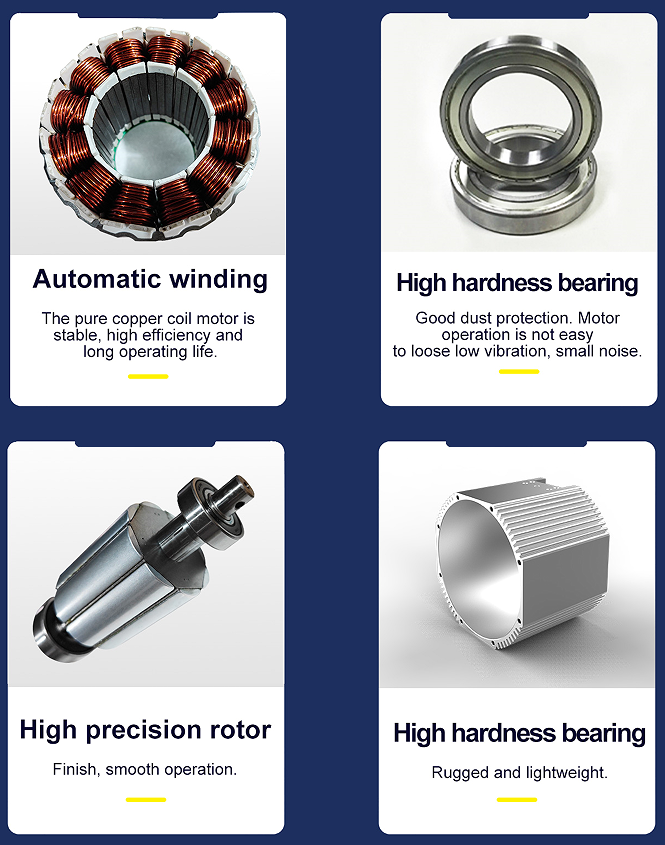
One of the major advantages of BLDC motors is that they can be maintained very easily. In conventional brushed motors, commutation is done by the contact of carbon brushes and commutators. The brushes wear out over time and have to be replaced periodically. This mechanical friction generates a lot of heat during motor operation besides affecting the long-term reliability of the motor because of the wear and tear on the brushes.

On the other hand, in the case of BLDC motors, this is a brushless design; it means no carbon brushes and commutators—no moving contacts inside the motor—are used; hence, mechanical wear can be reduced greatly. This brushless design makes BLDC motors require almost no regular maintenance. Besides, most of the electronic commutation systems in BLDC motors are adaptive—that is, the load and speed modify the commutation strategy to avoid excessive wear and unnecessary waste of energy found in conventional motors.

Since there are no carbon brushes in BLDC motors, it runs more smoothly, and the frictionally produced heat is reduced to a minimum, further enhancing motor stability and reliability. Hence, BLDC motors find extensive application in those fields where high reliability is demanded, such as wind turbines, medical devices, and drones that require operation for extended periods without the occurrence of frequent breakdowns or faults.

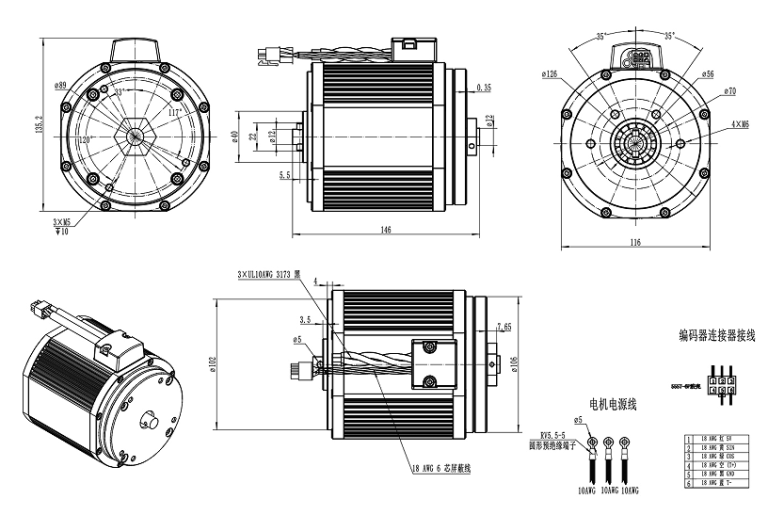
500W DC Brushless Motor(With electromagnetic brake) drawing

Compact Design

Other key advantages of the BLDC motors are in their compact design. Since there is no mechanical commutator, traditional motors can give the same or even higher output power in a smaller form factor. For the same required power, the BLDC motors are much smaller and lightweight compared to traditional motors by virtue of their higher power density. This makes BLDC motors highly valuable for applications with limited space.

Compact in size yet excellent in power density, BLDC motors can provide strong performance with their small and lightweight design for power tools, electric vehicles, and consumer electronics. In electric vehicles, for example, the compact design of the Rotontek it BLDC motors optimizes interior space in vehicles and allows for high space utilization of the battery, which further extends the driving range.

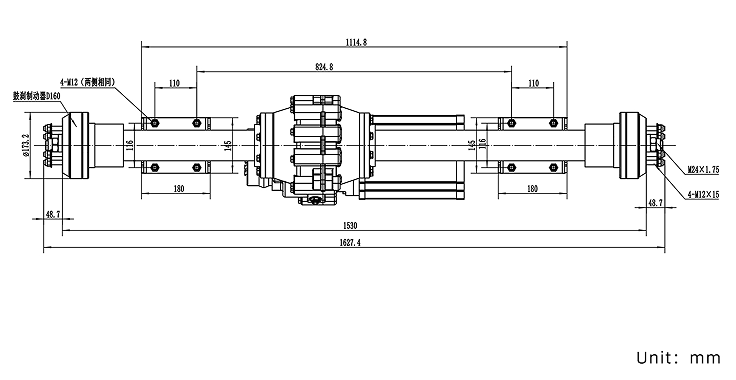
20KW AC/DC Motor Electric Transaxle Brushless Electric Drive Rear Axle size drawing

This compactness of the BLDC motors makes it even adaptable to different industrial usages in precision motion control in robotics. For some precision machineries or automation equipment, the small size of the BLDC motors allows more appropriate power transmission and its control in restricted spaces, optimizes not only the general design but also the performance of the particular equipment.

Precise Control

Among the salient features of a BLDC motor is its precision control capability. Since it employs electronic commutation technology, a BLDC motor is capable of precision control of the direction and magnitude of current in the windings via an advanced control unit that enables the motor to precisely control its speed and torque. Because of this electronic control, BLDC motors can have high precision, and they can also provide fast responsiveness when operating under various conditions.

Compared to the traditional motor, BLDC motors have more flexible speed and torque adjustment. When the load changes, the BLDC motors can adjust the input current immediately to operate smoothly. Especially at high speeds and large fluctuations in load, BLDC motors can maintain larger stability and avoid phenomena such as speed fluctuation or too small torque, which happens with traditional motors. Because it gives very precise control, the BLDC motors are widely applied in robotics, aerospace, automated production lines, and precision tools or instruments where high standards of controlling are needed.

Meanwhile, combined with advanced control systems, BLDC motors can also realize more complex motion patterns, such as high accuracy positioning and constant speed cruise. All those make BLDC motors the core component in loads of high-end equipment. In high-end industrial automation, BLDC motors can do some very complex tasks, such as precision cutting and assembly line transportation, all relying on their precise control capability.

Drive Controller For DC Brushless Motor ID200 advantage

Low Noise

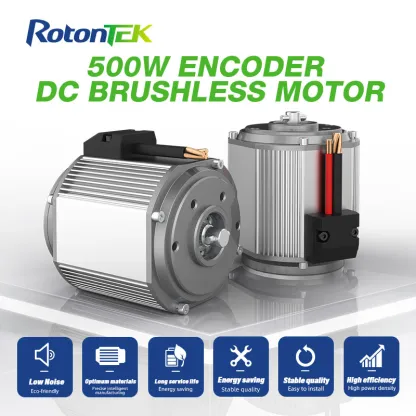
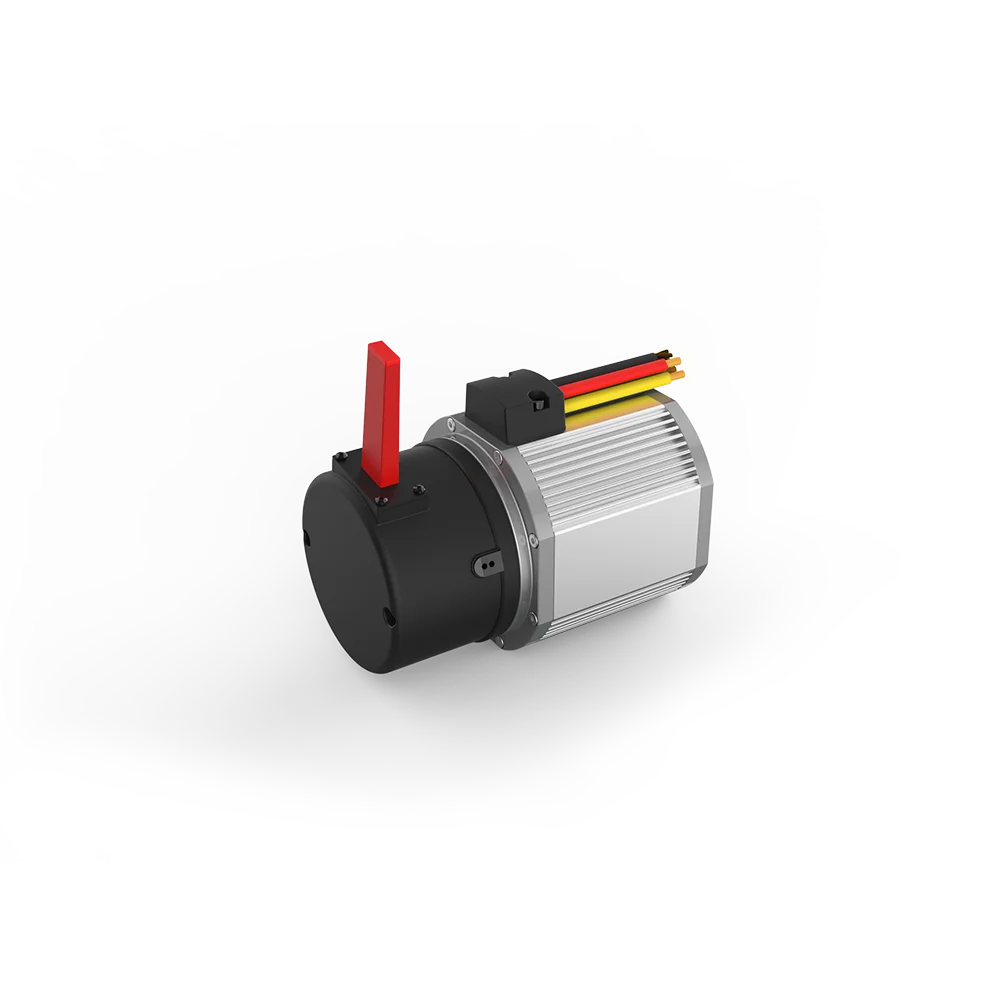
800W Encoder DC Brushless Motor features

Comparatively, BLDC motors obviously have an advantageous edge in noise control over traditional brushed motors. In the case of traditional brushed motors, friction between carbon brushes and the commutator generates significant noise. Normally, this noise will have a higher frequency that can break the quietness of the work environment. In contrast, because of the absence of contact parts such as brushes and commutators, mechanical friction in BLDC motors is much lesser, and hence noise from the motor during its operation is far less.

BLDC motors can operate with low noise both at low and high speeds due to their operational efficiency. The accurate electronic control system allows the motor to run smoothly without the variations of torque that characteristically raise noise in conventional motors during transition-in, acceleration, and deceleration. The quiet function makes BLDC motors suitable for silent places, such as offices, hospitals, and homes.

The low-noise characteristics of BLDC motors offer a better working environment for workers of industrial equipment and reduce health hazards resulting from noise pollution. Indeed, most modern industrial facilities use large numbers of BLDC motors for automated production lines and precision instruments in order to lower the overall noise levels in their equipment, hence improving the overall work efficiency and comfort of employees.

Better Durability

This is the other big positive for BLDC motors: their reliability. Since they have no carbon brushes or wear-prone parts, BLDC motors reduce friction and wear damage, further extending the service life of any motor. Traditional brushed motors have restricted lifespans for the carbon brushes, and the commutator wears out easily, which increases the possibility of the motor failing after being used for some time. By contrast, Rotontek it BLDC motors are designed for higher robustness, allowing them to support longer operation periods and more starts and stops.

BLDC motors have also proved to be durable by operating in extreme work conditions. Since they have simple structures with no parts that may easily wear out, they can bear high temperatures, humidity, and any form of extreme working environments. Most BLDC motors have quality materials and constructions for reliable operation in most high-temperature and humid environments; for long-term stability, they can bear operational temperature and humidity up to a certain level.

This excellent durability makes BLDC motors widely used in the fields of industrial automation, aerospace, medical equipment, and electric transportation, where the high reliability and durability of the motor are particularly important to guarantee stable system performance.

Best DC Brushless Motor for 2024

Eco-Friendly

The environmental benefits brought about by BLDC motors have gradually turned it into one of the most competitive advantages. Since Rotontek it BLDC motors are highly efficient, a lot of energy waste during operation can be avoided, and therefore, power consumption is comparatively low. For large-scale power-consuming industrial systems, saving energy consumption will not only save operating costs but also reduce carbon dioxide emissions and minimize negative environmental impact.

20KW AC/DC Motor Electric Transaxle Brushless Electric Drive Rear Axle application

Combined with its brushless design, furthers the reduction in pollution resulting from carbon brush wear in BLDC motors. Since the motor is running, in ordinary motors, the carbon brushes may wear off with time and can cause harmful emissions into natural environments. Since BLDC motors do not have such wearing parts, such problems are avoided. Environmental friendliness on the part of BLDC motors makes them quite suitable for applications which involve strict environmental requirements, such as electric vehicles, wind power generation, and smart appliances.

What are the key specifications to check when buying a brushless DC motor

While purchasing a brushless DC motor, pay attention to the following basic parameters: power, speed, voltage, and torque. The power could range from 500W to 1.8kW, where light loads to very heavy loads would be served. Choosing a speed of about 4000 rpm is perfect for most uses. Generally, voltage compatibility ranges between 24V and up to 48V; one can choose according to device requirement in order to avoid overheating or loss of efficiency. Torque recommendations range between 1.5 and 4 Nm for stability in performance for a wide range of loads.

Adequate motor power

When buying a brushless DC motor, attention should be paid to suitable power. Common power specifications range from 500W up to 1.8kW. 500W can be used for light-load devices, while for heavy-load devices, like automated machinery and large industrial machines, 1.8kW will be the best. The power choice should be based on actual needs; overlooking this may greatly reduce the service life of a motor or increase energy consumption. Some logistics companies choose motors over 1.2kW for heavy-duty conveyor equipment to ensure operation at high efficiency over an extended period.

The power shall be determined in accordance with the application scenario of the device, to avoid low power that affects work efficiency. Generally speaking, for household equipment and electric tools, below 500W is enough, but for industrial equipment, it needs to be above 1kW. Running the motor at an excessively lowly selected power will result in overheating, a reduction in its efficiency, a shorter life for the motor, and increased maintenance costs.

Power specifications not only have an impact on operational stability but also on running costs. The higher the power, the greater the energy consumption will be. While stronger outputs are welcomed, so are increased electricity bills. When selecting an operating power, one should consider long-term operating costs and make projections on the annual cost of using the power. Selection should be made on power that fits the budget.

Speed selection

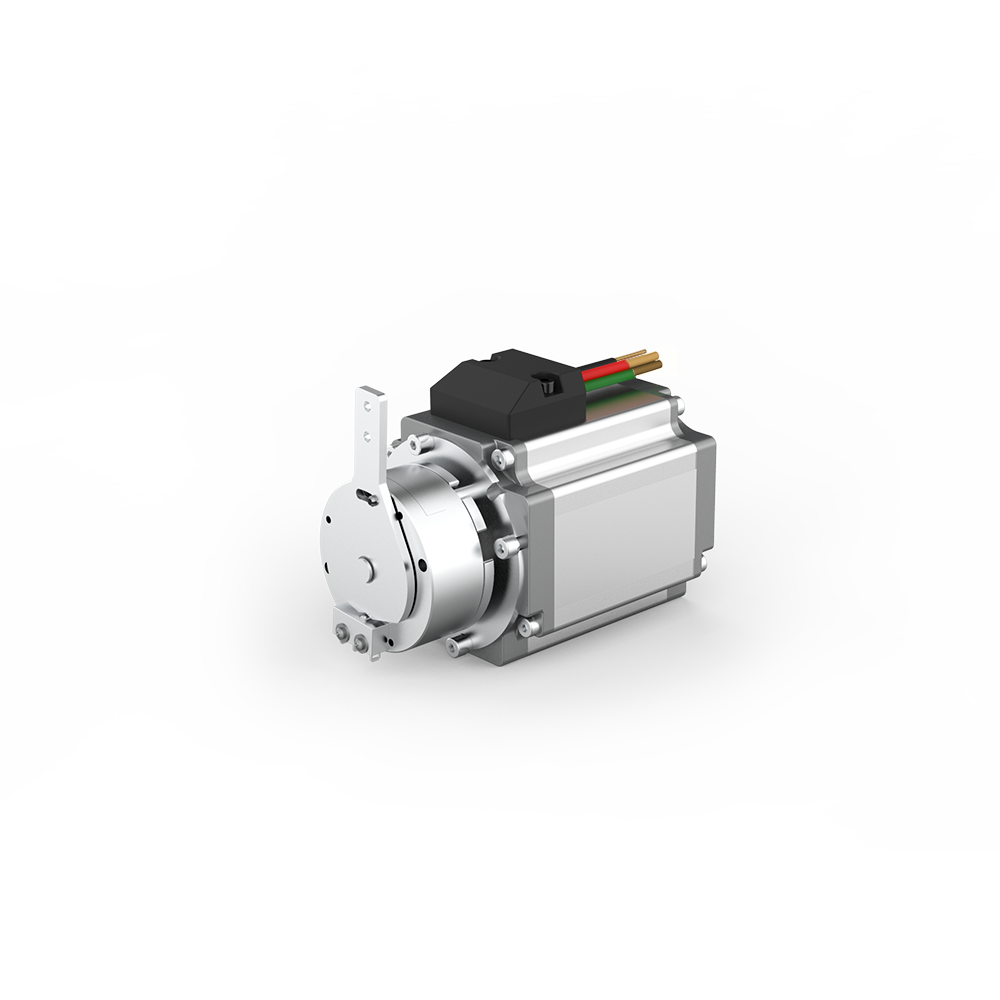
500W DC Brushless Motor(With electromagnetic brake)

Speed is usually a factor of performance or operational efficiency in equipment in the process of buying. A normal ideal speed for a common industrial and household application may normally be around 4000 rpm. This provides a very good compromise by meeting the speed requirements of most industrial automation devices without compromising the stability of the motor. For instance, industrial manufacturing CNC machines need very good speed control and normally are within a setting range of 3500-4500 rpm to offer very good machining accuracy and surface finish.

During actual applications, it contributes a lot to improving motor efficiency by adjusting the speed to meet the requirement loads. If all the equipment runs just conveyor belts or assembly lines, a stable and moderate speed will work in energy saving, cost reduction of maintenance, and prolonging equipment life. While working on high-efficiency occasions, such as sorting systems in logistic areas, setting the motor at 4000 RPM will greatly raise operational efficiency.

Voltage compatibility considerations

Voltage compatibility is a very important aspect in selecting a brushless DC motor, which pertains directly to the performance and safety of motors. In general, those from 500W to 1.8kW have different voltages, but there are a lot of them operating within 24V to 48V. In industrial use, such a motor should have a voltage that is strictly according to the requirements of the equipment; otherwise, too much current is likely to result in overheating and increased loss. The requirement in medical equipment is very high in terms of voltage stability, with fluctuations of more than 10% liable to affect accuracy.

Incompatible voltage can reduce motor performance or cause it to be damaged prematurely. Excessive voltage may cause serious overheating, which reduces life-span, while too low a voltage may not effectively drive the load, reducing efficiency. The specific value of voltage will be decided by companies depending on the scenario of load and power requirement in choosing the motor. While automating high-load equipment, choosing a higher working voltage will ensure stability in operation while energy consumption per unit is reduced accordingly.

The voltage compatibility, of course, would be even more strict for precision instruments or electric vehicles. The 36- and 48-volt configurations are common in electric bike motors, both capable of adequate torque and battery life. In the selection of voltage, first, refer to the device’s electrical parameters and related standards so the actual working condition would accord with the rated voltage for the motor, increasing device life while lowering failure rates.

Noise impact

Noise level is one of the most important parameters for people when choosing a brushless DC motor. Especially for medical equipment or office environments, noise requirements are generally below 40 dB to avoid disturbing anyone. The Rotontek brand motors are widely used due to their characteristics: “high efficiency, compact size, reliability, and low noise”, designed in such a way as to reduce the noise level and make it fit for noise-sensitive environments.

Noise also affects the life span of the motors, where long-term noise levels could be indicative of internal friction and the deterioration of parts in general. Most industrial machinery ought to maintain a noise level below 50 dB for the alleviation of worker fatigue and depreciation of the possibility of tinnitus. Optimizing internal structures, Rotontek’s high-efficiency motors have reduced mechanical friction by 20%, hence reducing noise and prolonging the life expectancy of equipment. In practice, some special application requirements could be satisfied by selecting a silent-type brushless DC motor.

What is the main purpose of Motor wheel

Motor wheels are designed to provide stable and efficient power for a wide variety of industrial vehicles. High performance of up to 1 kW of power and a speed of 2300 rpm in heavy load handling and precise operational performance for devices such as electric forklifts and AGVs.

Electric Forklift Efficient Power

Motor wheels are among the critical drive components in an electric forklift, providing power that ensures the machinery operates both in movement and load carriage effectively. Electric forklifts are required to deliver a pulling force of 4000 kg in accomplishing material handling tasks in complicated warehousing or logistic environments. With a maximum rotational speed of 2300 rpm, motor wheels ensure efficiency in their operations, separating them from conventional forklift drive systems. The motor wheels of Rotontek have a diameter of approximately 406 mm with a width of 100 mm to provide agility and the ability to maneuver in tight areas with minimum space. The 1:29 gear ratio of the motor wheels further optimizes speed control for precise handling in a wide range of warehouse environments.

Over 50% of large warehousing companies worldwide have shifted to electric forklifts mainly because the motor wheels can help reduce operational costs and service life. Electric forklifts consume less power per hour, and with the advantages of brushless motors, maintenance is significantly decreased. Hence, high-efficiency, durable, and low-maintenance motor wheels are driving up the demand for electric forklifts in today’s warehousing and logistic industries. More specifically, motor wheels play an active leading role in those companies committed to environmental protection and carbon emission reduction. This green and efficient drive system saves costs while promoting warehousing efficiency; it provides strong technical support in modern logistics promotion.

Precision in AGV Transfer Vehicles

Motor wheels play an important role in guaranteeing accurate navigation and effective operation for the AGVs. The positioning accuracy of the AGV should be very high in order to achieve centimeter-level precision in warehouse transfer. It has a gear ratio of 1:29, whereby the motor wheels of the AGVs can switch between operations that require different loads and speeds smoothly. The efficiency of the transfer vehicles is extremely vital for an AGV, especially in large warehouses where rated power at 1 kW would effectively address heavy loads. In particular, motor wheel AGV systems can save more than 20% of warehousing costs and hence are very attractive for companies in an attempt to enhance efficiency and cut labor costs.

The AGV motor wheels have traction and offer precision in terms of speed and route due to their electronic control systems. The technology ensures the stability of the AGVs in terms of turning, acceleration, and deceleration; hence, minimal risks occur for the sliding or tilting of cargo. In particular, with the increase in global demand for logistics, AGV transfer vehicles bring revolutionary improvement with their high efficiency and intelligent operation to the industries of warehousing and logistics. The technology of motor wheels has driven unparalleled development in the adoption of AGVs; thus, they are bound to be essential in unmanned warehousing and smart logistics, ensuring smooth, efficient operations right from production to delivery.

Self-Propelled Stackers

The motor wheels in self-propelled stackers make the piling of materials flexible and effective, which is very important in warehousing and industrial production. With a self-propelled stacker, such a motor wheel would further provide fast and accurate cargo stacking with a substantial increase in working efficiency compared to manual stacking. A self-propelled stacker has a rated load capacity of up to 1000 kg, so it can easily perform heavy loads in vertical stacking and horizontal moving.

1KW Brushless Electric Driving Wheel DL1000-1-29

The high power and low gear ratio of motor wheels is very important, especially in stackers, where high traction and stability are needed while lifting and moving. The Rotontek motor wheels can serve the purpose effectively by providing high speeds up to 2300 rpm, thereby making the stackers pick and place material with incredible swiftness. A stacker of this nature not only raises the speed of operation in a warehouse but also saves labor demand, improving the space utilization of the warehouse. The self-propelled stackers have flexible mobility in narrow aisles because of the precise control afforded by the motor wheels. This is impossible with traditional equipment.

Electric Aerial Lift

The motor wheels provide safe and reliable power support for high-altitude operations in electric aerial lifts. Compared to the traditional fuel-driven systems, the motor wheels are not only environment-friendly but also provide stable output under a continuous period of operations, which is quite critical for the lifts intended to move vertically and horizontally. Usually, electric aerial lifts are provided with 1 kW-rated motor wheels that can handle up to 1000 kg of load for providing stable lifting at different heights. In many working conditions at height, including maintenance of shopping malls and factories and organization on warehouse shelves, the electric aerial lifts for turning require flexibility with motor wheels having a diameter of 406 mm. Noise is reduced, with less frequency of maintenance since the motors employed are brushless; hence, operational costs are further lowered.

It saves money on equipment replacement because motor wheels have an extra-long service life and are able to meet the requirements of high-frequency operation. Compared with the traditional fuel-driven lift, an electric lift equipped with motor wheels can increase energy savings by over 30%. Thus, it has a strong appeal for companies with growing demands on environmental conditions. Motor wheels offer strong traction and a high output of torque, which provides stability for the lifts to move forward on uneven ground. Many electric aerial lifts are fitted with anti-slip design motor wheels, effectively preventing slipping in outdoor operations and guaranteeing the safety of high-altitude operations. Safety, eco-friendliness, efficiency, that is how much motor wheels can add to aerial lifts in improving the efficiency of high-altitude operations and ensuring worker safety.

The top 5 best motor controller of 2024

AC induction motor controller

These high-performance devices further enable better precision, greater efficiency, and higher safety for a wide array of applications. Starting with the top five motor controllers that represent the best in power output, innovative features, and robustness, this list discusses the following:

ID600 series 3KW~5KW motor controller

ID600 Series Motor Controller – 3kW/5kW

The ID600 Series Motor Controller, made by Rotontek, provides very powerful and highly accurate control for an electric motor in both 3kW and 5kW versions. Operating on 24V to 72V DC input voltage, this controller has quite broad uses in many respects. This is also a highly efficient motor controller with a peak efficiency of up to 98%, which ensures low energy loss and prolongs battery life in electric vehicles.

Key features include the control algorithm, which operates sophisticated torque and speed regulation to realize consistent performance even with variable loads. It supports FOC, which is essential for torque control optimization, noise reduction, and efficiency maximization. With the rating of IP67, it shows that ID600 is waterproof and dust-proof hence very durable in harsh environments.

Drive Controller For DC Brushless Motor ID200

2kW Brushless Motor Controller

The Rotontek 2kW Brushless Motor Controller focuses on precision and efficiency. It works within a wide voltage range of 48V to 72V DC, offering a peak power output of 2000W. It provides both single and dual-mode control capability-including sensorless mode for greater flexibility and smoother operation over a wide range of applications.

Overcurrent and thermal protection is built into the controller for added security against motor damage to provide an extended system life. The high-frequency switching mode is used for its design. This makes for a much quieter operation. Moreover, there is minimal electromagnetic interference to improve operating efficiency. Because this controller is light in weight and compact in size, it only takes up so much space for its installation.

ID500-series-DC-brushless-wheelchair-controller-3

ID500 Series DC Brushless Wheelchair Controller

The ID500 Series DC Brushless Wheelchair Controller by Rotontek combines the highest functionality with ease of use, specific to mobility solutions. Rated at 500W and operating voltages between 24V and 36V DC, this finely tuned controller provides reliable and smooth control in electric wheelchairs and other assistive devices.

Due to its compact build and intuitive interface, it can be easily integrated and controlled within various models of wheelchairs. Increased IPX4 water protection allows small splashes, making users confident to work in variable conditions. The ID500 Series provides reliable power management with safety-enhanced performance that fits the assistive mobility needs of electric wheelchairs and similar devices.

ID510-series-DC-brushless-wheelchair-controller-3

ID510 Series DC Brushless Wheelchair Controller

This controller works on an output power of 500W, with voltage input supported from 24V to 36V DC. It ensures the effectiveness of minimal energy consumption. The controller incorporates adaptive speed control and provides smooth acceleration and deceleration, which are crucial in areas requiring high levels of precision.

Equipped with advanced thermal and overload protection, the ID510 has been constructed to be highly durable, which automatically takes corrective measures to prevent overheating and excessive power drawing. This controller has customizable braking and sensitivity settings for personalizing user control preferences. The unit is adaptable to different user needs and driving conditions.

ID200-series-DC-brushless-wheelchair-controller-6

ID200 Series DC Brushless Wheelchair Controller

This controller is for 200W, 24V DC, with efficiency in energy use and smooth driving control. Sensitive steer and precision control are some of the features included in this model, which provide maneuverability and give confidence, especially in confined areas.

The ID200 features a smart braking system with variable response time; users can adjust the braking feeling according to their preference. Compact footprint and low-weight design mean it is easily integratable even into smaller wheelchair models without compromising quality in control. Having an IPX3 water resistance rating, it does provide basic protection against light moisture, supporting reliable indoor use and outdoor use on occasion.

Why is a BLDC motor superior to a traditional DC motor

How Do Controllers Improve Wheelchair Mobility

Advanced Controllers for Enhanced Automation

With the advance of technology in recent years, controller role has become more significant in modern wheelchair systems. They make the operation drastically easier, but they also work great for users that need to have their wheelchair be more mobile and even user-friendly. Wheelchair controllers are intelligent products that use advanced functions such as precise control, adaptive technology, accessible design, and smart intelligence to make wheelchairs more sophisticated and responsive so they can meet the diverse needs of various users in a complex environment, thus changing completely wheelchair user life experience.

Precise Control

Utilizing high precision sensors and encoders, the advanced wheelchair controllers achieve precise changes in speed control of the machine and direction drive with up to 99% accuracy of wheel-rotation per minute adjustment. On rough terrains, the controller takes care of correcting slopes so as to make the user climb smoothly. Based on the slope scenario, modern controllers can increase torque/output by 20 to 30% of power requirement in order for it to manage this and thus provide a stable no jerk movement.

And in response to abrupt weather changes, these smart wheelchairs can fine-tune their speed thereby automatically reducing the pace by 20% (to help slip protection) that leads control to a hitherto safer state of affairs. In more human terms, this will make everyday tasks easier and more user-friendly in relation to the operation of your powerchair by using slight hand movements it can be set up so you can control what direction and speed that was traveling.

Adaptive Technology

Greatly optimizes the user experience of a wheelchair with highly individual settings. New control systems for wheelchairs now have the ability to sense their environment, identifying and adjusting for various terrain. The smart wheelchair can automatically transform to mode for adapting to different terrains, including naturally transitioning from a hard flat surface onto grass, and running on as much as 95% accuracy.

Adaptive technology prevalent in wheelchairs targets the sensitivity of the controller, making a small gesture enough for users with weak muscle control to accurately manage their wheelchair. This very fine sensitivity adjustment allows the wheelchair to act by a light hand or head movement and facilitates its driving comfort. User feedback modification can set the response threshold of wheelchair tenfold higher than normal, which is very useful for people with weak muscles.

Accessible Design

For many modern wheelchair controllers, which take visually impaired users into consideration, there are voice feedback systems that can enable a user to speak the instructions to start and stop whilst providing speed adjustments. The autonomy of the users who operate it has increased by 40% and, at the same time, its error rate went down to half. Certain wheelchairs can be controlled by a programmable touchscreen where those with limited hand mobility are able to adjust the width and position of buttons based on their use patterns or physical abilities. This custom interface design not only eases operation but also allows for 65% more self-sufficient user operations.

Lots of wheelchair controllers have adaptation technology built in them to also change the driving mode between different terrains. This makes the wheelchair more stable and easier to handle on different ground conditions, like grass or gravel, as it minimizes changes needed by hand. Adding this reactive auto club has improved customer satisfaction over 75% across the board. The wheelchair also comes equipped with an emergency response feature that automatically applies brakes in times of emergencies. The safety feature has lowered the likelihood of accident rates due to human error or external factors and reduced possible incidents by as much as 40% using its emergency stop function.

Smart Tech Integration

Intelligent wheelchairs have GPS, also with sensors that allow them to identify the states of their environment and adjust accordingly. A kind of simply intelligent and self-protection for the wheelchairs takes actions by referring to navigational maps, extra sensors supplied information as a barrier warning. This technology can lower the number of long-distance course corrections users must make in challenging places like malls and sidewalks by up to 70%, improving navigation accuracy and user-driven mobility.

The intelligent controller also focuses on the ejection technology of obstacle detection and automatic avoidance, which reduces potential collision accidents by 30% and improved independent driving safety. The most advanced wheelchair controllers can also connect to healthcare monitoring systems that monitor the health of users, heart rate monitors, and blood pressure measurements. This info can be sent to medical companies in real time so that they react quicker during emergency situations hence enhancing the speed and efficiency of exactly how clinical treatment is done.

Energy Efficiency

The controller itself is equipped with an integrated dynamic energy management system so that it can automatically adjust the output of electric power according to the moving speed of the wheelchair and gybing situation by the user. This function reduces energy consumption automatically on flat roads where the wheelchair does not require much power, providing significant increases in battery efficiency of 20% when used to draw statistics allowing users can swerve for longer periods without recharging.

Practical application Regenerative Braking Technology, which converts the energy generated during braking or downhill into electricity for storage in batteries to regain about 15% of that energy. This equates to less exertion and distance that can be covered by users who rely on the wheelchair for extended periods or over long distances. The chair will turn into a low-power state at the smart sleep mode, it can save about 10% of electric so that to maintain good performance for using the battery longer.

How does an electric motor turn electricity into motion

An electric motor is a device that converts current into a magnetic field. This interaction between the two fields produces mechanical motion. It all starts with current flowing through the stator coils. The stator coils generate a magnetic field. This field interacts with the rotor’s like pole, creating rotation. While the rotor whirls on, the motor outputs mechanical energy at a constant rate to keep equipment in motion.

Current generates a magnetic field

When current flows through the stator coils, a magnetic field is induced that starts motor operation. The magnetic field surrounding the coil moves as the current flows through the coils. It takes its shape according to the amplitude of the flowing current. It also depends on the number of turns in the winding. It also depends on the volume, size, and shape of the pole piece. It comprises five thousand turns. Collectively, this will produce magnetic field strength equal to 4000 ampere-turns per meter. This is strong enough to create enough torque on its rotor.

The size and type of coil will also affect how powerful its magnetic field strength becomes. Increasing the number of turns will further increase magnetic field strength, but this result in a larger motor. Engineers can tune the coils in real-world designs to strike a balance between magnetic strength and motor size. Some high-performance vehicles use thicker copper wires in their motors. This reduces the energy loss generated by excessive heat.

Some coils have their windings wound on bobbins or formers in the shape of a spool. These often include an iron core placed inside winding types where it will best guide and focus magnetic lines. Core material is important for the motor. A good silicon steel sheet or soft iron with excellent magnetic permeability can improve the motor’s magnetic field efficiency. This improves the motor’s efficiency and creates higher torque at the same enter power. This reduces the stator core losses in an industrial motor by up to 98% of total energy. This leaves the vast majority for mechanical output.

Electromagnetic interaction

When the stator creates a magnetic field, it interacts with a rotor. It utilizes either electromagnetic coils (originally known as field windings) or permanent magnets. These magnets produce a magnetic field with a strength ranging from 0.5 Tesla. This powerful magnetic field combines with the stator’s rotating magnetic field to produce an electromagnetic force. This force applies torque to the rotor, causing it to rotate. Both depend on how strong your current is. They also depend on what kind of magnetic field you are using. For a 0.1-meter conductor and a current of 10A, you can generate an electromagnetic force of up to almost 5 Newtons. This is enough for many small-to-medium-sized machines.

The effectiveness of the electromagnetic interaction also depends on the material, structure, and weight of the rotor. It is common to use rotors made from light and strong materials like aluminum or composite materials. This helps to keep inertia low. It also enables fast response times. Additionally, more advanced motors have multiple permanent magnets. Some also have electromagnetic coils mounted on the rotor to improve efficiency. The produced motor can generate equivalent torque, but only at a much higher enter current.

How often new current gets introduced is also important. The current waveform is controlled precisely in brushless DC motors. The electronic controller pulses current to each winding. This ensures smooth rotation. This technology is fundamental in any application that demands precision control, like robotics or electric vehicles.

Rotor rotation

How fast the rotor spins is dictated by the current frequency and how quickly the magnetic field switches. Rotational speed in motors is normally measured in revolutions per minute (RPM). If the motor is rotating at 3000 RPM, this means that the rotor spins about 50 times every second. At this stage, the motor may be running at 50Hz. This means that the magnetic field is changing direction (south to north) and back again 50 times per second. This ensures smooth rotation of the rotor.

In industrial applications, some high-speed motors may run at speeds in excess of 10000 RPM. Typical applications for these motors include industrial drills, fans, and precision processing equipment, where high-speed operation is a necessity. A motor spinning faster will deliver mechanical power very quickly. This is essential for high-performance applications.

Electronic speed control technology is used to boost or slow rotor spinning in modern motors. The current frequency in motors is controlled by variable-frequency-driving (VFD) or electronic control systems that adjust the rotational speed. When the frequency is increased from 50Hz to 60Hz, the rotation speed also increases. This makes it suitable for applications that must have variable rotational speeds. Examples include elevators or robotic arms on production lines.

Mechanical energy output

Once the rotor achieves high speed, it moves smoothly from one step to another. The motor driver circuit stays energized. It converts electrical energy into mechanical energy. This energy is output via the shaft. The power output can be around 628 watts. This approximation assumes an efficiency of around 95%. This level of power is enough to drive medium-sized loads like fans, pumps, or conveyor belts. Large industrial motors can generate power in the range of thousands or even hundreds of kilowatts. These motors can power compressors and cranes. They also power other heavy machinery.

Another important aspect is motor efficiency. When the efficiency of high-efficiency motors reaches 90% or more, industrial-grade brushless motors can exceed 93% efficiency. These motors boast high efficiency, making them ideal for use in large machinery, wind turbines, or electric vehicles.

The motor’s output can be further amplified or adjusted through gear mechanisms, couplings, and other mechanical transmission devices. For automotive motors, rotational speed is typically high, but torque is insufficient. Gearboxes modulate speed and torque. This allows electric vehicles to deliver strong traction at low speeds. It also maintains stability at high speeds.

Top 6 Electric Motor Manufacturers in the World 2024

The global electric motor industry is dominated by several key players known for their innovation and high-quality products. In 2024, Rotontek, YASA, ElectroCraft, WEG Electric Corp, BDI, and Pelonis Technologies Inc. are among the top manufacturers leading the market.

Brand Founded Employees Product Features
Rotontek 2008 500+ High Efficiency √ Low Noise√  Long Service Life√
YASA 2009 200+ High Torque Density, Compact Design, High Efficiency
ElectroCraft 1960 1,000+ High Precision, Versati le Applications, Customizable
WEG Electric Corp 1961 36,000+ High Efficiency, Robust Durability, Energy Saving
BDI 1935 3,000+ Wide Range of Options, Customization, Global Reach
Pelonis Technologies Inc 1955 500+ Energy Efficient, Compact Design, High Reliability

Rotontek

Completely reinventing the electric motor industry, Rotontek announces a revolutionary 3-in-1 design combining three elements of the drive: motor + driver+encoder into one efficient unit. With its high efficiency, quick starting and long-life performance, the entire brushless DC motor (BLDC) series from 150W-20kW suitable for various applications. Whether for electric vehicles, industrial machinery, home appliances, or other equipment, this motors deliver top-tier efficiency, low noise, and exceptional durability.Rotontek motors are designed to be high-efficient, low-noise and durable in order to maintain a better energy conversion efficiency (waste heat source for thermal refinement) combined with lower mechanical wear as well as less maintenance costs alongside an adaptable installation density and variety of environmental conventions. To choose a rotontek is to elevate your equipment by choosing the top of motor manufacturer.

YASA

YASA stands out in the electric motor industry with its innovative axial-flux technology, offering impressive torque density and efficiency within a compact design. With power outputs ranging from 10 kW to 200 kW and efficiency levels surpassing 95%, YASA’s motors are well-suited for applications in electric vehicles and aerospace. Operating at speeds up to 15,000 RPM, these motors deliver reliable performance in demanding environments. Priced between $15,000 and $60,000, depending on customization, YASA’s motors provide a strong option for those seeking advanced propulsion technology. 

ElectroCraft

ElectroCraft offers a wide range of precision electric motors to meet your motion control need. Owing to their breadth of power outputs from 0.1 kW up to 20kW and operating speeds between 500 -to-5,000 RPM they also service a variety in industries such as robotics, medical devices & industrial automation applications. With voltage options of 12V to 400V, these motors are versatile and easily configured for different applications. Starting at $500 and going up to several thousand dollars depending on customization level, ElectroCraft offers a reasonably priced option with low maintenance needs compared their long-lasting motors suitable for precision applications.

WEG Electric Corp

WEG Electric Corp, a major player in the electric motor market, supplies motors with ratings from 0.18 kW to an astounding 25,000 kW. These IE2, IE3, IE4 and IS5 standard-compliant motors are no stranger to high energy efficiency as shown by their sturdy savings on the same. They are available with operating speeds from 750 to 3,600 RPM and voltage ratings options spanning the range of all commonly-used industrial and commercial motors today. WEG motors range from $1,000 up to $100,000 and offers consistent performance of lengths days while maintaining a reasonable energy efficiency on the higher end.

BDI

BDI provides an extensive selection of electric motors for use in diverse industrial applications with power ranging from 0.37 kW to 200 kW These motors are reliable, cost-effective and an excellent solution for companies that require consistent performance. They operate within a speed anywhere between 1200-36000rpm and have voltage options that range from 230V up to as high as690V which make them very adaptable in different environments. At $800-$15,000 BDI motors provide a well-rounded mix of performance/cost relationship.

Pelonis Technologies Inc

Pelonis Technologies Inc offers a wide range of compact, efficient motors suitable for HVAC systems and appliances among other automotive applications. Featuring power ranges from 0,05 kW up to10 kW with respective operating speeds of between 1.000 and12.000 RPM these motors are ideal for low- to mid-power requirements ensuring minimal noise levels at all times just when you need it the most.. High voltage options ranging from 12V to 240 V make them flexible and simple for use in different systems. Pelonis motors range from $300 to 5,000 making it a reliable and cost-effective answer.